Zhao Bo, Barrera Luis A, Ersing Ina, Willox Bradford, Schmidt Stefanie C S, Greenfeld Hannah, Zhou Hufeng, Mollo Sarah B, Shi Tommy T, Takasaki Kaoru, Jiang Sizun, Cahir-McFarland Ellen, Kellis Manolis, Bulyk Martha L, Kieff Elliott, Gewurz Benjamin E
Division of Infectious Disease, Department of Medicine, Brigham and Women's Hospital, Boston, MA 02115, USA; Department of Microbiology and Immunobiology, Harvard Medical School, Boston, MA 02115, USA.
Division of Genetics, Department of Medicine, Brigham and Women's Hospital, Boston, MA 02115, USA; Harvard Medical School, Boston, MA 02115, USA; Committee on Higher Degrees in Biophysics, Harvard University, Cambridge, MA 02138, USA; Harvard-MIT Division of Health Sciences and Technology, Harvard Medical School, Boston, MA 02115, USA; Computer Science and Artificial Intelligence Laboratory, Massachusetts Institute of Technology, Cambridge, MA 02139, USA.
Cell Rep. 2014 Sep 11;8(5):1595-606. doi: 10.1016/j.celrep.2014.07.037. Epub 2014 Aug 21.
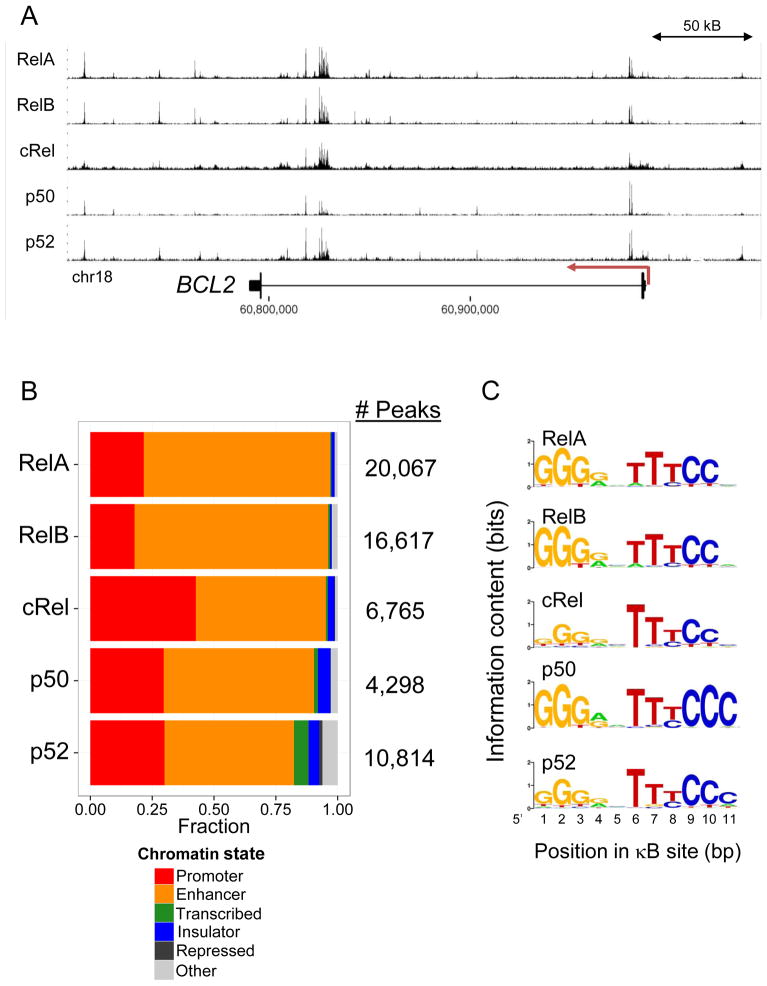
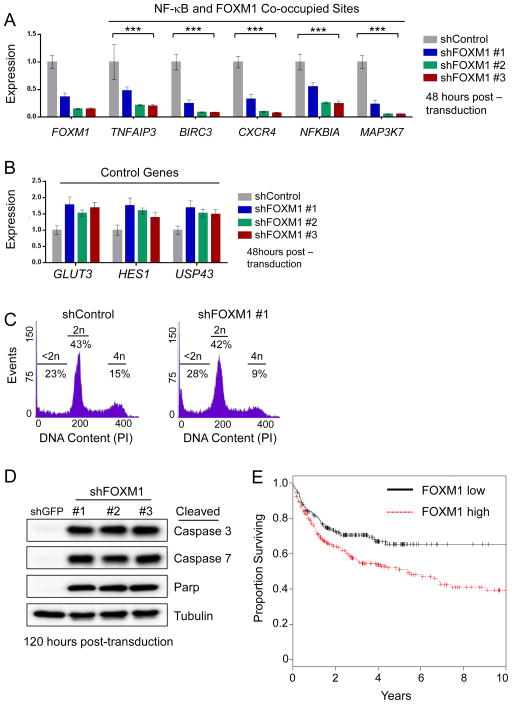
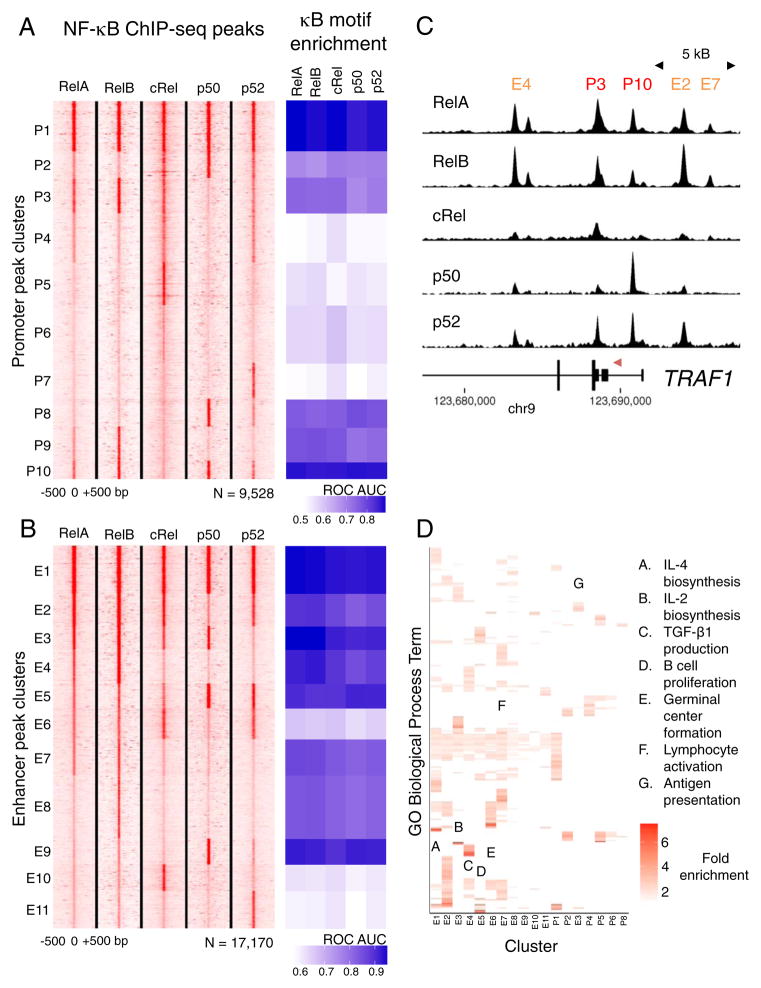
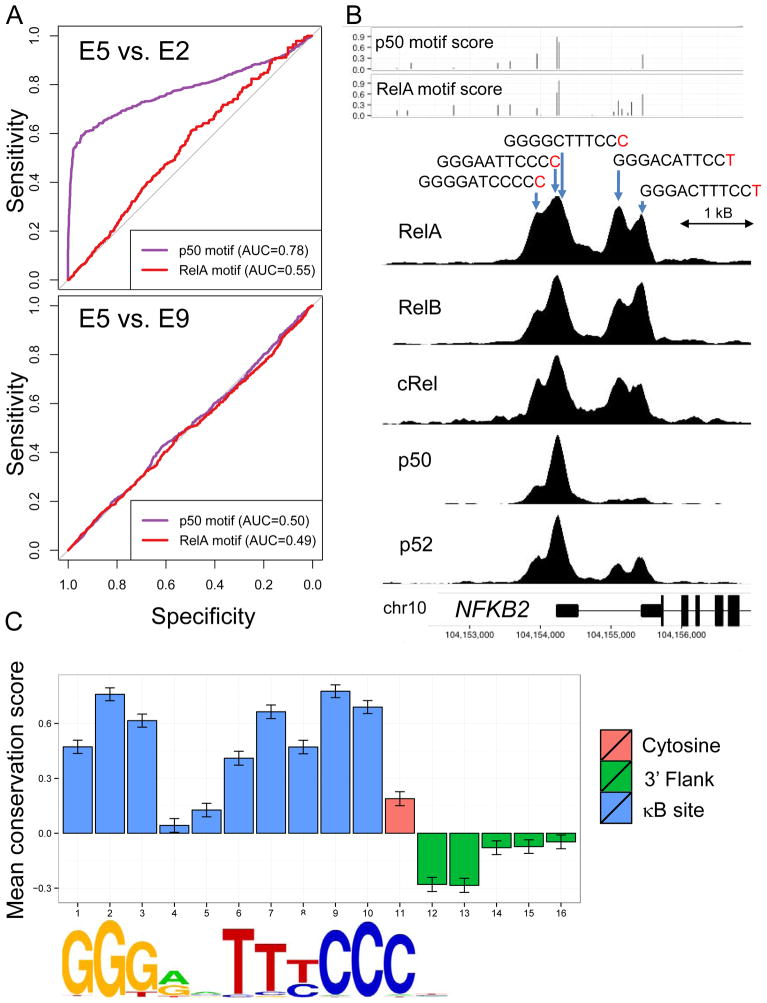
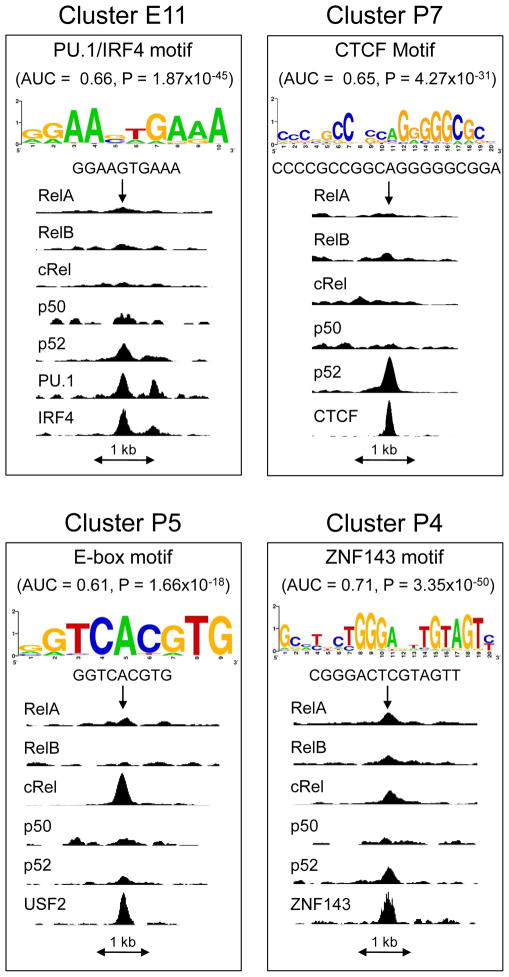
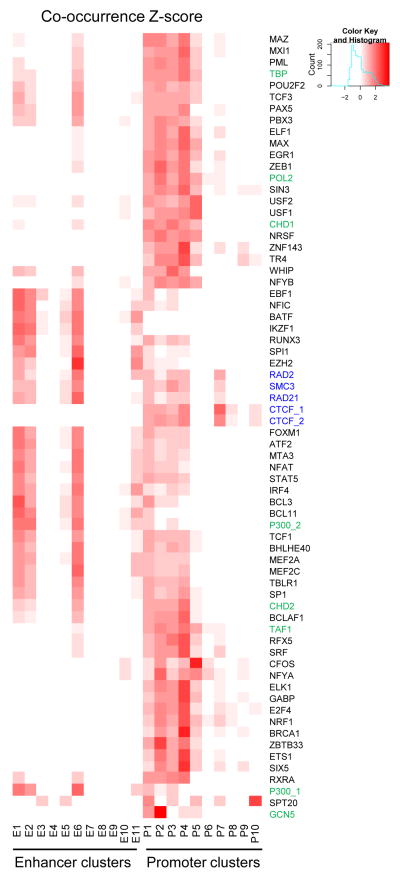
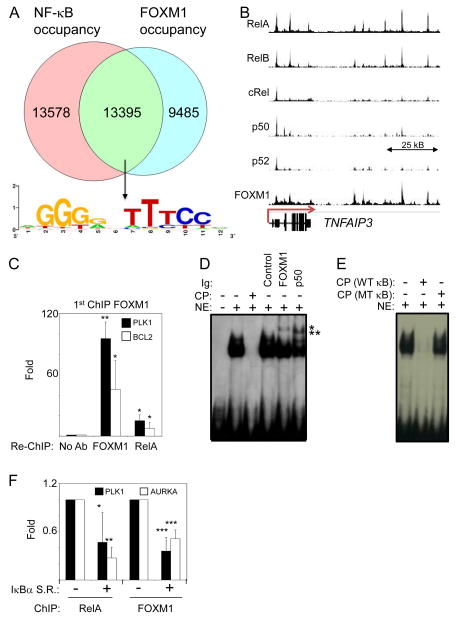
The nuclear factor κB (NF-κΒ) subunits RelA, RelB, cRel, p50, and p52 are each critical for B cell development and function. To systematically characterize their responses to canonical and noncanonical NF-κB pathway activity, we performed chromatin immunoprecipitation followed by high-throughput DNA sequencing (ChIP-seq) analysis in lymphoblastoid B cell lines (LCLs). We found a complex NF-κB-binding landscape, which did not readily reflect the two NF-κB pathway paradigms. Instead, 10 subunit-binding patterns were observed at promoters and 11 at enhancers. Nearly one-third of NF-κB-binding sites lacked κB motifs and were instead enriched for alternative motifs. The oncogenic forkhead box protein FOXM1 co-occupied nearly half of NF-κB-binding sites and was identified in protein complexes with NF-κB on DNA. FOXM1 knockdown decreased NF-κB target gene expression and ultimately induced apoptosis, highlighting FOXM1 as a synthetic lethal target in B cell malignancy. These studies provide a resource for understanding mechanisms that underlie NF-κB nuclear activity and highlight opportunities for selective NF-κB blockade.
核因子κB(NF-κΒ)亚基RelA、RelB、cRel、p50和p52对B细胞的发育和功能均至关重要。为了系统地表征它们对经典和非经典NF-κB信号通路活性的反应,我们在淋巴母细胞系B细胞(LCLs)中进行了染色质免疫沉淀,随后进行高通量DNA测序(ChIP-seq)分析。我们发现了一个复杂的NF-κB结合图谱,它并未轻易反映出两种NF-κB信号通路模式。相反,在启动子处观察到10种亚基结合模式,在增强子处观察到11种。近三分之一的NF-κB结合位点缺乏κB基序,而是富含其他基序。致癌性叉头框蛋白FOXM1共占据了近一半的NF-κB结合位点,并在与DNA上的NF-κB形成的蛋白复合物中被鉴定出来。FOXM1敲低降低了NF-κB靶基因的表达,并最终诱导细胞凋亡,突出了FOXM1作为B细胞恶性肿瘤中的合成致死靶点。这些研究为理解NF-κB核活性的潜在机制提供了资源,并突出了选择性NF-κB阻断的机会。