Cashion A K, Hathaway D K, Stanfill A, Thomas F, Ziebarth J D, Cui Y, Cowan P A, Eason J
National Institutes of Health/National Institute of Nursing Research, Bethesda, MD, USA; The University of Tennessee Health Science Center, Memphis, TN, USA.
Clin Transplant. 2014 Nov;28(11):1271-8. doi: 10.1111/ctr.12456.
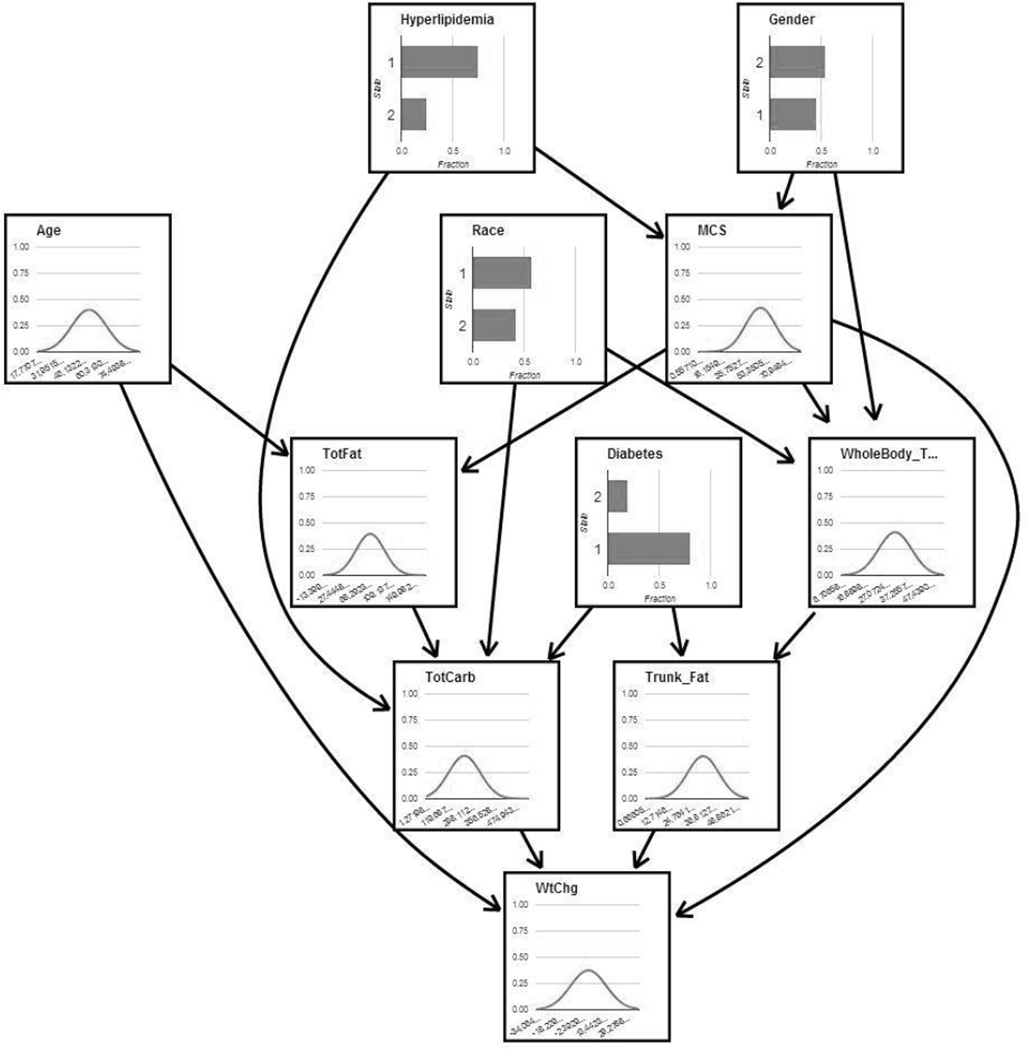
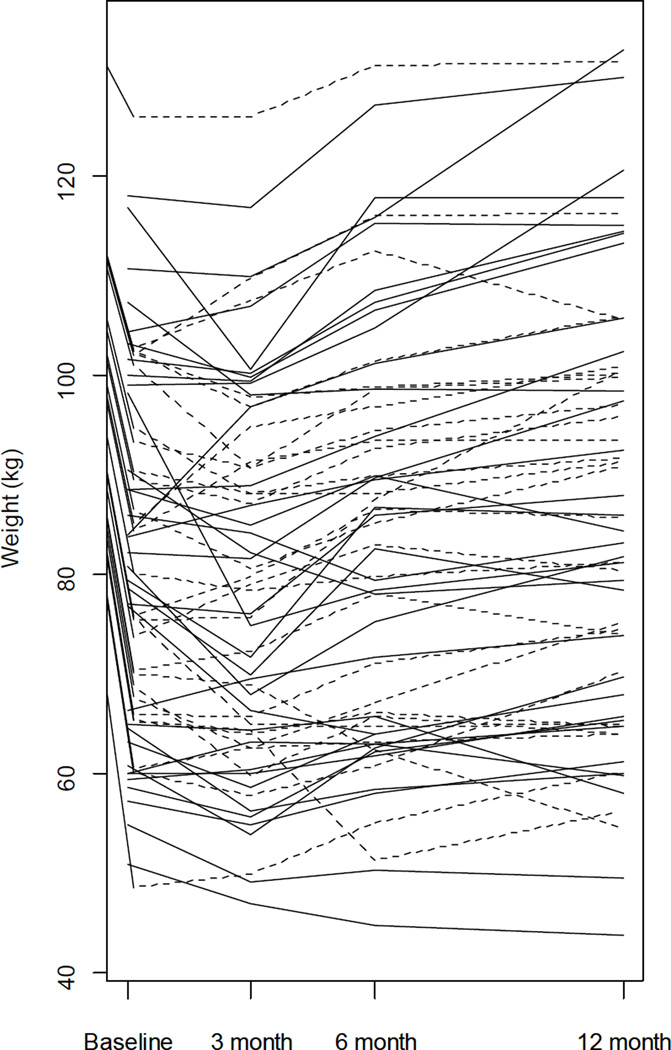
Clinically useful predictors of weight gain could be used to reduce the epidemic of post-kidney transplant obesity and resulting co-morbidities. The purpose of this study was to identify predictors of weight gain at 12 months following kidney transplant in a cohort of 96 recipients. Demographic, clinical, and environmental data were obtained at transplant and 12 months. Descriptive, correlational, and Bayesian network analysis were used to identify predictors. For the 52 (55.9%) recipients who gained weight, the average amount gained was 9.18 ± 6.59 kg. From the 15 baseline factors that met inclusion criteria, Bayesian network modeling identified four baseline predictors for weight gain: younger age, higher carbohydrate consumption, higher trunk fat percentage, and higher perception of mental health quality of life. Three are modifiable through either pre- or immediate post-transplant clinical intervention programs.
临床上有用的体重增加预测指标可用于减少肾移植后肥胖症的流行及其引发的合并症。本研究的目的是在96名肾移植受者队列中确定肾移植后12个月体重增加的预测指标。在移植时和12个月时获取了人口统计学、临床和环境数据。采用描述性、相关性和贝叶斯网络分析来确定预测指标。对于52名(55.9%)体重增加的受者,平均增加量为9.18±6.59千克。在符合纳入标准的15个基线因素中,贝叶斯网络建模确定了体重增加的四个基线预测指标:年龄较小、碳水化合物摄入量较高、躯干脂肪百分比较高以及对心理健康生活质量的认知较高。其中三个指标可通过移植前或移植后即刻的临床干预方案进行调整。