Fenhammar Johan, Rundgren Mats, Hultenby Kjell, Forestier Jakob, Taavo Micael, Kenne Ellinor, Weitzberg Eddie, Eriksson Stefan, Ozenci Volkan, Wernerson Annika, Frithiof Robert
Crit Care. 2014 Sep 3;18(5):488. doi: 10.1186/s13054-014-0488-y.
Acute kidney injury (AKI) is a common and feared complication of sepsis. The pathogenesis of sepsis-induced AKI is largely unknown, and therapeutic interventions are mainly supportive. In the present study, we tested the hypothesis that pharmacological inhibition of Toll-like receptor 4 (TLR4) would improve renal function and reduce renal damage in experimental sepsis, even after AKI had already developed.
Sheep were surgically instrumented and subjected to a 36-hour intravenous infusion of live Escherichia coli. After 12 hours, they were randomized to treatment with a selective TLR4 inhibitor (TAK-242) or vehicle.
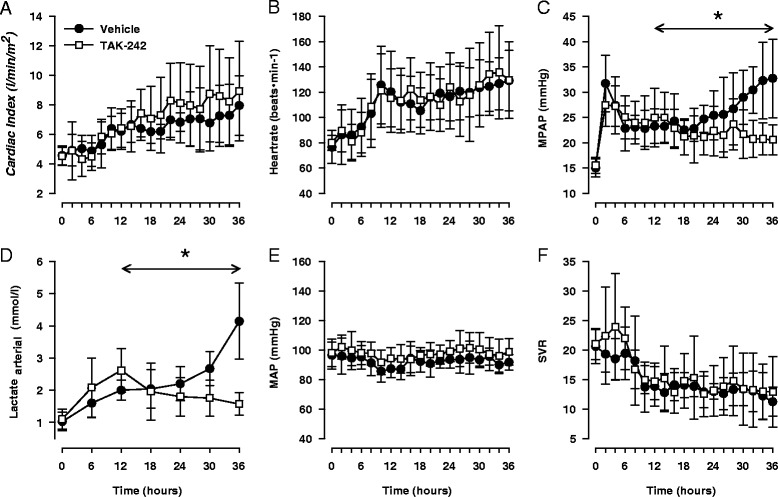
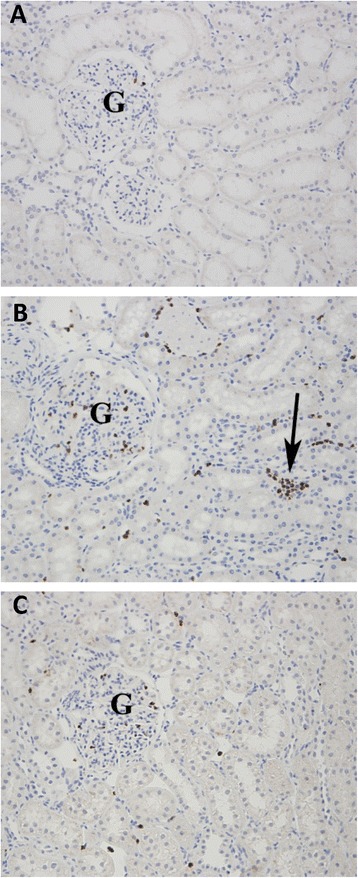
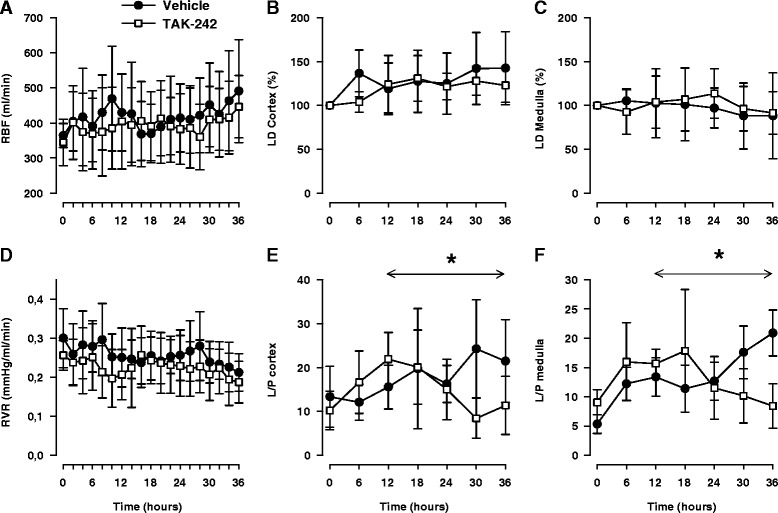
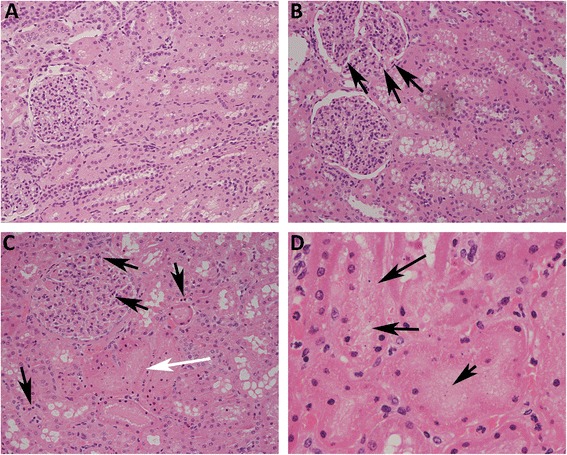
The E. coli caused normotensive sepsis characterized by fever, increased cardiac index, hyperlactemia, oliguria, and decreased creatinine clearance. TAK-242 significantly improved creatinine clearance and urine output. The increase in N-acetyl-beta-D-glucosaminidas, a marker of tubular damage, was attenuated. Furthermore, TAK-242 reduced the renal neutrophil accumulation and glomerular endothelial swelling caused by sepsis. These effects were independent of changes in renal artery blood flow and renal microvascular perfusion in both cortex and medulla. TAK-242 had no effect per se on the measured parameters.
These results show that treatment with a TLR4 inhibitor is able to reverse a manifest impairment in renal function caused by sepsis. In addition, the results provide evidence that the mechanism underlying the effect of TAK-242 on renal function does not involve improved macro-circulation or micro-circulation, enhanced renal oxygen delivery, or attenuation of tubular necrosis. TLR4-mediated inflammation resulting in glomerular endothelial swelling may be an important part of the pathogenesis underlying Gram-negative septic acute kidney injury.
急性肾损伤(AKI)是脓毒症常见且可怕的并发症。脓毒症诱导的急性肾损伤的发病机制很大程度上尚不清楚,治疗干预主要是支持性的。在本研究中,我们验证了这样一个假设,即对Toll样受体4(TLR4)进行药物抑制能够改善实验性脓毒症中的肾功能并减少肾损伤,即使在急性肾损伤已经发生之后。
对绵羊进行手术插管,并静脉输注活的大肠杆菌36小时。12小时后,将它们随机分为接受选择性TLR4抑制剂(TAK - 242)或赋形剂治疗。
大肠杆菌导致血压正常的脓毒症,其特征为发热、心脏指数增加、高乳酸血症、少尿和肌酐清除率降低。TAK - 242显著改善了肌酐清除率和尿量。作为肾小管损伤标志物的N - 乙酰 - β - D - 氨基葡萄糖苷酶的增加得到了缓解。此外,TAK - 242减少了脓毒症引起的肾中性粒细胞积聚和肾小球内皮肿胀。这些作用与肾皮质和髓质的肾动脉血流及肾微血管灌注的变化无关。TAK - 242本身对所测参数无影响。
这些结果表明,用TLR4抑制剂治疗能够逆转由脓毒症引起的明显肾功能损害。此外,结果提供了证据表明TAK - 242对肾功能的作用机制不涉及改善大循环或微循环、增强肾氧输送或减轻肾小管坏死。由TLR4介导的导致肾小球内皮肿胀的炎症可能是革兰氏阴性脓毒症急性肾损伤发病机制的重要组成部分。