Chang Fred, Huang Kerwyn Casey
BMC Biol. 2014 Aug 2;12:54. doi: 10.1186/s12915-014-0054-8.
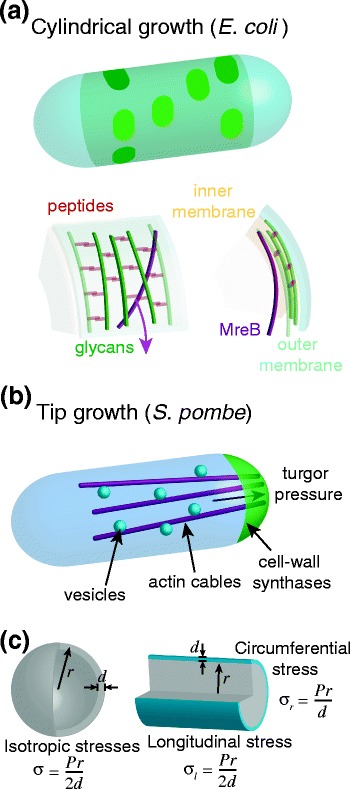
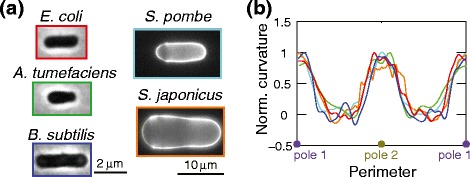
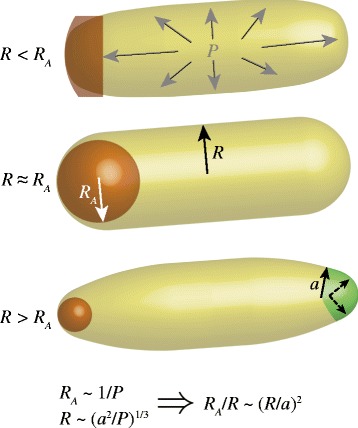
The rod is a ubiquitous shape adopted by walled cells from diverse organisms ranging from bacteria to fungi to plants. Although rod-like shapes are found in cells of vastly different sizes and are constructed by diverse mechanisms, the geometric similarities among these shapes across kingdoms suggest that there are common evolutionary advantages, which may result from simple physical principles in combination with chemical and physiological constraints. Here, we review mechanisms of constructing rod-shaped cells and the bases of different biophysical models of morphogenesis, comparing and contrasting model organisms in different kingdoms. We then speculate on possible advantages of the rod shape, and suggest strategies for elucidating the relative importance of each of these advantages.
杆状是从细菌到真菌再到植物等多种生物体中壁细胞所采用的一种普遍形状。尽管在大小差异极大的细胞中都能发现杆状形状,且其形成机制各不相同,但不同生物界中这些形状之间的几何相似性表明存在共同的进化优势,这可能是简单物理原理与化学和生理限制相结合的结果。在这里,我们回顾了构建杆状细胞的机制以及形态发生的不同生物物理模型的基础,比较和对比了不同生物界中的模式生物。然后,我们推测了杆状形状可能具有的优势,并提出了阐明这些优势各自相对重要性的策略。