Jang Tae-Ho, Lee Dong-Sup, Choi Kihang, Jeong Eui Man, Kim In-Gyu, Kim Young Whan, Chun Jung Nyeo, Jeon Ju-Hong, Park Hyun Ho
School of Biotechnology, Yeungnam University, Gyeongsan, South Korea; Graduate School of Biochemistry, Yeungnam University, Gyeongsan, South Korea.
Department of Physiology and Biophysics at Seoul National University College of Medicine, Seoul, South Korea.
PLoS One. 2014 Sep 5;9(9):e107005. doi: 10.1371/journal.pone.0107005. eCollection 2014.
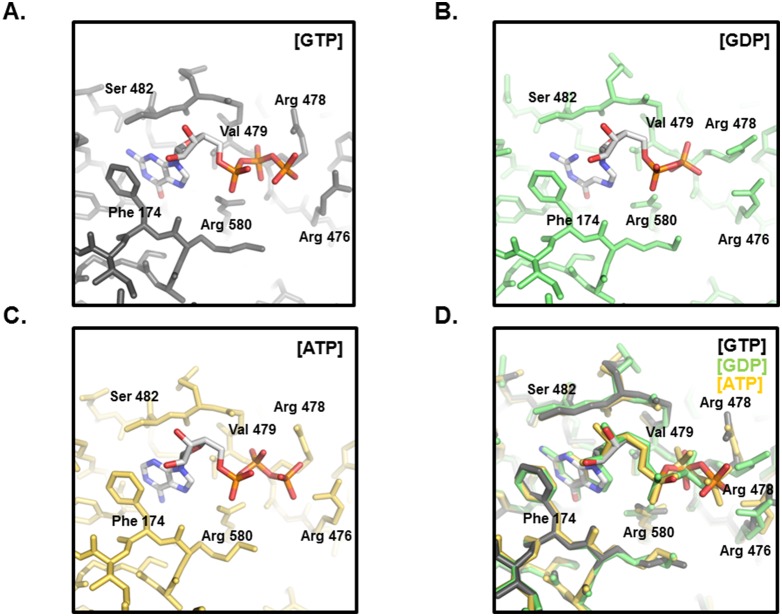
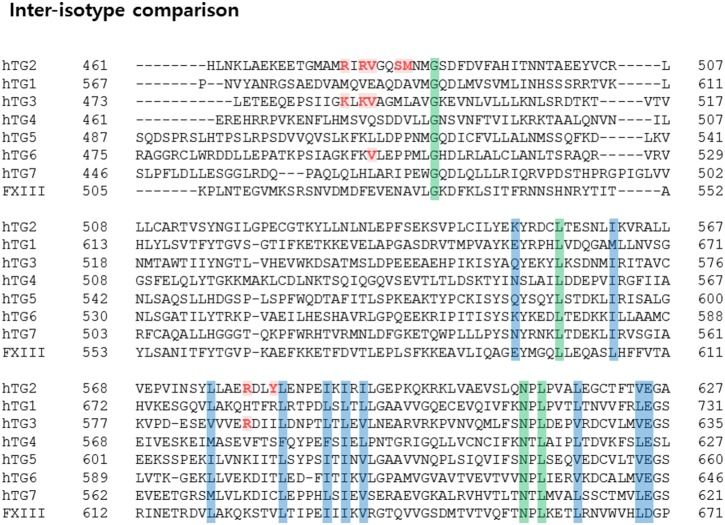
Transglutaminase2 (TG2) is a multi-functional protein involved in various cellular processes, including apoptosis, differentiation, wound healing, and angiogenesis. The malfunction of TG2 causes many human disease including inflammatory disease, celiac disease, neurodegenerative diseases, tissue fibrosis, and cancers. Protein cross-linking activity, which is representative of TG2, is activated by calcium ions and suppressed by GTP. Here, we elucidated the structure of TG2 in complex with its endogenous inhibitor, GTP. Our structure showed why GTP is the optimal nucleotide for interacting with and inhibiting TG2. In addition, sequence comparison provided information describing the evolutionary scenario of GTP usage for controlling the activity of TG2.
转谷氨酰胺酶2(TG2)是一种多功能蛋白质,参与多种细胞过程,包括细胞凋亡、分化、伤口愈合和血管生成。TG2功能异常会引发多种人类疾病,包括炎症性疾病、乳糜泻、神经退行性疾病、组织纤维化和癌症。TG2具有代表性的蛋白质交联活性受钙离子激活,受GTP抑制。在此,我们阐明了TG2与其内源性抑制剂GTP形成的复合物的结构。我们的结构显示了为什么GTP是与TG2相互作用并抑制TG2的最佳核苷酸。此外,序列比较提供了有关GTP用于控制TG2活性的进化情况的信息。