Eddy Justin L, Gielda Lindsay M, Caulfield Adam J, Rangel Stephanie M, Lathem Wyndham W
Department of Microbiology-Immunology, Northwestern University Feinberg School of Medicine, Chicago, Illinois, United States of America.
PLoS One. 2014 Sep 8;9(9):e107002. doi: 10.1371/journal.pone.0107002. eCollection 2014.
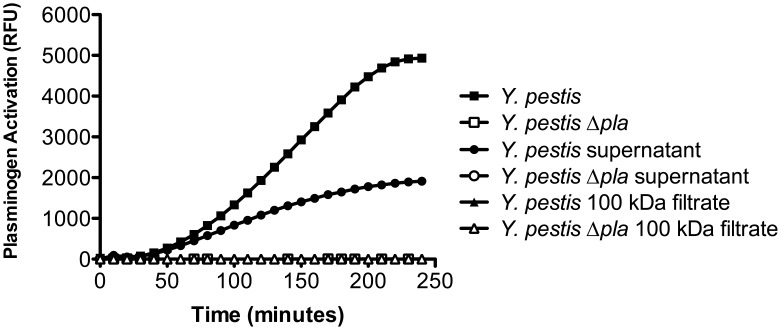
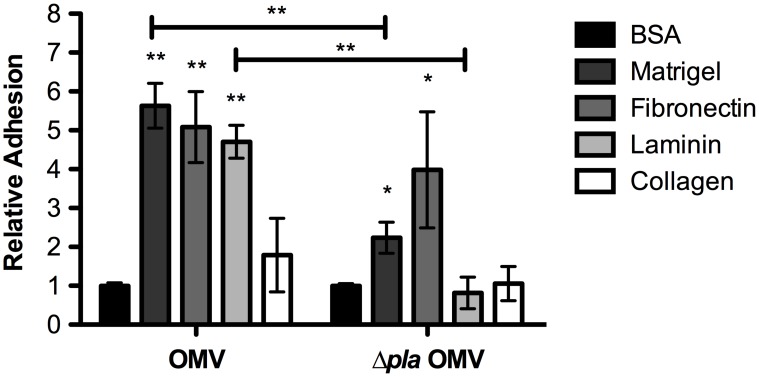
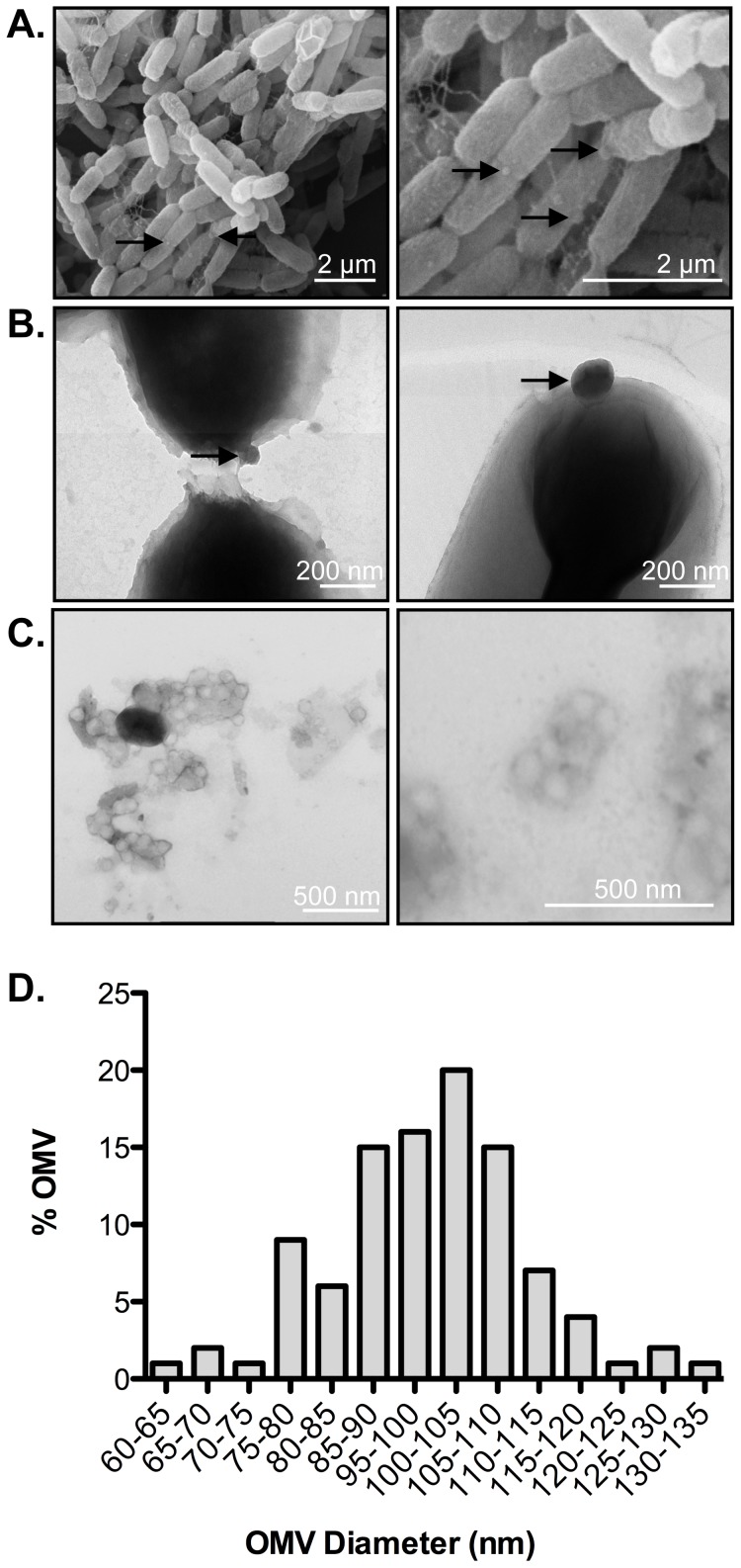
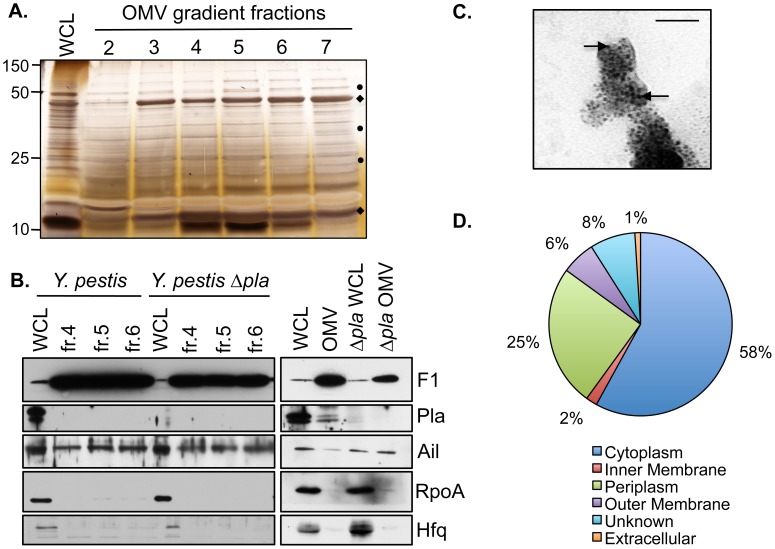
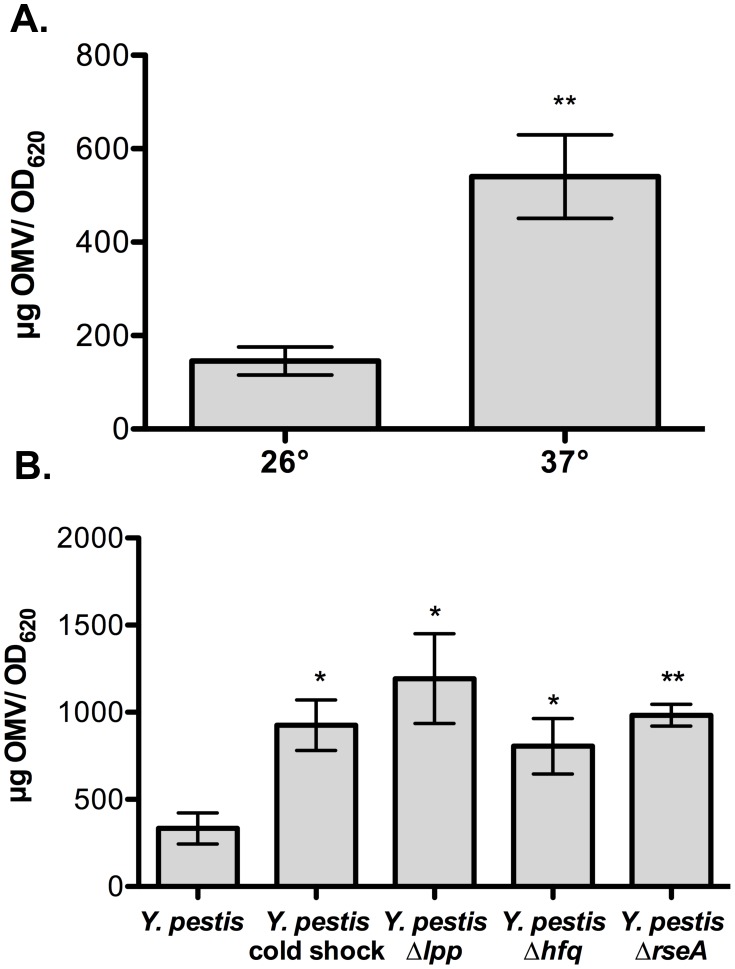
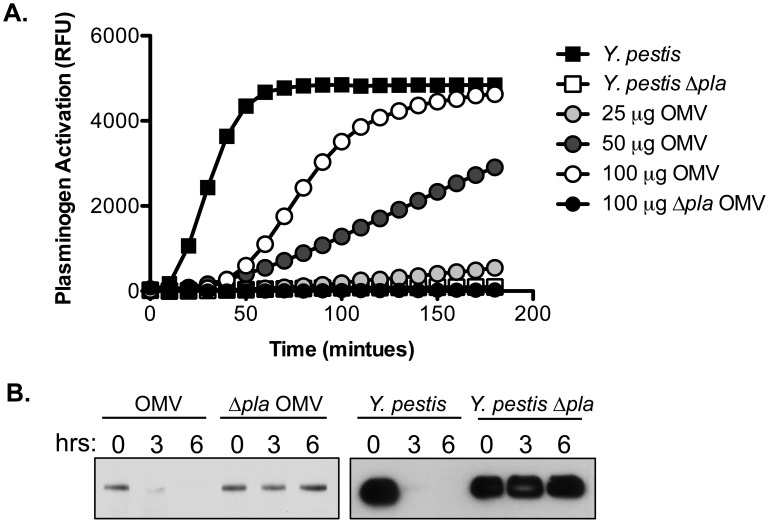
Many Gram-negative bacteria produce outer membrane vesicles (OMVs) during cell growth and division, and some bacterial pathogens deliver virulence factors to the host via the release of OMVs during infection. Here we show that Yersinia pestis, the causative agent of the disease plague, produces and releases native OMVs under physiological conditions. These OMVs, approximately 100 nm in diameter, contain multiple virulence-associated outer membrane proteins including the adhesin Ail, the F1 outer fimbrial antigen, and the protease Pla. We found that OMVs released by Y. pestis contain catalytically active Pla that is competent for plasminogen activation and α2-antiplasmin degradation. The abundance of OMV-associated proteins released by Y. pestis is significantly elevated at 37 °C compared to 26 °C and is increased in response to membrane stress and mutations in RseA, Hfq, and the major Braun lipoprotein (Lpp). In addition, we show that Y. pestis OMVs are able to bind to components of the extracellular matrix such as fibronectin and laminin. These data suggest that Y. pestis may produce OMVs during mammalian infection and we propose that dispersal of Pla via OMV release may influence the outcome of infection through interactions with Pla substrates such as plasminogen and Fas ligand.
许多革兰氏阴性菌在细胞生长和分裂过程中会产生外膜囊泡(OMV),一些细菌病原体在感染期间通过释放OMV将毒力因子传递给宿主。在此,我们表明鼠疫耶尔森菌(鼠疫的病原体)在生理条件下会产生并释放天然OMV。这些OMV直径约100纳米,包含多种与毒力相关的外膜蛋白,包括黏附素Ail、F1外菌毛抗原和蛋白酶Pla。我们发现鼠疫耶尔森菌释放的OMV含有具有催化活性的Pla,其能够激活纤溶酶原并降解α2-抗纤溶酶。与26℃相比,鼠疫耶尔森菌释放的与OMV相关的蛋白丰度在37℃时显著升高,并且在受到膜应激以及RseA、Hfq和主要的布劳恩脂蛋白(Lpp)突变的影响时会增加。此外,我们表明鼠疫耶尔森菌的OMV能够结合细胞外基质的成分,如纤连蛋白和层粘连蛋白。这些数据表明鼠疫耶尔森菌在哺乳动物感染期间可能会产生OMV,并且我们提出通过OMV释放来分散Pla可能会通过与Pla底物(如纤溶酶原和Fas配体)的相互作用影响感染结果。