Chavarri-Guerra Yanin, St Louis Jessica, Liedke Pedro E R, Symecko Heather, Villarreal-Garza Cynthia, Mohar Alejandro, Finkelstein Dianne M, Goss Paul E
MGH-Avon International Breast Cancer Program, Massachusetts General Hospital, Boston, MA, USA.
BMC Cancer. 2014 Sep 9;14:658. doi: 10.1186/1471-2407-14-658.
Despite recently implemented access to care programs, Mexican breast cancer (BC) mortality rates remain substantially above those in the US. We conducted a survey among Mexican Oncologists to determine whether practice patterns may be responsible for these differences.
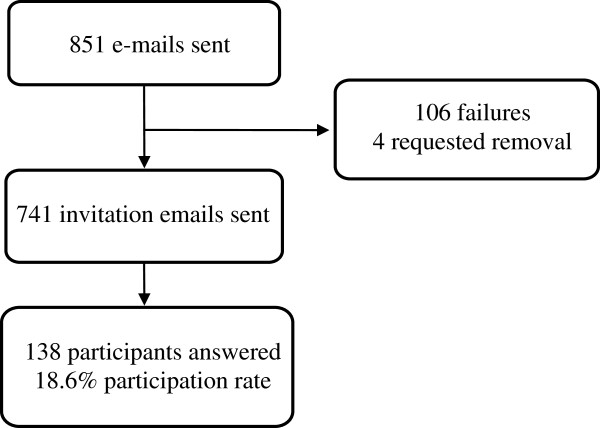
A web-based survey was sent to 851 oncologists across Mexico using the Vanderbilt University REDCap database. Analyses of outcomes are reported using exact and binomial confidence bounds and tests.
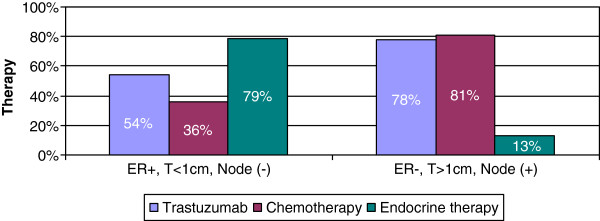
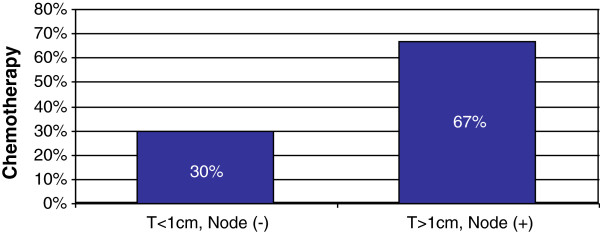
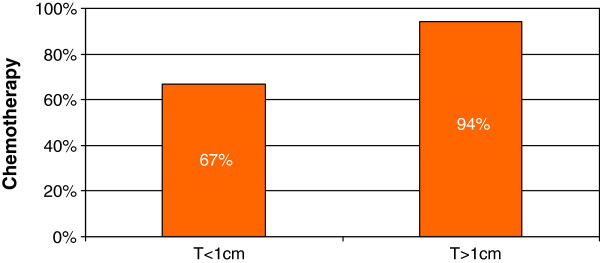
138 participants (18.6% of those surveyed) from the National capital and 26 Mexican states, responded. Respondents reported that 58% of newly diagnosed BC patients present with stage III-IV disease; 63% undergo mastectomy, 52% axillary lymph node dissection (ALND) and 48% sentinel lymph node biopsy (SLNB). Chemotherapy is recommended for tumors > 1 cm (89%), positive nodes (86.5%), triple-negative (TN) (80%) and HER2 positive tumors (58%). Trastuzumab is prescribed in 54.3% and 77.5% for HER2 < 1 cm and > 1 cm tumors, respectively. Tamoxifen is indicated for premenopausal hormone receptor (HR) positive tumors in 86.5% of cases and aromatase inhibitors (AI's) for postmenopausal in 86%. 24% of physicians reported treatment limitations, due to delayed or incomplete pathology reports and delayed or limited access to medications.
Even though access to care programs have been recently applied nationwide, women commonly present with advanced BC, leading to increased rates of mastectomy and ALND. Mexican physicians are dissatisfied with access to appropriate medical care. Our survey detects specific barriers that may impact BC outcomes in Mexico and warrant further investigation.
尽管最近实施了医疗服务获取计划,但墨西哥乳腺癌(BC)死亡率仍大幅高于美国。我们对墨西哥肿瘤学家进行了一项调查,以确定医疗实践模式是否可能是造成这些差异的原因。
使用范德堡大学的REDCap数据库,向墨西哥各地的851名肿瘤学家发送了基于网络的调查问卷。使用精确和二项式置信区间及检验报告结果分析。
来自墨西哥首都和26个州的138名参与者(占调查对象的18.6%)做出了回应。受访者报告称,58%新诊断的BC患者为III-IV期疾病;63%接受乳房切除术,52%接受腋窝淋巴结清扫术(ALND),48%接受前哨淋巴结活检(SLNB)。对于直径>1 cm的肿瘤(89%)、阳性淋巴结(86.5%)、三阴性(TN)肿瘤(80%)和HER2阳性肿瘤(58%),建议进行化疗。对于HER2<1 cm和>1 cm的肿瘤,曲妥珠单抗的处方率分别为54.3%和77.5%。86.5%的病例中,他莫昔芬用于绝经前激素受体(HR)阳性肿瘤,86%的病例中,芳香化酶抑制剂(AI)用于绝经后肿瘤。24%的医生报告存在治疗限制,原因是病理报告延迟或不完整以及药物获取延迟或受限。
尽管最近在全国范围内实施了医疗服务获取计划,但女性通常被诊断为晚期BC,导致乳房切除术和ALND的比例增加。墨西哥医生对获得适当医疗服务不满意。我们的调查发现了可能影响墨西哥BC治疗结果的具体障碍,值得进一步调查。