Novrup Hans G, Bracchi-Ricard Valerie, Ellman Ditte G, Ricard Jerome, Jain Anjana, Runko Erik, Lyck Lise, Yli-Karjanmaa Minna, Szymkowski David E, Pearse Damien D, Lambertsen Kate L, Bethea John R
Department of Neurobiology Research, Institute of Molecular Medicine, University of Southern Denmark, Odense, J.B. Winsloewsvej 21 St, 5000, Odense C, Denmark.
Department of Neurological Surgery, The Miami Project to Cure Paralysis, University of Miami Miller School of Medicine, 1095 NW 14th Ter R-48, Miami, FL, 33136, USA.
J Neuroinflammation. 2014 Sep 10;11:159. doi: 10.1186/s12974-014-0159-6.
Glial cell activation and overproduction of inflammatory mediators in the central nervous system (CNS) have been implicated in acute traumatic injuries to the CNS, including spinal cord injury (SCI). Elevated levels of the proinflammatory cytokine tumor necrosis factor (TNF), which exists in both a soluble (sol) and a transmembrane (tm) form, have been found in the lesioned cord early after injury. The contribution of solTNF versus tmTNF to the development of the lesion is, however, still unclear.
We tested the effect of systemically or centrally blocking solTNF alone, using XPro1595, versus using the drug etanercept to block both solTNF and tmTNF compared to a placebo vehicle following moderate SCI in mice. Functional outcomes were evaluated using the Basso Mouse Scale, rung walk test, and thermal hyperalgesia analysis. The inflammatory response in the lesioned cord was investigated using immunohistochemistry and western blotting analyses.
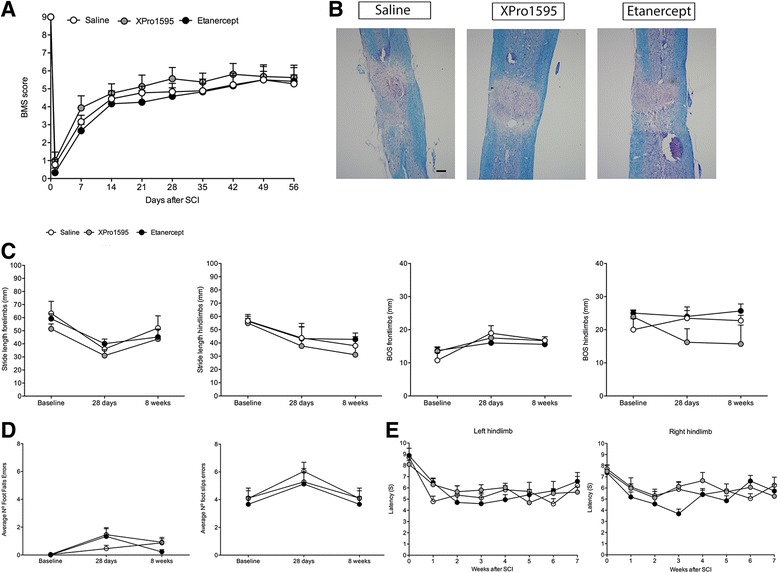
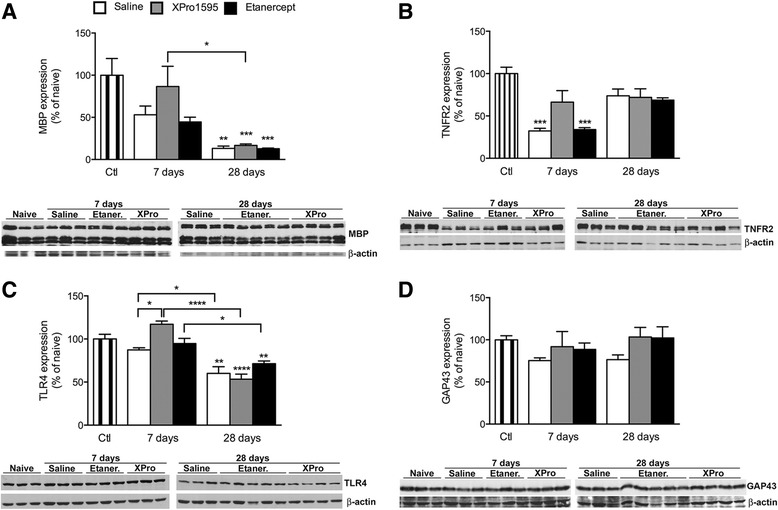
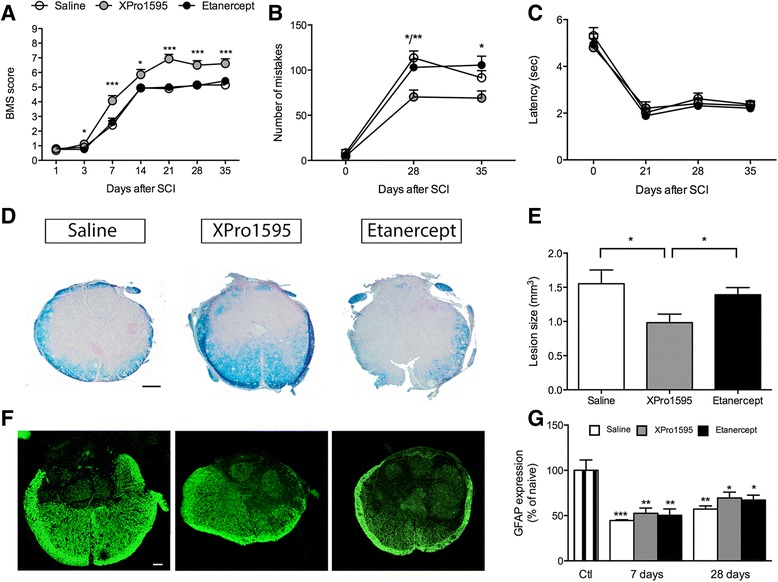
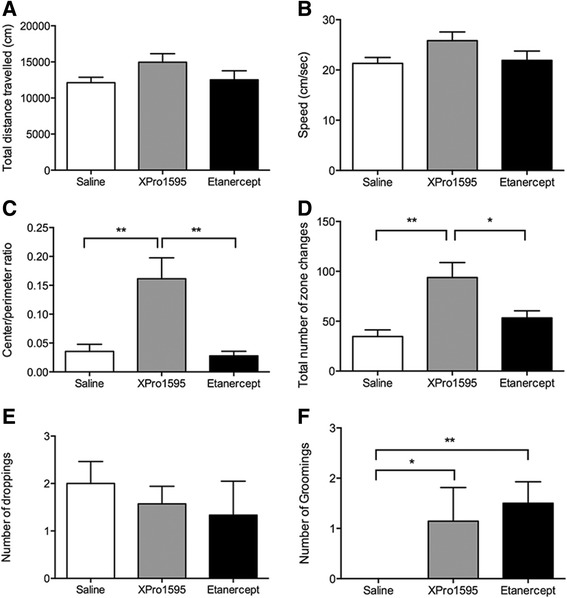
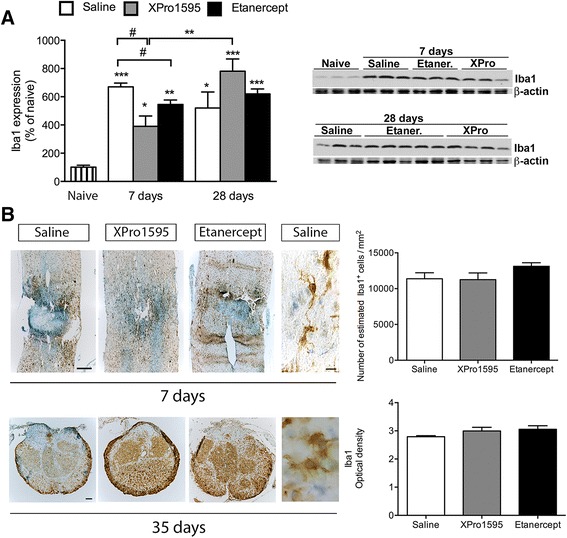
We found that peripheral administration of anti-TNF therapies had no discernable effect on locomotor performances after SCI. In contrast, central administration of XPro1595 resulted in improved locomotor function, decreased anxiety-related behavior, and reduced damage to the lesioned spinal cord, whereas central administration of etanercept had no therapeutic effects. Improvements in XPro1595-treated mice were accompanied by increases in Toll-like receptor 4 and TNF receptor 2 (TNFR2) protein levels and changes in Iba1 protein expression in microglia/macrophages 7 and 28 days after SCI.
These studies suggest that, by selectively blocking solTNF, XPro1595 is neuroprotective when applied directly to the lesioned cord. This protection may be mediated via alteration of the inflammatory environment without suppression of the neuroprotective effects of tmTNF signaling through TNFR2.
中枢神经系统(CNS)中的胶质细胞活化和炎症介质过度产生与中枢神经系统的急性创伤性损伤有关,包括脊髓损伤(SCI)。在损伤后的早期,在损伤的脊髓中发现促炎细胞因子肿瘤坏死因子(TNF)水平升高,其以可溶性(sol)和跨膜(tm)两种形式存在。然而,可溶性TNF与跨膜TNF对损伤发展的作用仍不清楚。
在小鼠中度脊髓损伤后,我们测试了单独使用XPro1595全身或中枢阻断可溶性TNF的效果,与使用药物依那西普阻断可溶性TNF和跨膜TNF相比,后者使用安慰剂载体。使用Basso小鼠量表、 rung步行试验和热痛觉过敏分析评估功能结果。使用免疫组织化学和蛋白质印迹分析研究损伤脊髓中的炎症反应。
我们发现,SCI后外周给予抗TNF疗法对运动性能没有明显影响。相比之下,中枢给予XPro1595可改善运动功能、减少焦虑相关行为并减少损伤脊髓的损伤,而中枢给予依那西普则没有治疗效果。在SCI后7天和28天,XPro1595治疗的小鼠的改善伴随着Toll样受体4和TNF受体2(TNFR2)蛋白水平的增加以及小胶质细胞/巨噬细胞中Iba1蛋白表达的变化。
这些研究表明,通过选择性阻断可溶性TNF,XPro1595直接应用于损伤脊髓时具有神经保护作用。这种保护作用可能是通过改变炎症环境介导的,而不会抑制通过TNFR2的跨膜TNF信号传导的神经保护作用。