Francischetti Ivo M B, Ma Dongying, Andersen John F, Ribeiro José M C
Section of Vector Biology, Laboratory of Malaria and Vector Research, National Institute of Allergy and Infectious Diseases, National Institutes of Health, Bethesda, Maryland, United States of America.
PLoS One. 2014 Sep 10;9(9):e107295. doi: 10.1371/journal.pone.0107295. eCollection 2014.
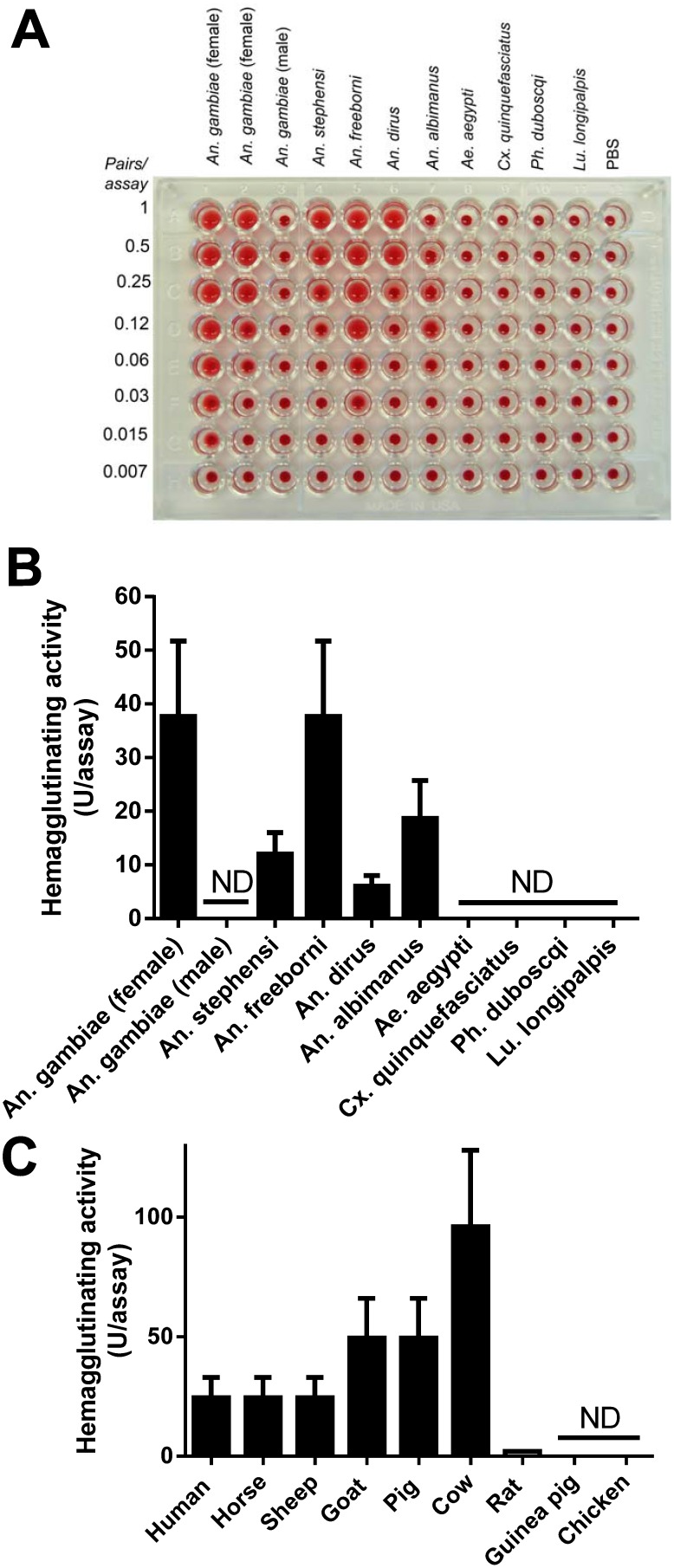
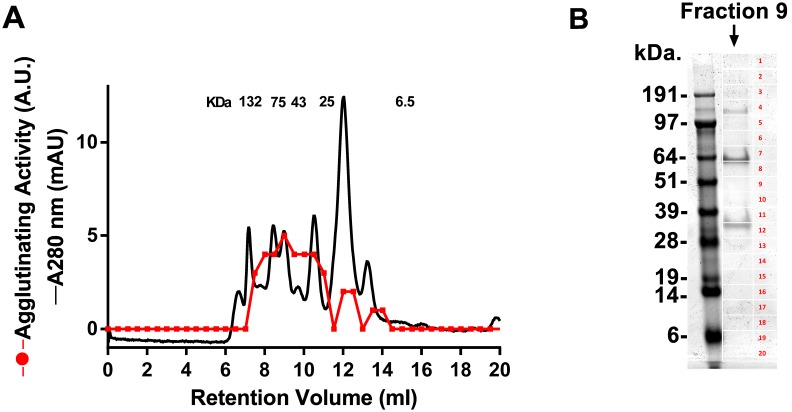
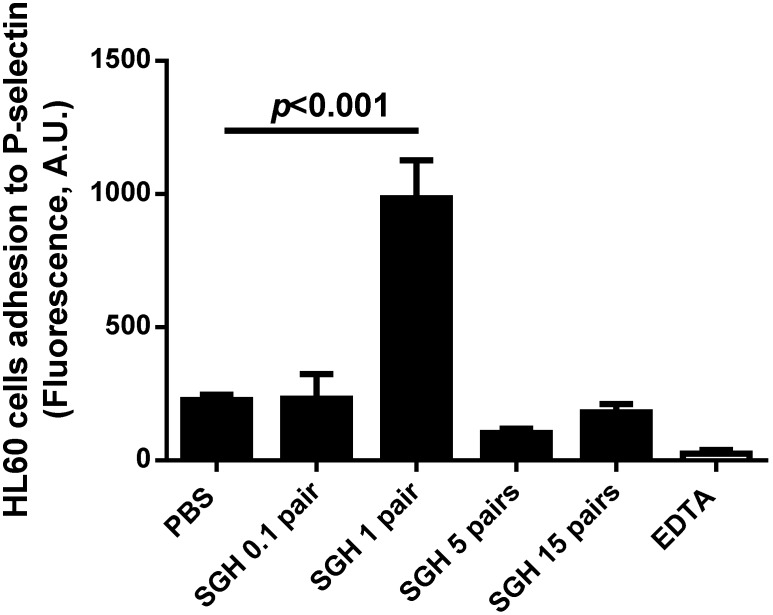
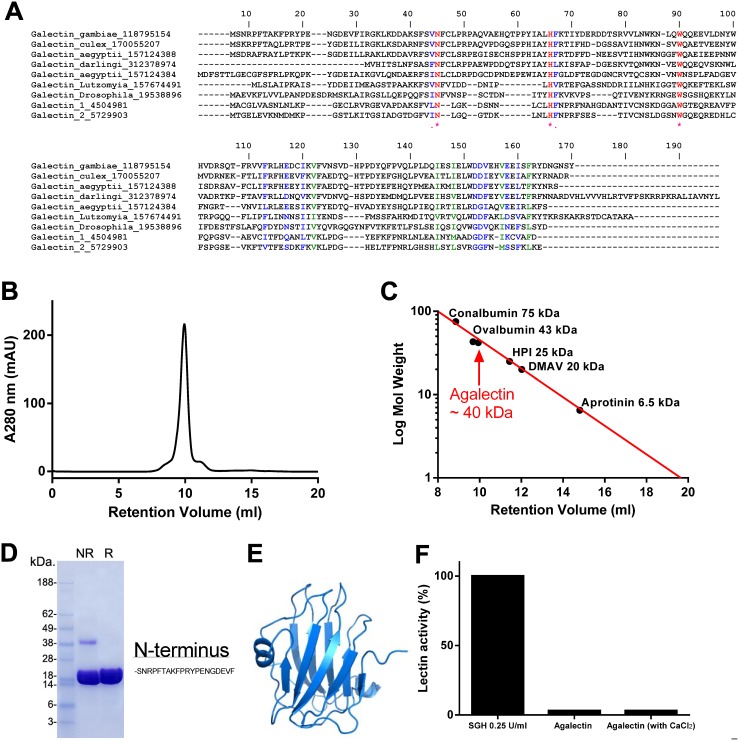
Salivary gland homogenate (SGH) from the female mosquitoes Anopheles gambiae, An. stephensi, An. freeborni, An. dirus and An. albimanus were found to exhibit hemagglutinating (lectin) activity. Lectin activity was not found for male An. gambiae, or female Ae aegypti, Culex quinquefasciatus, Phlebotomus duboscqi, and Lutzomyia longipalpis. With respect to species-specificity, An. gambiae SGH agglutinates red blood cells (RBC) from humans, horse, sheep, goat, pig, and cow; it is less active for rats RBC, and not detectable for guinea-pigs or chicken RBC. Notably, lectin activity was inhibited by low concentrations of dextran sulfate 50-500 K, fucoidan, heparin, laminin, heparin sulfate proteoglycan, sialyl-containing glycans (e.g. 3'-sialyl Lewis X, and 6'-sialyl lactose), and gangliosides (e.g. GM3, GD1, GD1b, GTB1, GM1, GQ1B), but not by simple sugars. These results imply that molecule(s) in the salivary gland target sulfated glycans. SGH from An. gambiae was also found to promote agglutination of HL-60 cells which are rich in sialyl Lewis X, a glycan that decorates PSGL-1, the neutrophils receptor that interacts with endothelial cell P-selectin. Accordingly, SGH interferes with HL-60 cells adhesion to immobilized P-selectin. Because An. gambiae SGH expresses galectins, one member of this family (herein named Agalectin) was expressed in E. coli. Recombinant Agalectin behaves as a non-covalent homodimer. It does not display lectin activity, and does not interact with 500 candidates tested in a Glycan microarray. Gel-filtration chromatography of the SGH of An. gambiae identified a fraction with hemagglutinating activity, which was analyzed by 1D PAGE followed by in-gel tryptic digestion, and nano-LC MS/MS. This approach identified several genes which emerge as candidates for a lectin targeting sulfated glycans, the first with this selectivity to be reported in the SGH of a blood-sucking arthropod. The role of salivary molecules (sialogenins) with lectin activity is discussed in the context of inflammation, and parasite-vector-host interactions.
已发现冈比亚按蚊、斯氏按蚊、弗里博按蚊、大劣按蚊和白跗按蚊雌蚊的唾液腺匀浆(SGH)具有血凝(凝集素)活性。未发现冈比亚按蚊雄蚊、埃及伊蚊雌蚊、致倦库蚊、杜氏白蛉和长须罗蛉的唾液腺匀浆有凝集素活性。就物种特异性而言,冈比亚按蚊SGH可凝集人、马、绵羊、山羊、猪和牛的红细胞;对大鼠红细胞的活性较低,对豚鼠或鸡红细胞则检测不到活性。值得注意的是,低浓度的硫酸葡聚糖50 - 500K、岩藻依聚糖、肝素、层粘连蛋白、硫酸乙酰肝素蛋白聚糖、含唾液酸的聚糖(如3'-唾液酸路易斯X和6'-唾液酸乳糖)以及神经节苷脂(如GM3、GD1、GD1b、GTB1、GM1、GQ1B)可抑制凝集素活性,但单糖无此作用。这些结果表明唾液腺中的分子靶向硫酸化聚糖。还发现冈比亚按蚊的SGH可促进富含唾液酸路易斯X的HL - 60细胞凝集,唾液酸路易斯X是一种修饰PSGL - 1的聚糖,PSGL - 1是与内皮细胞P - 选择素相互作用的中性粒细胞受体。因此,SGH会干扰HL - 60细胞与固定化P - 选择素的黏附。由于冈比亚按蚊SGH表达半乳糖凝集素,该家族的一个成员(在此命名为Agalectin)在大肠杆菌中表达。重组Agalectin表现为非共价同源二聚体。它不显示凝集素活性,也不与聚糖微阵列中测试的500种候选物相互作用。对冈比亚按蚊SGH进行凝胶过滤色谱分析,鉴定出具有血凝活性的一个组分,通过一维聚丙烯酰胺凝胶电泳(1D PAGE),随后进行凝胶内胰蛋白酶消化和纳升级液相色谱串联质谱(nano - LC MS/MS)分析。该方法鉴定出几个基因,它们可能是靶向硫酸化聚糖的凝集素候选基因,这是在吸血节肢动物的SGH中首次报道具有这种选择性的基因。本文在炎症以及寄生虫 - 媒介 - 宿主相互作用的背景下讨论了具有凝集素活性的唾液分子(唾液生成素)的作用。