Gong Zheng, Luna Yesmin, Yu Ping, Fan Huizhou
Department of Pharmacology, Rutgers University Robert Wood Johnson Medical School, Piscataway, New Jersey, United States of America; Department of Immunology, Central South University Xiangya Medical School, Changsha, Hunan, China.
Department of Pharmacology, Rutgers University Robert Wood Johnson Medical School, Piscataway, New Jersey, United States of America.
PLoS One. 2014 Sep 12;9(9):e107758. doi: 10.1371/journal.pone.0107758. eCollection 2014.
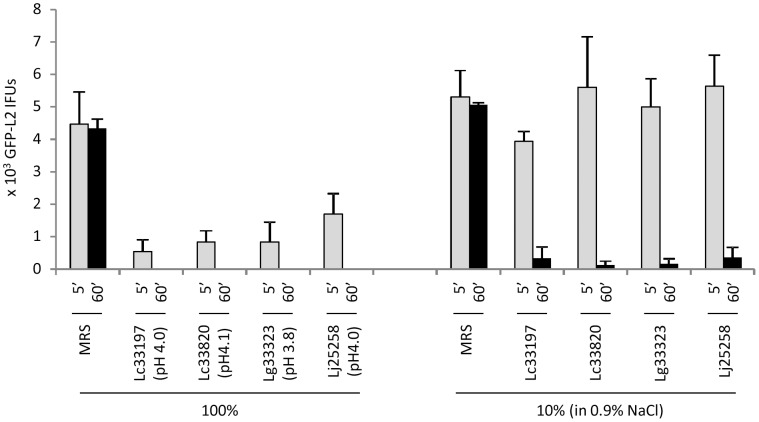
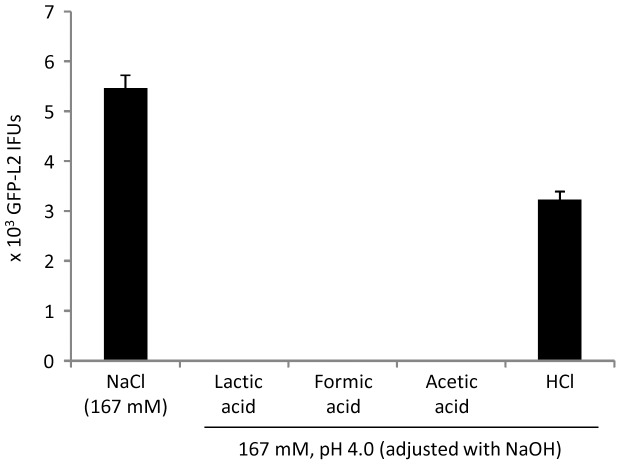
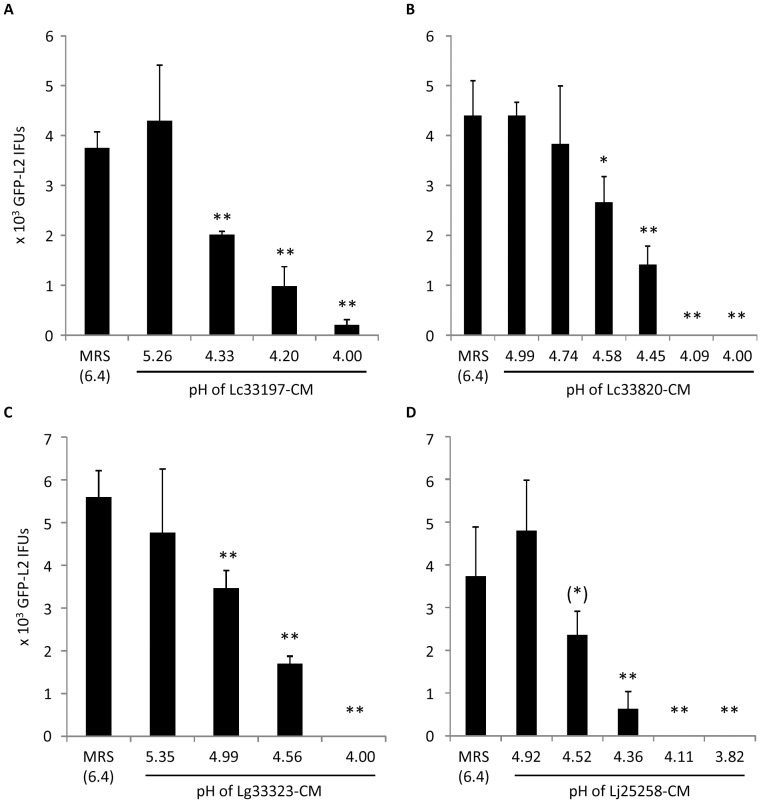
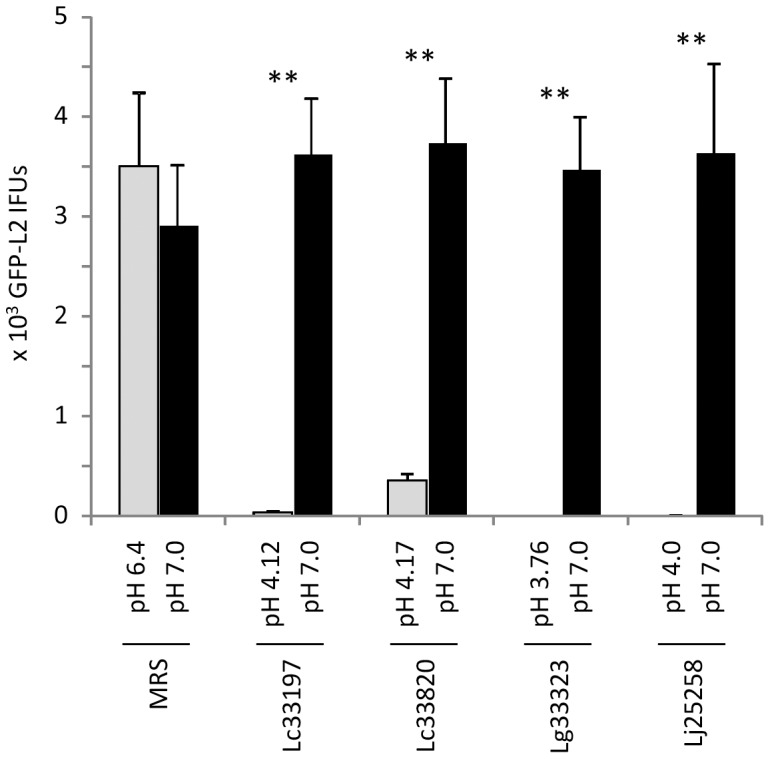
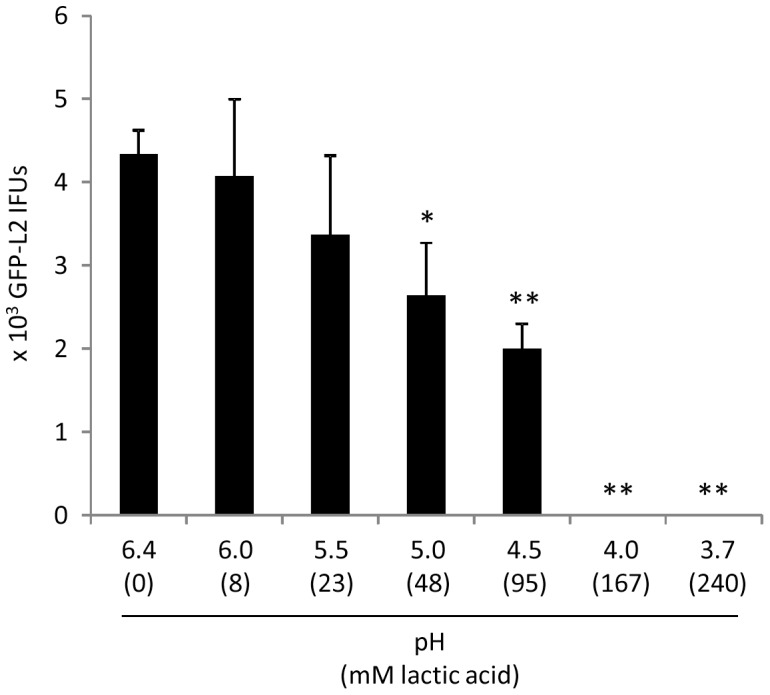
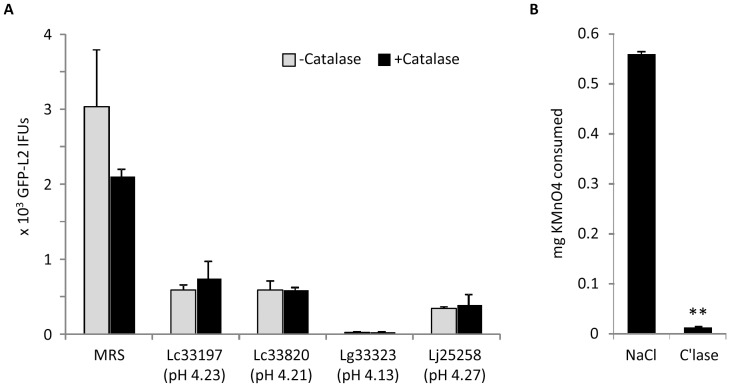
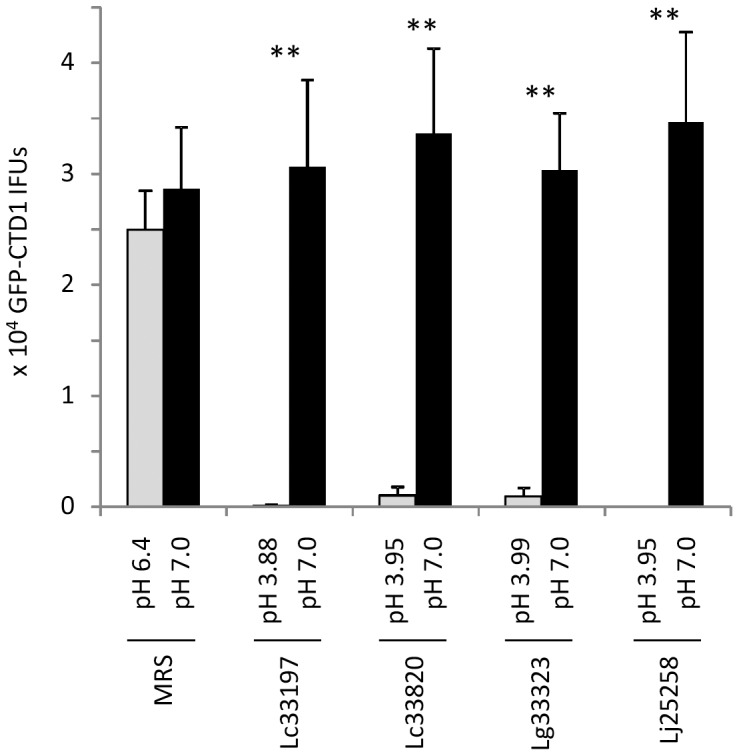
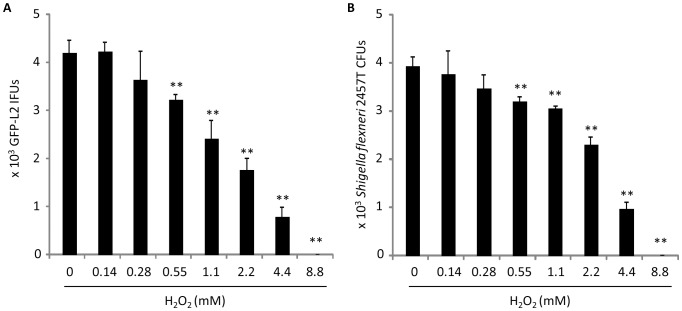
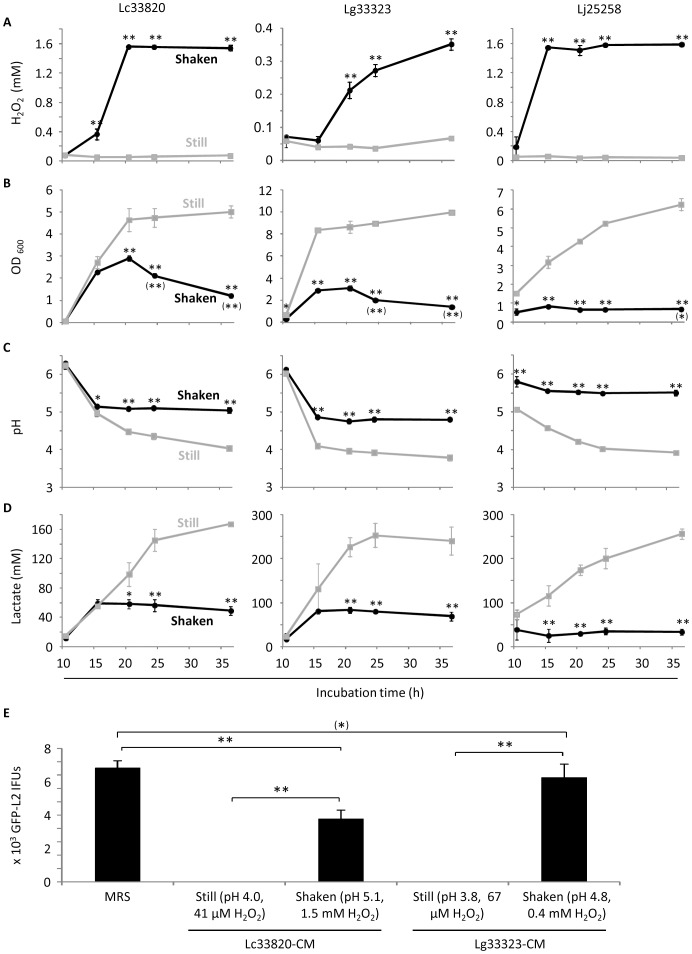
Lactobacillus species dominate the microbiome in the lower genital tract of most reproductive-age women. Producing lactic acid and H2O2, lactobacilli are believed to play an important role in prevention of colonization by and growth of pathogens. However, to date, there have been no reported studies characterizing how lactobacilli interact with Chlamydia trachomatis, a leading sexually transmitted bacterium. In this report, we demonstrate inactivation of C. trachomatis infectivity by culture media conditioned by Lactobacillus crispatus, L. gasseri and L. jensenii, known to be dominating organisms in the human vaginal microbiome. Lactobacillus still cultures produced lactic acid, leading to time- and concentration-dependent killing of C. trachomatis. Neutralization of the acidic media completely reversed chlamydia killing. Addition of lactic acid into Lactobacillus-unconditioned growth medium recapitulated the chlamydiacidal activity of conditioned media. The H2O2 concentrations in the still cultures were found to be comparable to those reported for the cervicovaginal fluid, but insufficient to inactivate chlamydiae. Aeration of Lactobacillus cultures by shaking markedly induced H2O2 production, but strongly inhibited Lactobacillus growth and lactic acid production, and thus severely affected acidification, leading to significantly reduced chlamydiacidal efficiency. These observations indicate lactobacilli inactivate chlamydiae primarily through maintaining acidity in a relatively hypoxic environment in the vaginal lumen with limited H2O2, which is consistent with the notion that women with higher vaginal pH are more prone to sexually transmitted C. trachomatis infection. In addition to lactic acid, formic acid and acetic acid also exhibited potent chlamydiacidal activities. Taken together, our findings imply that lowering the vaginal pH through engineering of the vaginal microbiome and other means will make women less susceptible to C. trachomatis infection.
大多数育龄女性下生殖道的微生物群以乳酸杆菌属为主。乳酸杆菌可产生乳酸和过氧化氢,据信在预防病原体定植和生长方面发挥着重要作用。然而,迄今为止,尚无关于乳酸杆菌与主要性传播细菌沙眼衣原体相互作用的报道研究。在本报告中,我们证明了卷曲乳酸杆菌、加氏乳酸杆菌和詹氏乳酸杆菌(已知是人类阴道微生物群中的优势菌)条件培养基可使沙眼衣原体感染性失活。乳酸杆菌静止培养物产生乳酸,导致沙眼衣原体出现时间和浓度依赖性死亡。酸性培养基的中和完全逆转了衣原体的杀伤作用。向未用乳酸杆菌处理的生长培养基中添加乳酸可重现条件培养基的杀衣原体活性。发现静止培养物中的过氧化氢浓度与宫颈阴道液中报道的浓度相当,但不足以使衣原体失活。通过振荡对乳酸杆菌培养物进行通气可显著诱导过氧化氢产生,但强烈抑制乳酸杆菌生长和乳酸产生,从而严重影响酸化,导致杀衣原体效率显著降低。这些观察结果表明,乳酸杆菌主要通过在阴道腔内相对缺氧的环境中维持酸度(过氧化氢含量有限)来使衣原体失活,这与阴道pH值较高的女性更容易感染性传播沙眼衣原体的观点一致。除乳酸外,甲酸和乙酸也表现出强大的杀衣原体活性。综上所述,我们的研究结果表明,通过改造阴道微生物群和其他方法降低阴道pH值将使女性不易感染沙眼衣原体。