Houlihan Shauna L, Feng Yuanyi
Department of Neurology, Northwestern University Feinberg School of Medicine, Chicago, United States.
Elife. 2014 Sep 23;3:e03297. doi: 10.7554/eLife.03297.
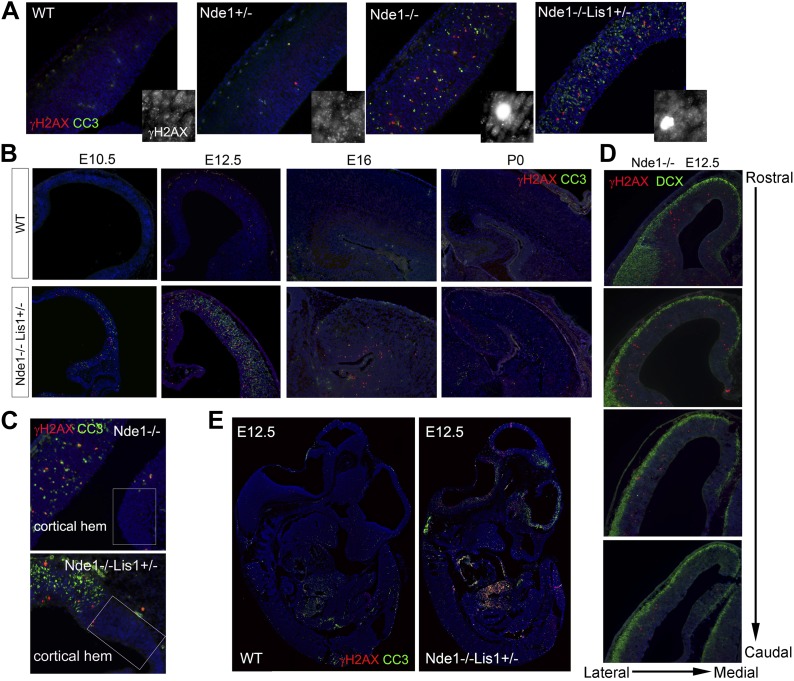
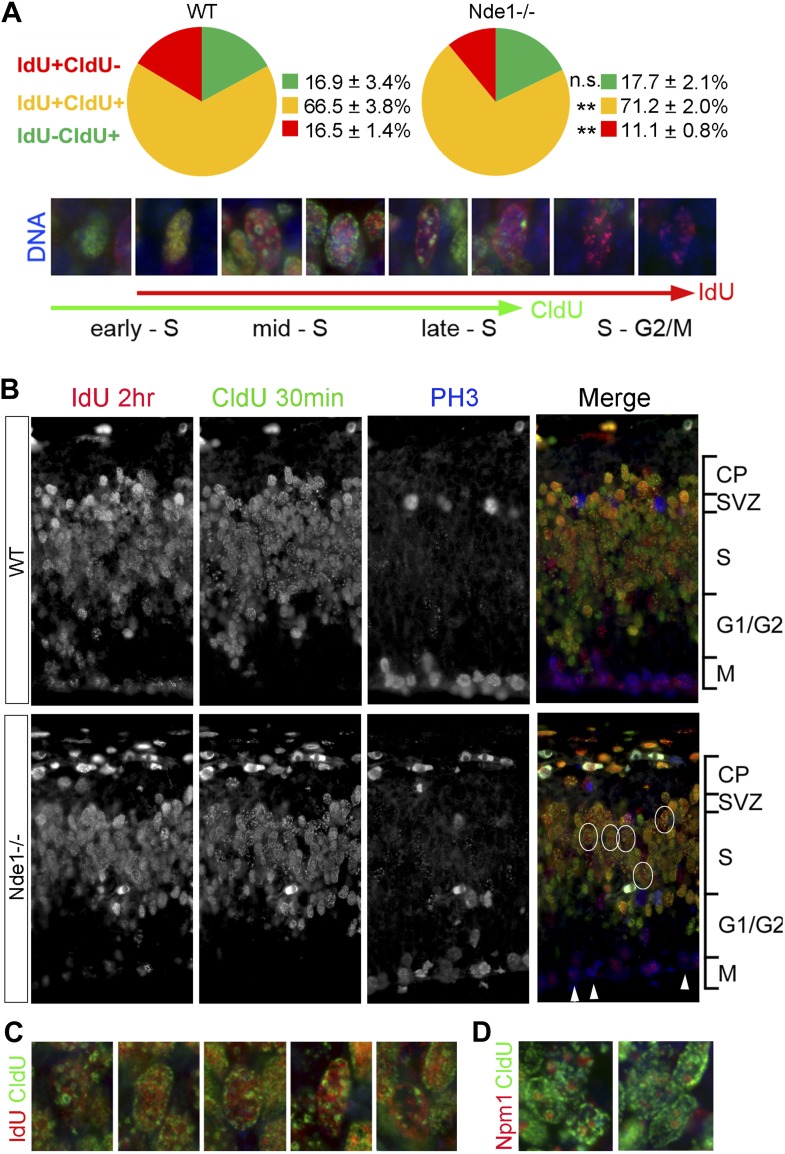
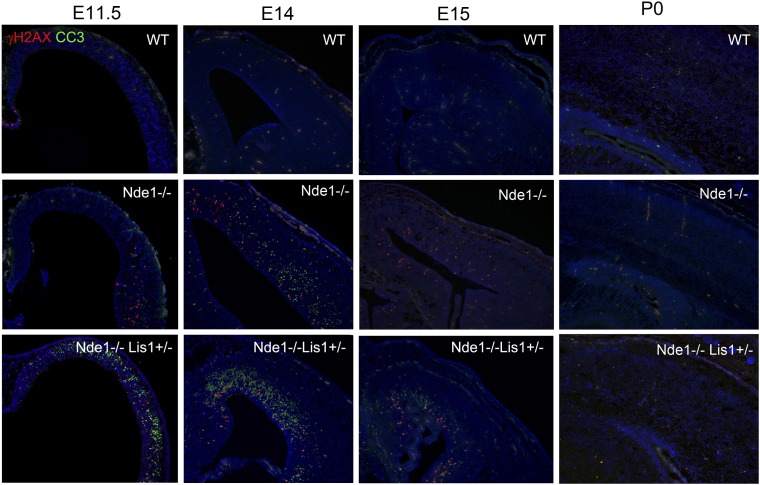
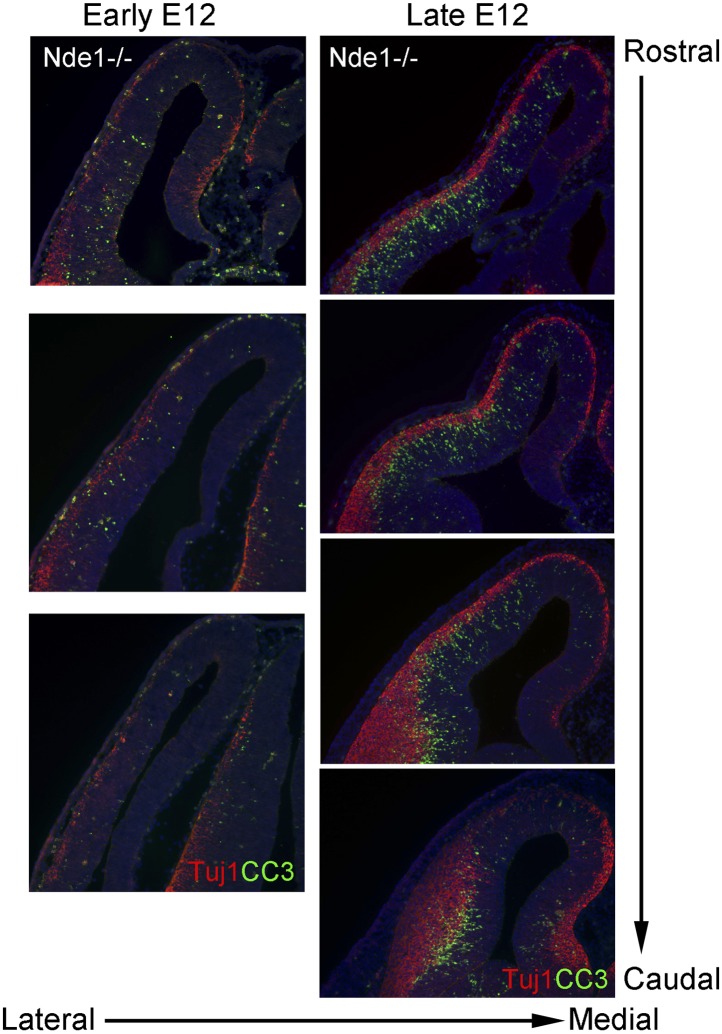
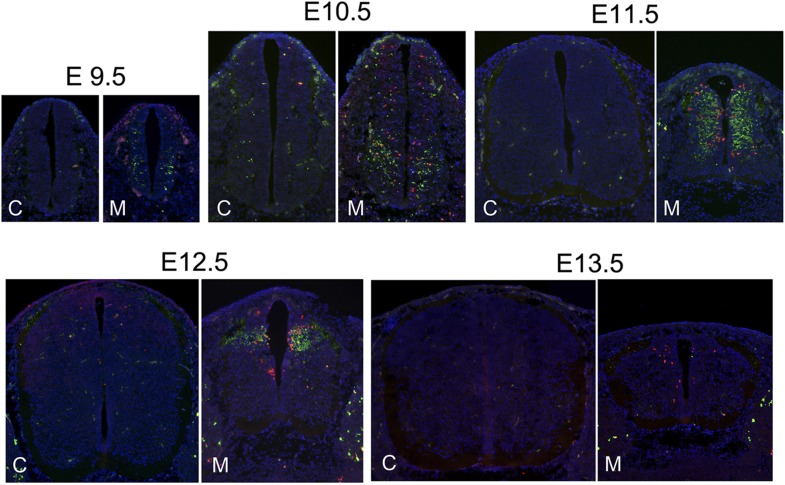
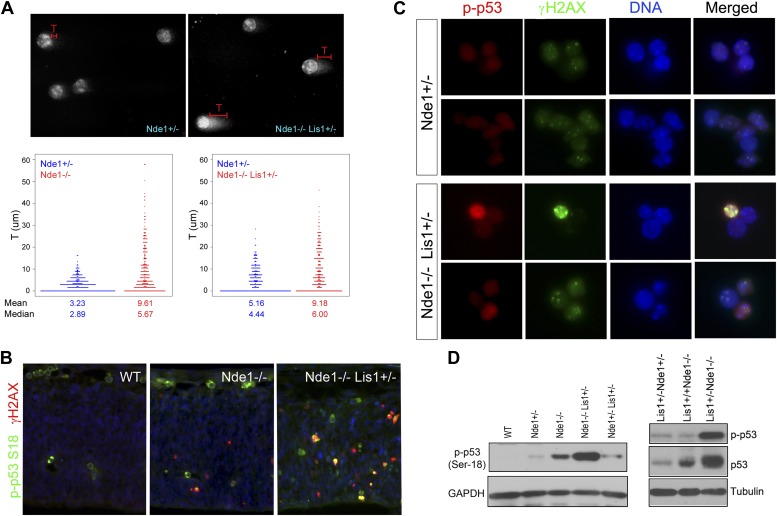
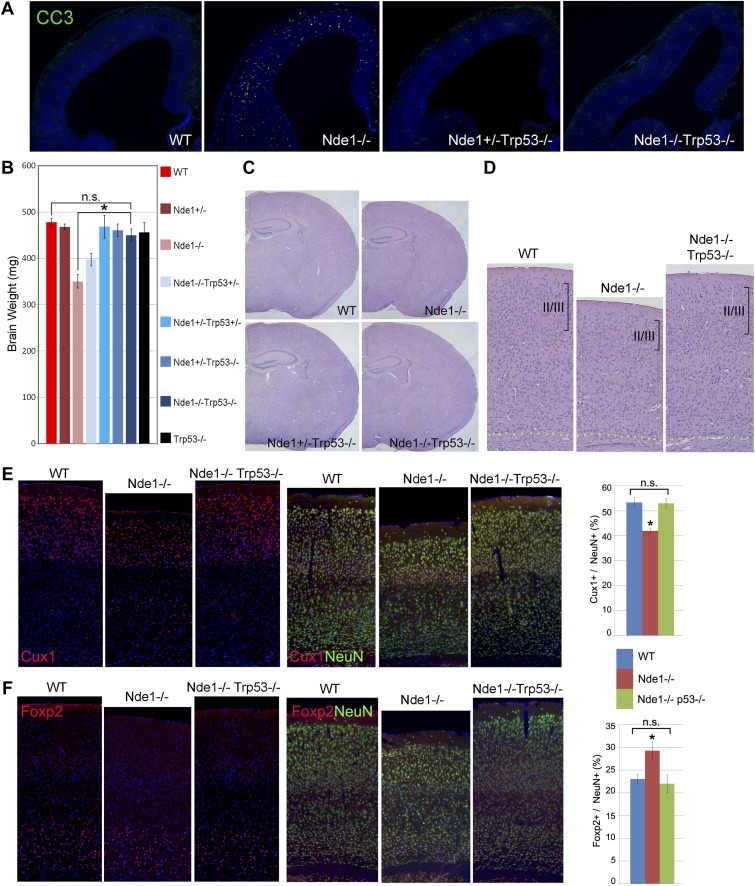
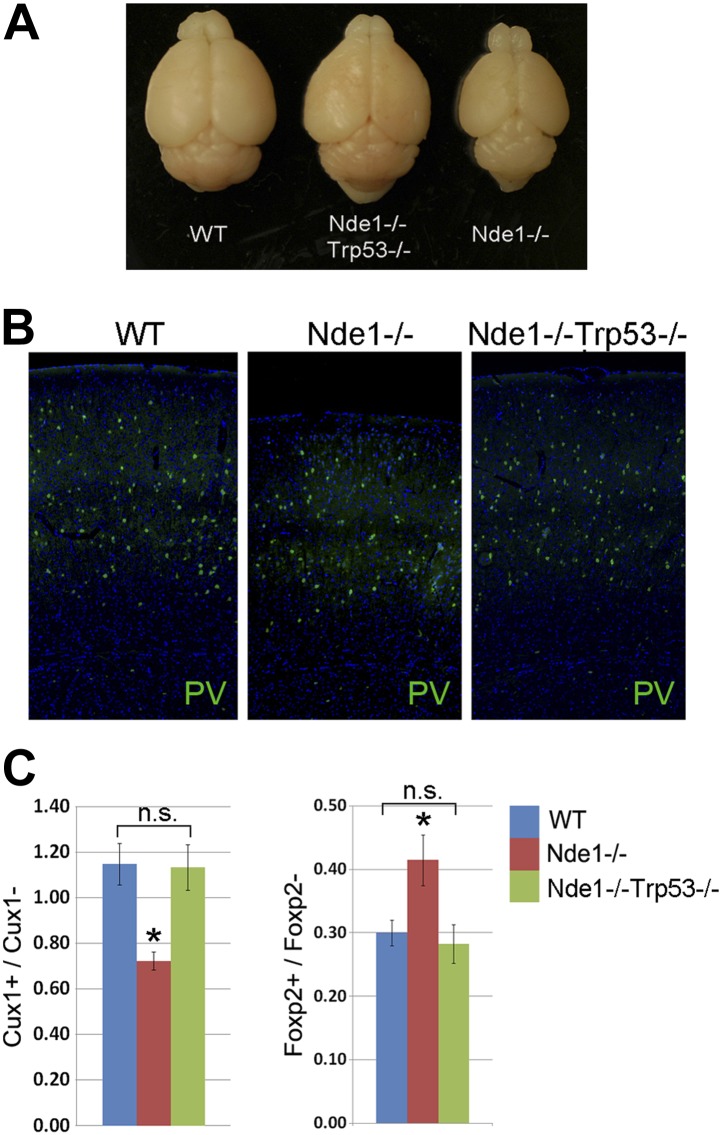
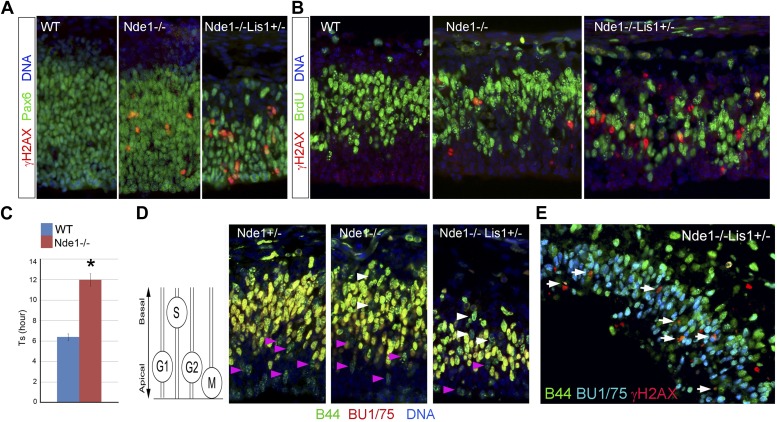
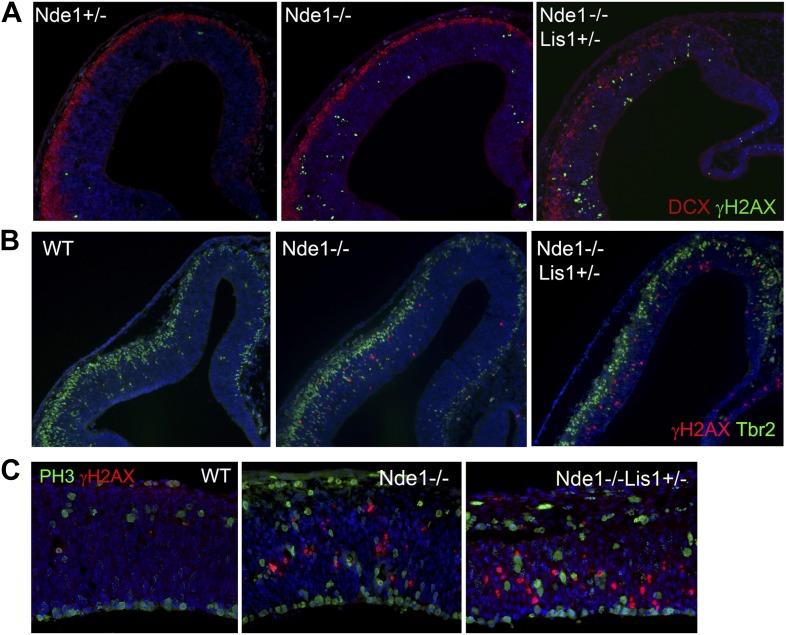
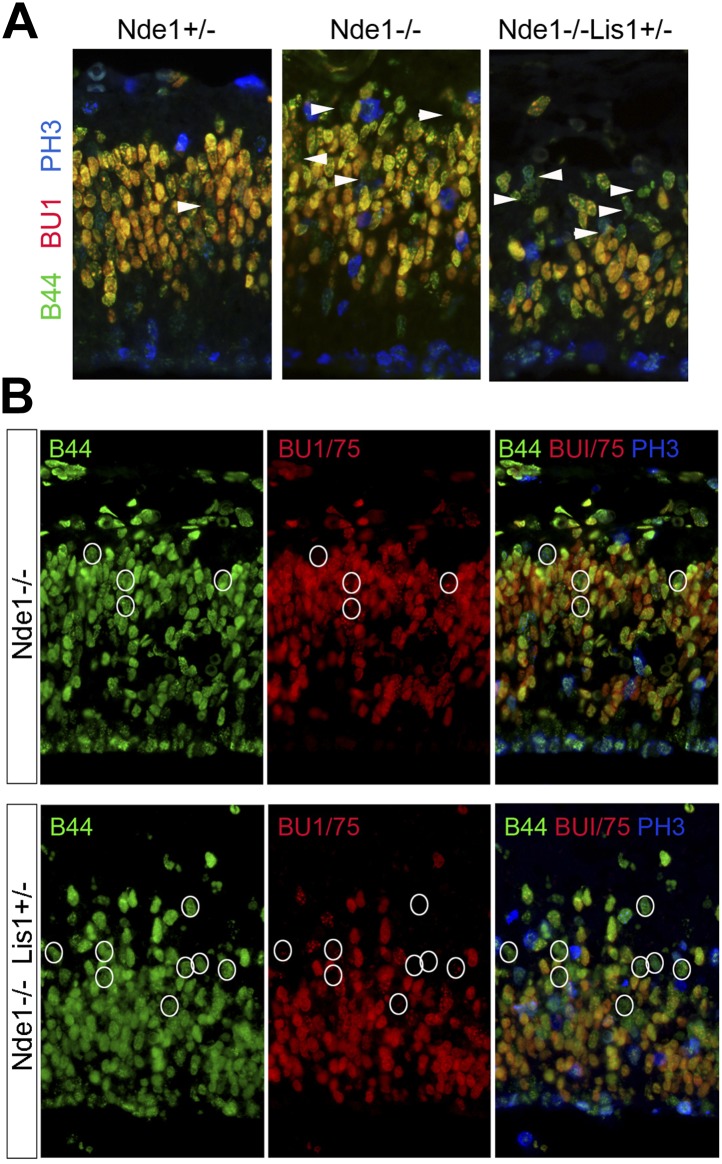
Successfully completing the S phase of each cell cycle ensures genome integrity. Impediment of DNA replication can lead to DNA damage and genomic disorders. In this study, we show a novel function for NDE1, whose mutations cause brain developmental disorders, in safeguarding the genome through S phase during early steps of neural progenitor fate restrictive differentiation. Nde1 mutant neural progenitors showed catastrophic DNA double strand breaks concurrent with the DNA replication. This evoked DNA damage responses, led to the activation of p53-dependent apoptosis, and resulted in the reduction of neurons in cortical layer II/III. We discovered a nuclear pool of Nde1, identified the interaction of Nde1 with cohesin and its associated chromatin remodeler, and showed that stalled DNA replication in Nde1 mutants specifically occurred in mid-late S phase at heterochromatin domains. These findings suggest that NDE1-mediated heterochromatin replication is indispensible for neuronal differentiation, and that the loss of NDE1 function may lead to genomic neurological disorders.
成功完成每个细胞周期的S期可确保基因组完整性。DNA复制受阻会导致DNA损伤和基因组紊乱。在本研究中,我们展示了NDE1的一种新功能,其突变会导致脑发育障碍,在神经祖细胞命运限制性分化的早期阶段通过S期来保护基因组。Nde1突变的神经祖细胞在DNA复制时出现灾难性的DNA双链断裂。这引发了DNA损伤反应,导致p53依赖性凋亡的激活,并导致皮质层II/III中神经元数量减少。我们发现了Nde1的一个核库,确定了Nde1与黏连蛋白及其相关染色质重塑因子的相互作用,并表明Nde1突变体中停滞的DNA复制特别发生在异染色质结构域的S期中后期。这些发现表明,NDE1介导的异染色质复制对于神经元分化是不可或缺的,并且NDE1功能的丧失可能导致基因组神经疾病。