Kamimura Kenya, Kanefuji Tsutomu, Yokoo Takeshi, Abe Hiroyuki, Suda Takeshi, Kobayashi Yuji, Zhang Guisheng, Aoyagi Yutaka, Liu Dexi
Division of Gastroenterology and Hepatology, Graduate School of Medical and Dental Sciences, Niigata University, Niigata, Japan.
Department of Pharmaceutical and Biomedical Sciences, College of Pharmacy, University of Georgia, Athens, Georgia, United States of America.
PLoS One. 2014 Sep 24;9(9):e107203. doi: 10.1371/journal.pone.0107203. eCollection 2014.
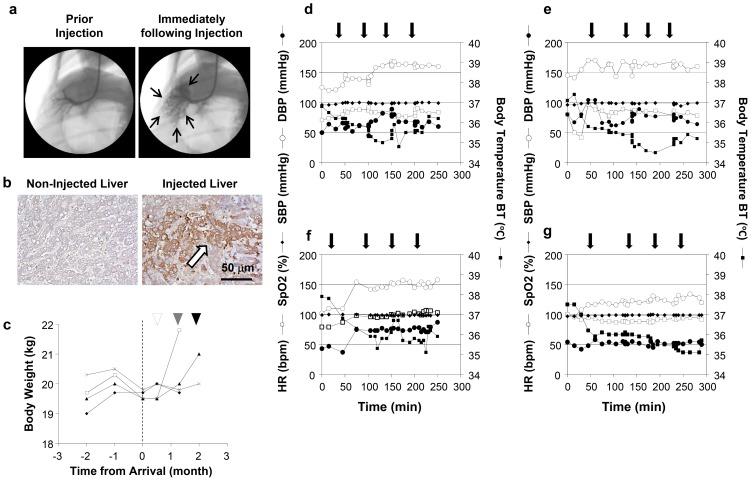
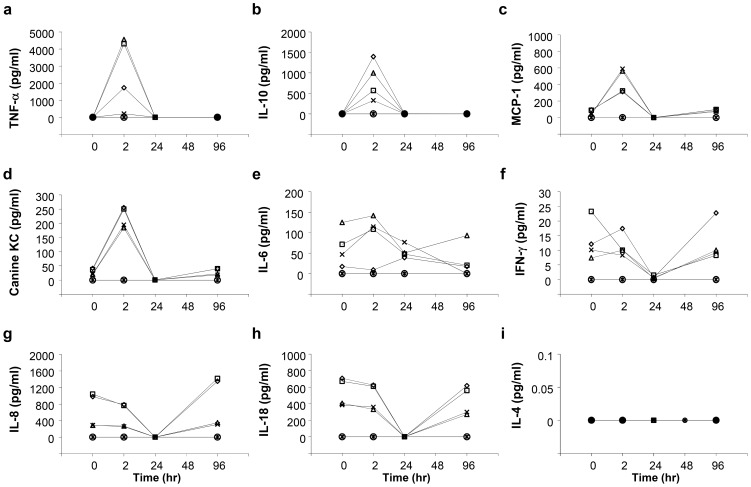
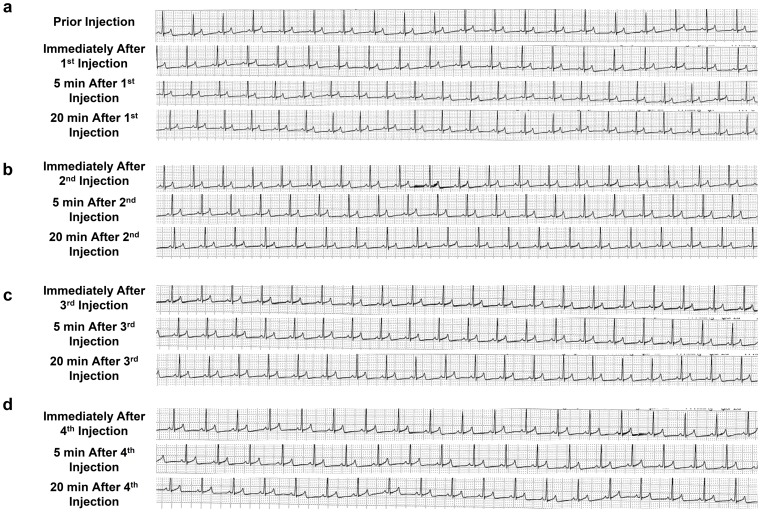
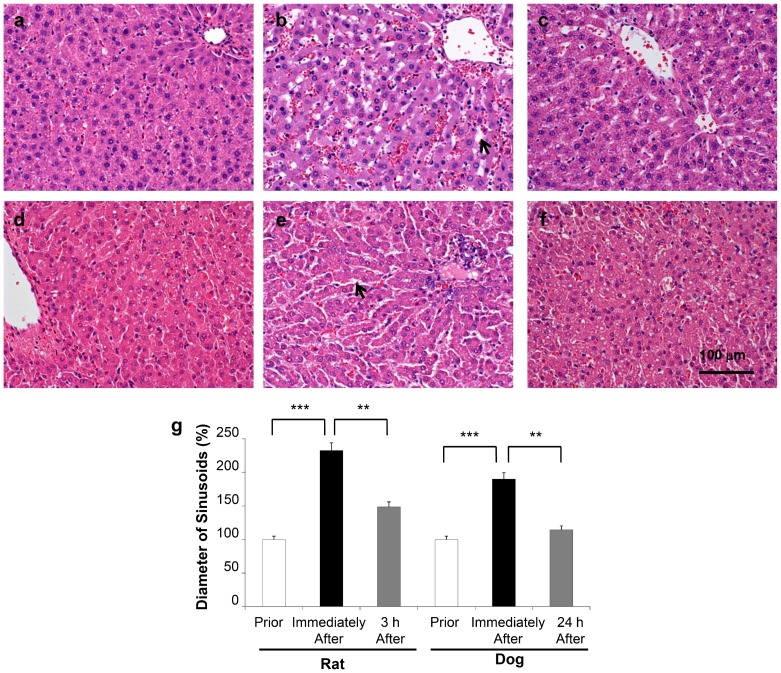
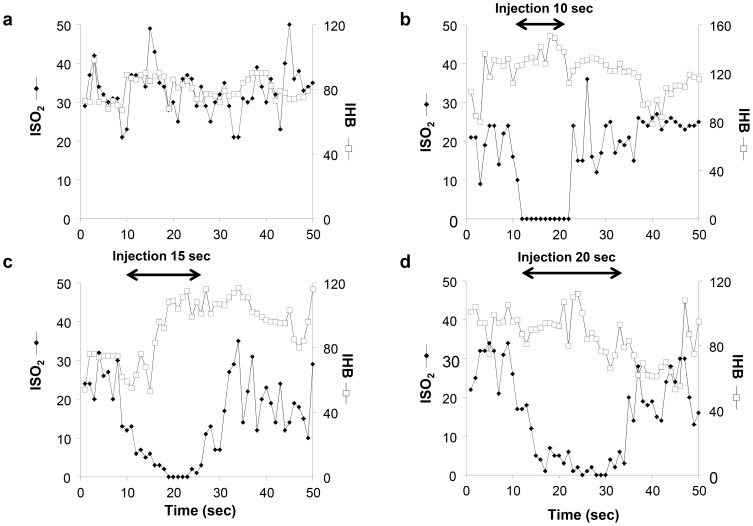
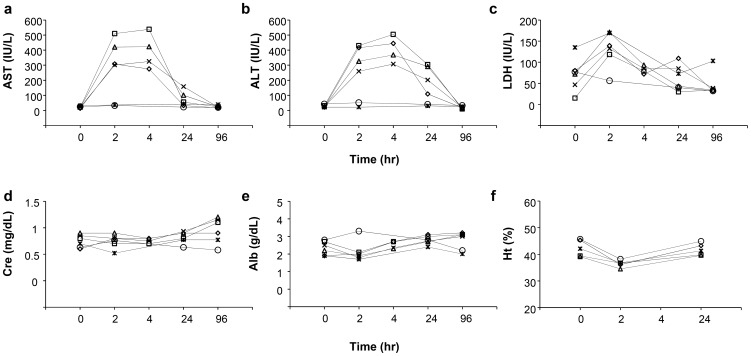
Evidence in support of safety of a gene delivery procedure is essential toward gene therapy. Previous studies using the hydrodynamics-based procedure primarily focus on gene delivery efficiency or gene function analysis in mice. The current study focuses on an assessment of the safety of computer-controlled and liver-targeted hydrodynamic gene delivery in dogs as the first step toward hydrodynamic gene therapy in clinic. We demonstrate that the impacts of the hydrodynamic procedure were limited in the injected region and the influences were transient. Histological examination and the hepatic microcirculation measurement using reflectance spectrophotometry reveal that the liver-specific impact of the procedure involves a transient expansion of the liver sinusoids. No systemic damage or toxicity was observed. Physiological parameters, including electrocardiogram, heart rate, blood pressure, oxygen saturation, and body temperature, remained in normal ranges during and after hydrodynamic injection. Body weight was also examined to assess the long-term effects of the procedure in animals who underwent 3 hydrodynamic injections in 6 weeks with 2-week time interval in between. Serum biochemistry analysis showed a transient increase in liver enzymes and a few cytokines upon injection. These results demonstrate that image-guided, liver-specific hydrodynamic gene delivery is safe.
支持基因递送程序安全性的证据对于基因治疗至关重要。先前使用基于流体动力学的程序的研究主要集中在小鼠的基因递送效率或基因功能分析上。当前的研究重点是评估计算机控制的肝脏靶向流体动力学基因递送在犬类中的安全性,这是迈向临床流体动力学基因治疗的第一步。我们证明,流体动力学程序的影响在注射区域是有限的,并且影响是短暂的。组织学检查和使用反射分光光度法进行的肝微循环测量表明,该程序对肝脏的特异性影响涉及肝血窦的短暂扩张。未观察到全身损伤或毒性。在流体动力学注射期间和之后,包括心电图、心率、血压、血氧饱和度和体温在内的生理参数保持在正常范围内。还检查了体重,以评估在6周内间隔2周进行3次流体动力学注射的动物中该程序的长期影响。血清生化分析显示注射后肝酶和一些细胞因子短暂升高。这些结果表明,图像引导的肝脏特异性流体动力学基因递送是安全的。