Ghosh Siddhartha S, Bie Jinghua, Wang Jing, Ghosh Shobha
Department of Internal Medicine, Virginia Commonwealth University Medical Center, Richmond, Virginia, United States of America.
PLoS One. 2014 Sep 24;9(9):e108577. doi: 10.1371/journal.pone.0108577. eCollection 2014.
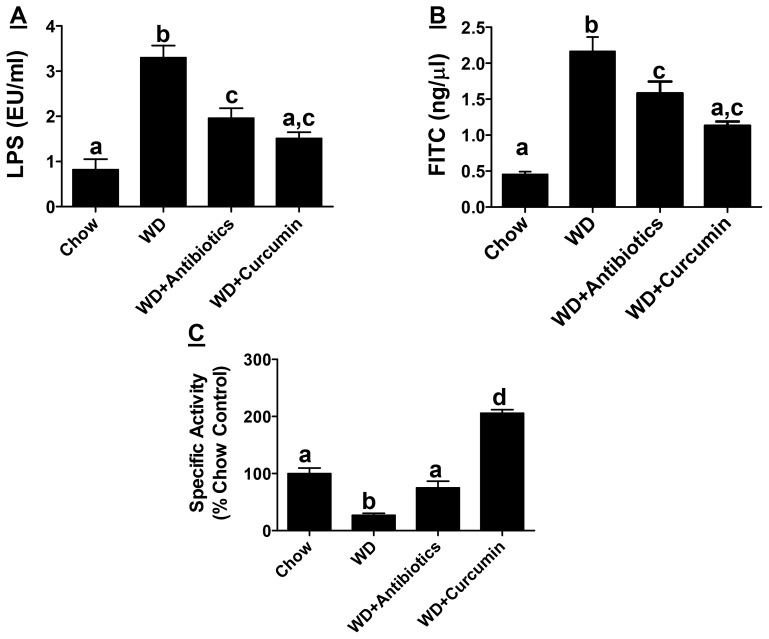
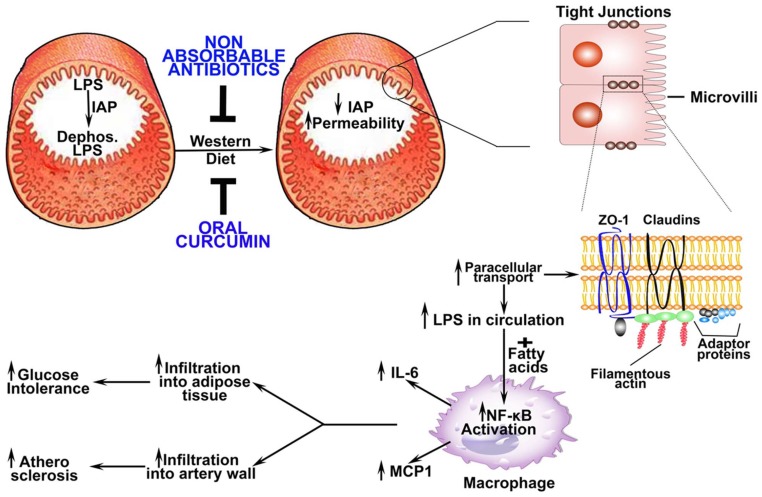
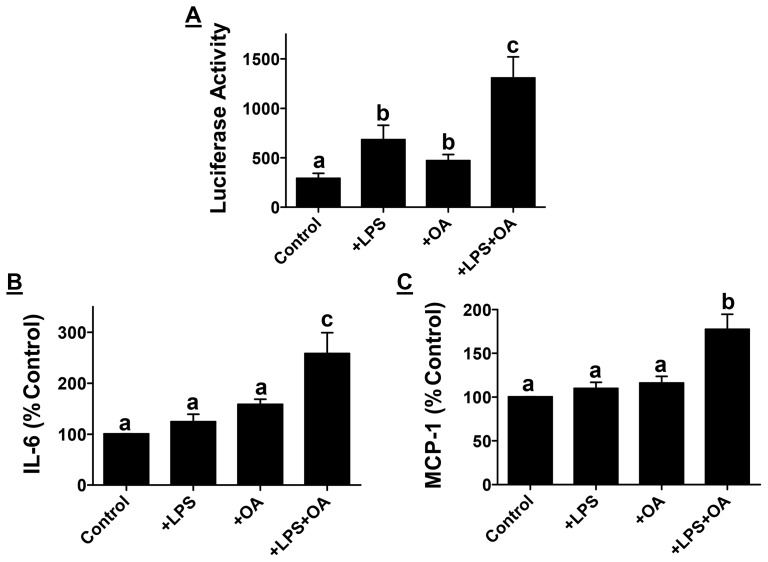
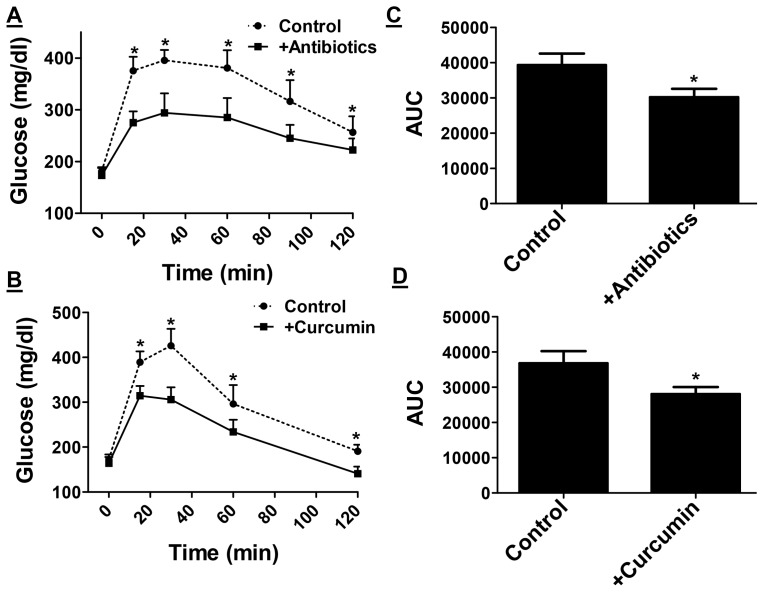
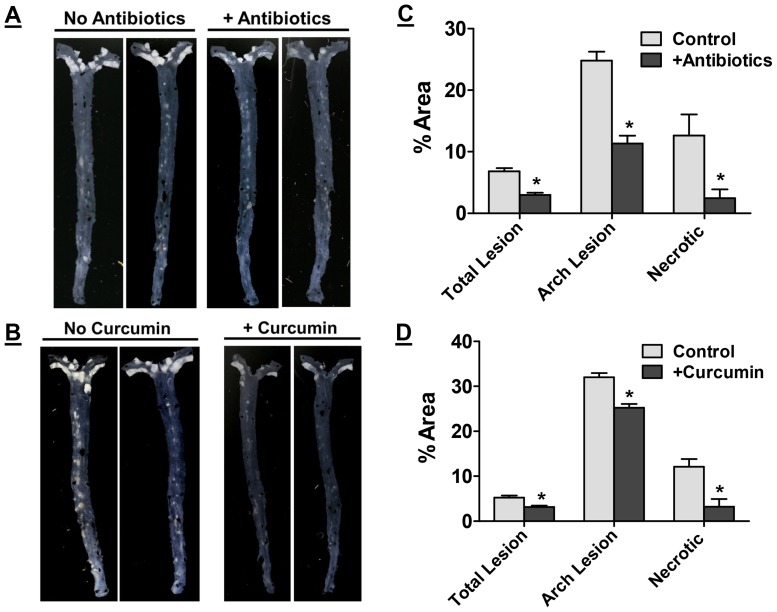
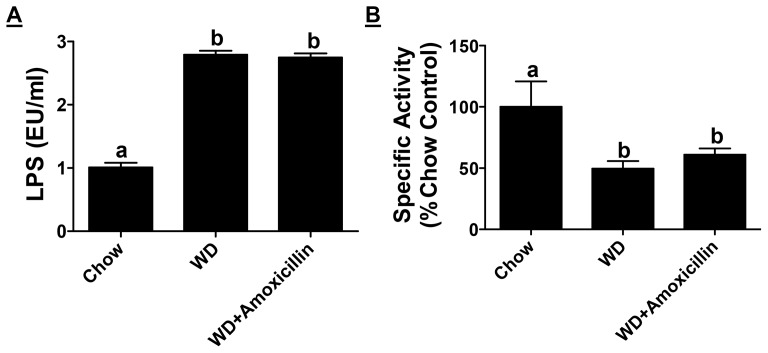
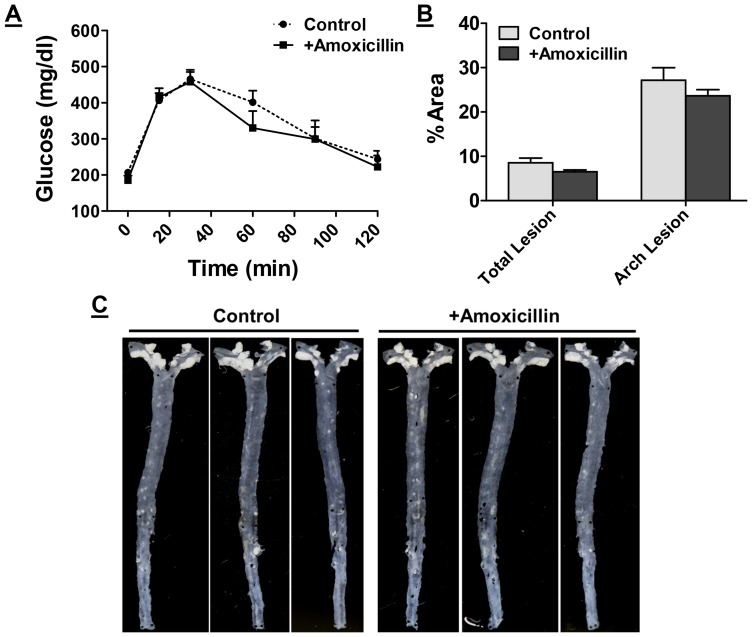
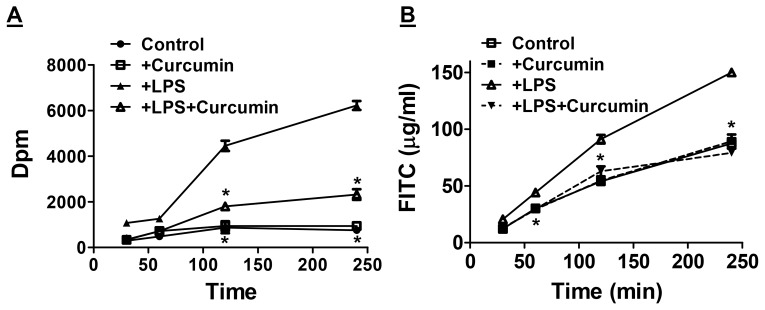
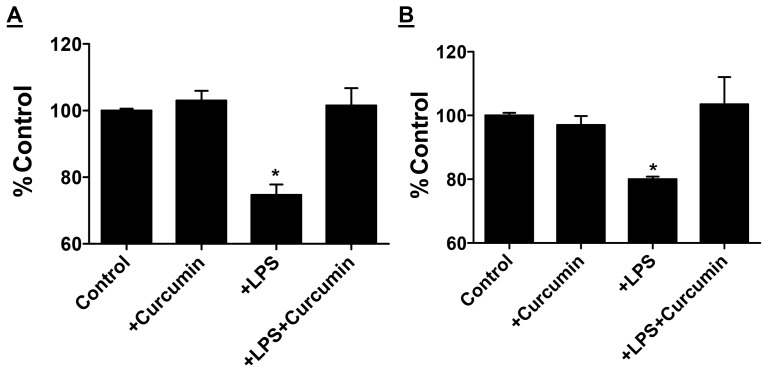
Association between circulating lipopolysaccharide (LPS) and metabolic diseases (such as Type 2 Diabetes and atherosclerosis) has shifted the focus from Western diet-induced changes in gut microbiota per se to release of gut bacteria-derived products into circulation as the possible mechanism for the chronic inflammatory state underlying the development of these diseases. Under physiological conditions, an intact intestinal barrier prevents this release of LPS underscoring the importance of examining and modulating the direct effects of Western diet on intestinal barrier function. In the present study we evaluated two strategies, namely selective gut decontamination and supplementation with oral curcumin, to modulate Western-diet (WD) induced changes in intestinal barrier function and subsequent development of glucose intolerance and atherosclerosis. LDLR-/- mice were fed WD for 16 weeks and either received non-absorbable antibiotics (Neomycin and polymyxin) in drinking water for selective gut decontamination or gavaged daily with curcumin. WD significantly increased intestinal permeability as assessed by in vivo translocation of FITC-dextran and plasma LPS levels. Selective gut decontamination and supplementation with curcumin significantly attenuated the WD-induced increase in plasma LPS levels (3.32 vs 1.90 or 1.51 EU/ml, respectively) and improved intestinal barrier function at multiple levels (restoring intestinal alkaline phosphatase activity and expression of tight junction proteins, ZO-1 and Claudin-1). Consequently, both these interventions significantly reduced WD-induced glucose intolerance and atherosclerosis in LDLR-/- mice. Activation of macrophages by low levels of LPS (50 ng/ml) and its exacerbation by fatty acids is likely the mechanism by which release of trace amounts of LPS into circulation due to disruption of intestinal barrier function induces the development of these diseases. These studies not only establish the important role of intestinal barrier function, but also identify oral supplementation with curcumin as a potential therapeutic strategy to improve intestinal barrier function and prevent the development of metabolic diseases.
循环中的脂多糖(LPS)与代谢性疾病(如2型糖尿病和动脉粥样硬化)之间的关联,已将研究重点从西方饮食引起的肠道微生物群本身变化,转移到肠道细菌衍生产物释放到循环系统,这可能是这些疾病发展背后慢性炎症状态的机制。在生理条件下,完整的肠道屏障可防止LPS的这种释放,凸显了研究和调节西方饮食对肠道屏障功能直接影响的重要性。在本研究中,我们评估了两种策略,即选择性肠道去污和口服姜黄素补充剂,以调节西方饮食(WD)诱导的肠道屏障功能变化以及随后发生的葡萄糖不耐受和动脉粥样硬化。给LDLR-/-小鼠喂食WD 16周,要么在饮用水中给予不可吸收的抗生素(新霉素和多粘菌素)进行选择性肠道去污,要么每天灌胃姜黄素。通过FITC-葡聚糖的体内转运和血浆LPS水平评估,WD显著增加了肠道通透性。选择性肠道去污和姜黄素补充剂显著减轻了WD诱导的血浆LPS水平升高(分别为3.32 vs 1.90或1.51 EU/ml),并在多个水平上改善了肠道屏障功能(恢复肠道碱性磷酸酶活性以及紧密连接蛋白ZO-1和Claudin-1的表达)。因此,这两种干预措施均显著降低了WD诱导的LDLR-/-小鼠的葡萄糖不耐受和动脉粥样硬化。低水平LPS(50 ng/ml)激活巨噬细胞及其被脂肪酸加剧,可能是由于肠道屏障功能破坏导致微量LPS释放到循环系统中从而诱发这些疾病发展的机制。这些研究不仅确立了肠道屏障功能的重要作用,还确定口服补充姜黄素是改善肠道屏障功能和预防代谢性疾病发展的一种潜在治疗策略。