Hüttner Silvia, Veit Christiane, Vavra Ulrike, Schoberer Jennifer, Dicker Martina, Maresch Daniel, Altmann Friedrich, Strasser Richard
*Department of Applied Genetics and Cell Biology, University of Natural Resources and Life Sciences, Muthgasse 18, A-1190 Vienna, Austria.
†Department of Chemistry, University of Natural Resources and Life Sciences, Muthgasse 18, A-1190 Vienna, Austria.
Biochem J. 2014 Dec 15;464(3):401-11. doi: 10.1042/BJ20141057.
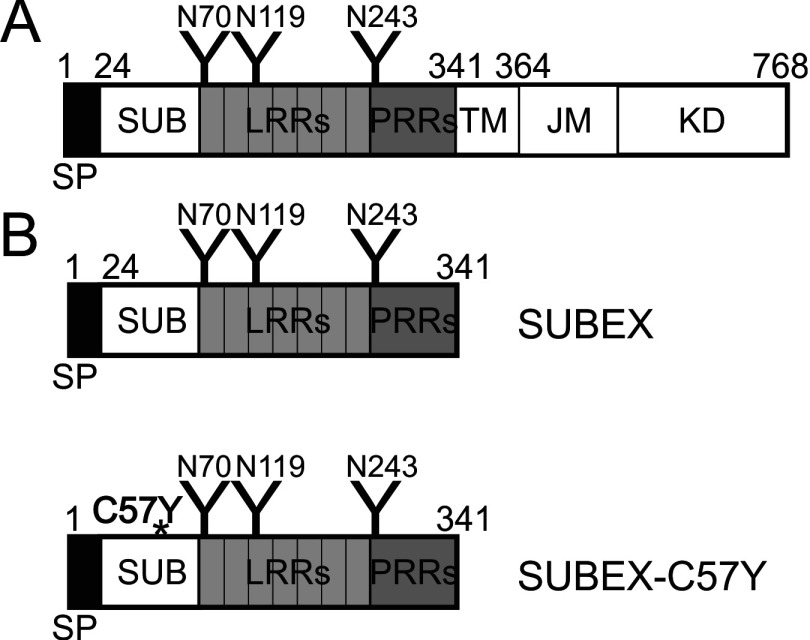
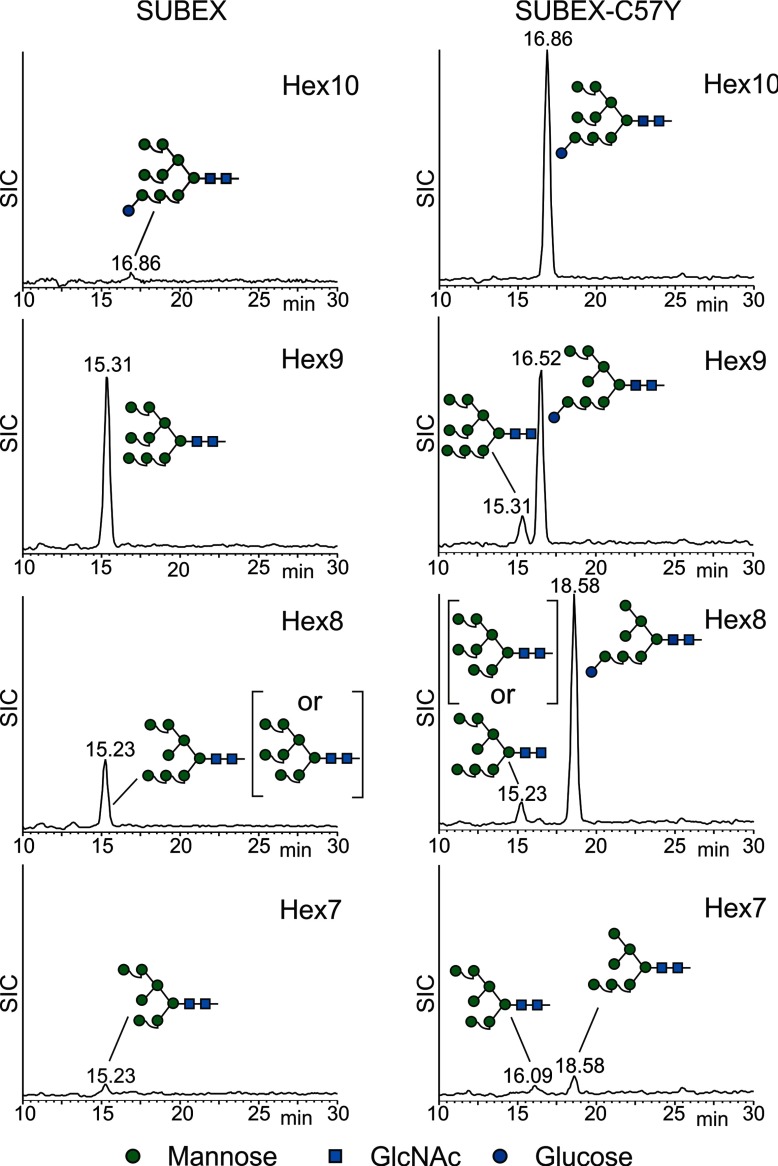
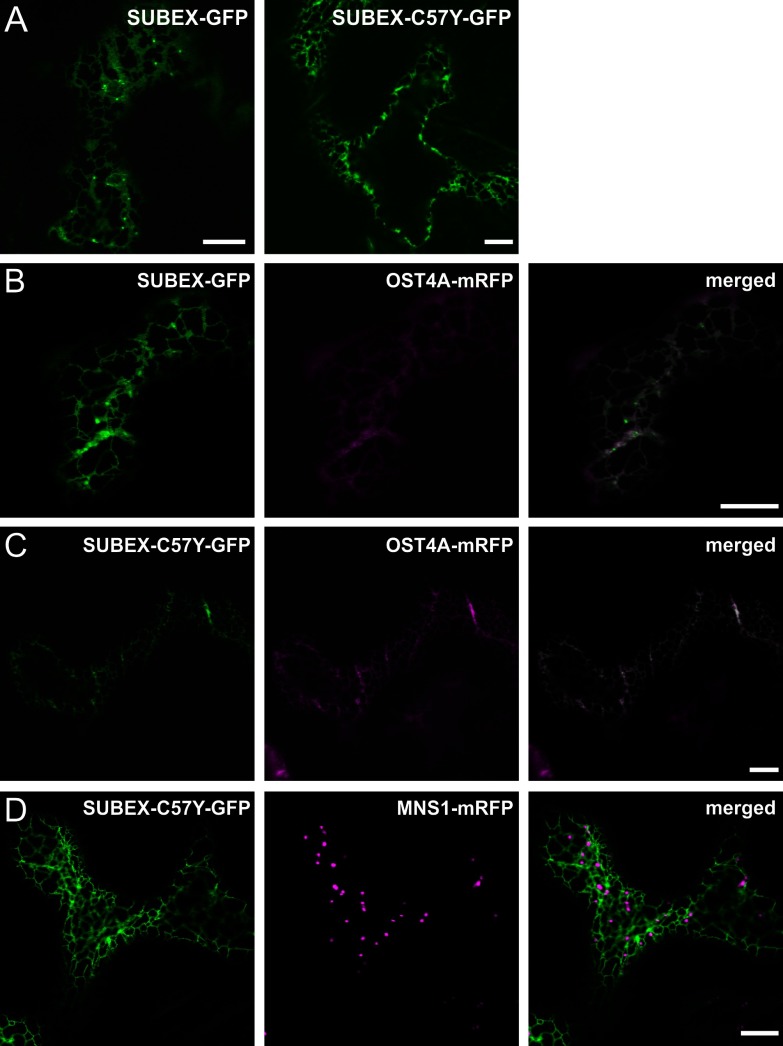
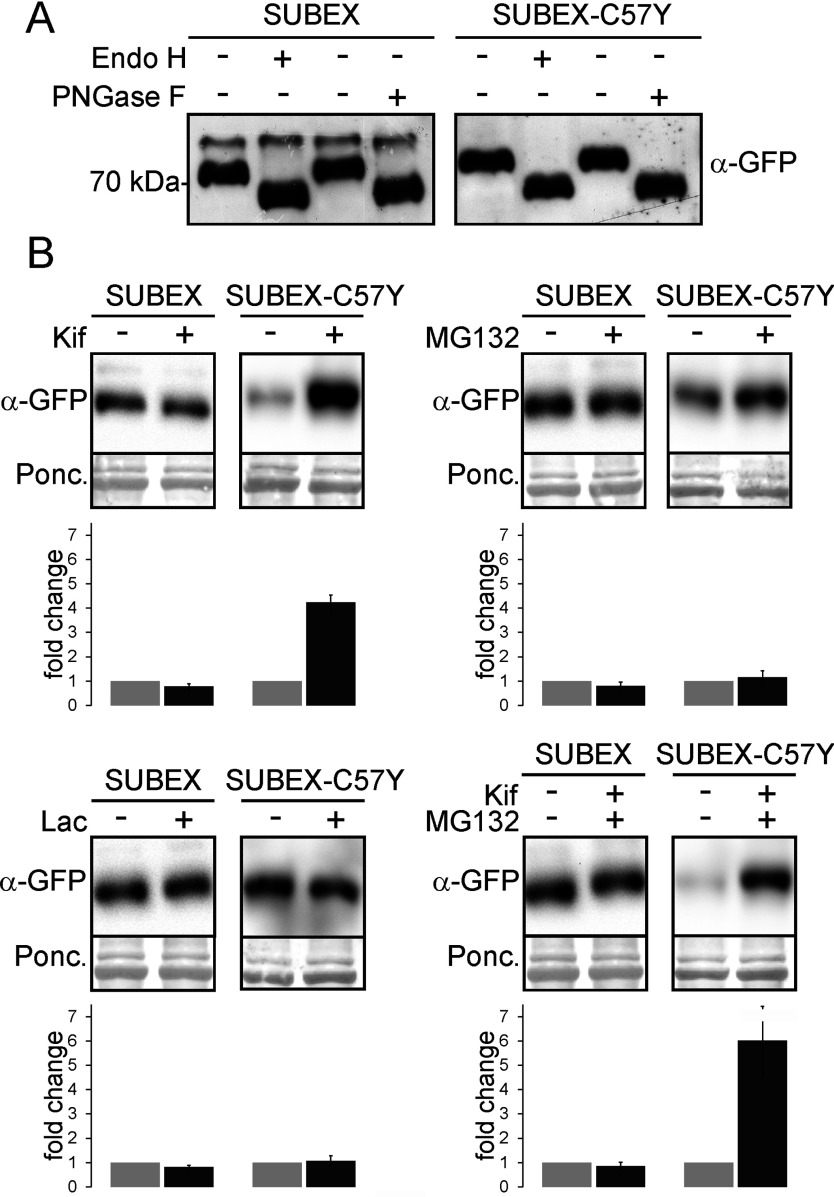
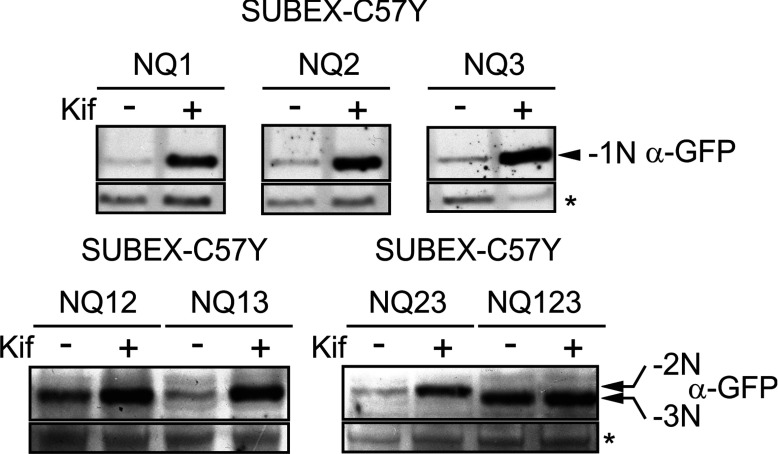
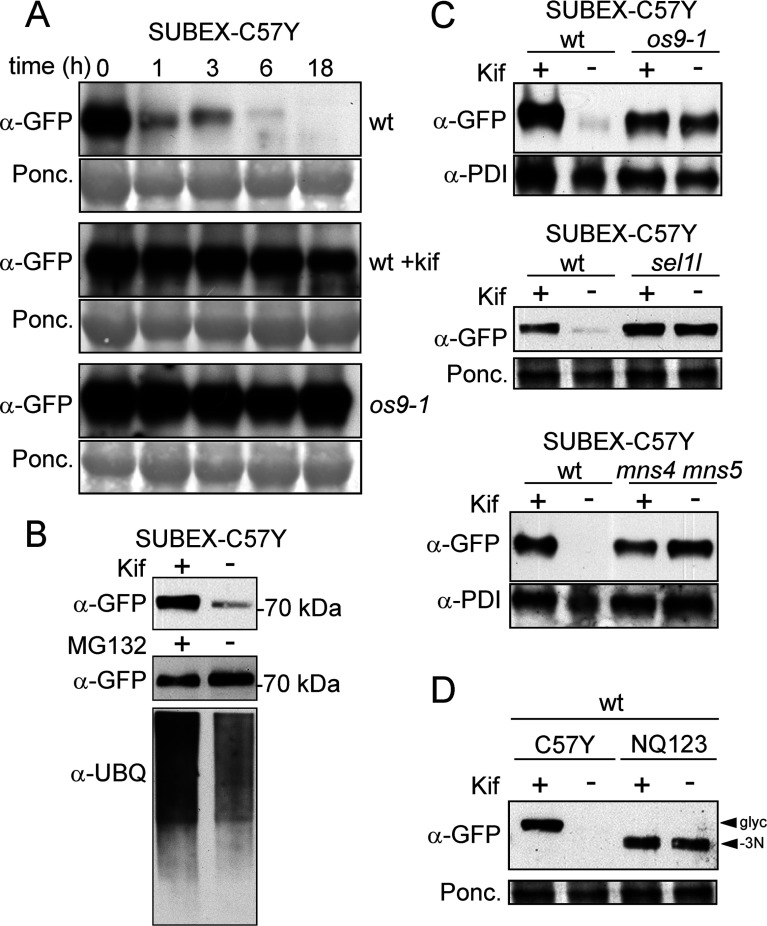
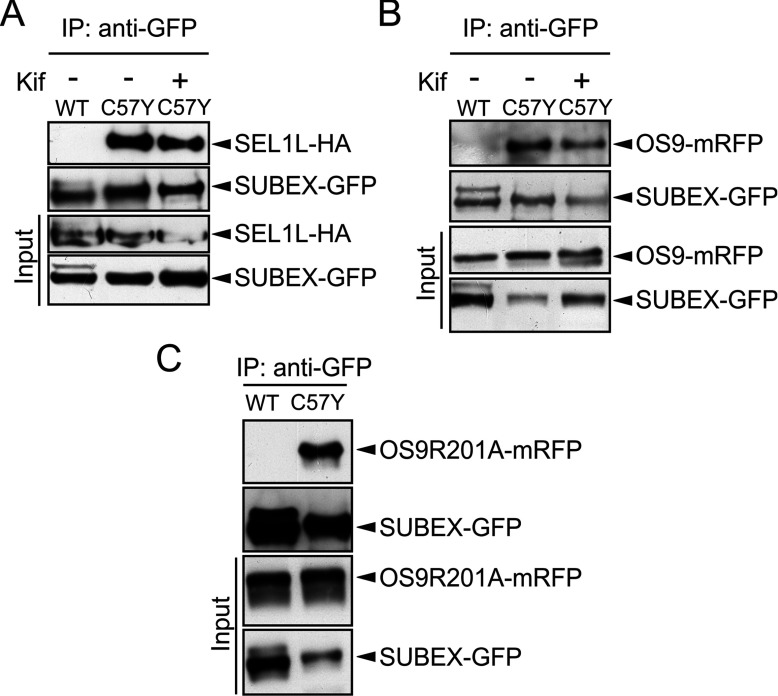
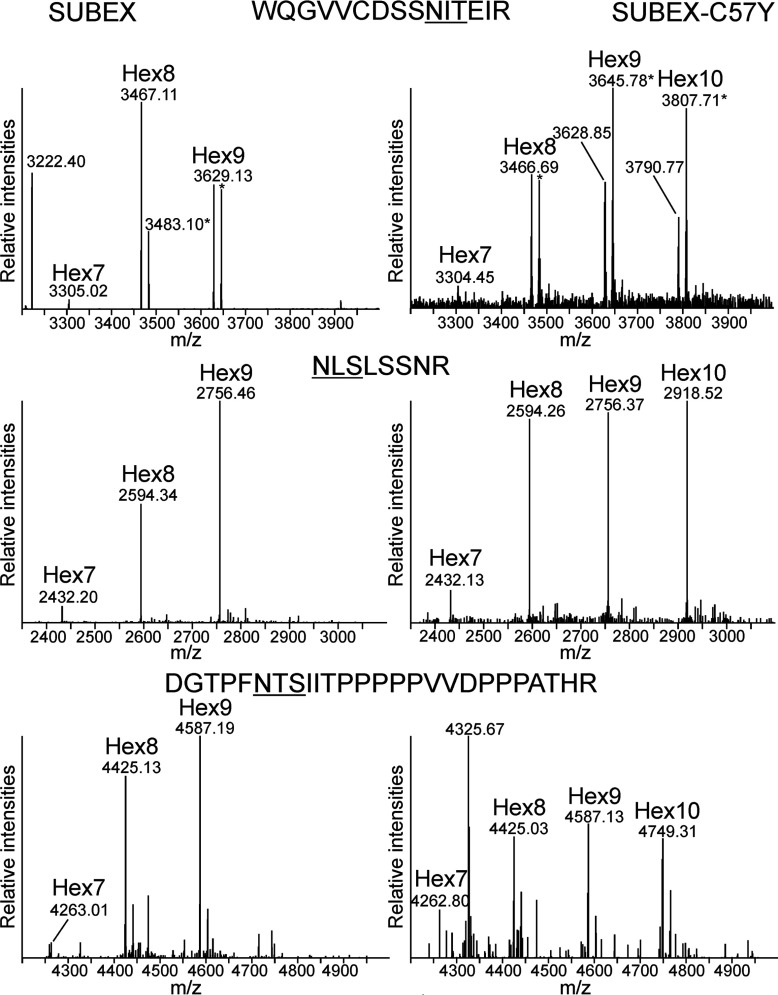
N-glycosylation of proteins plays an important role in the determination of the fate of newly synthesized glycoproteins in the endoplasmic reticulum (ER). Specific oligosaccharide structures recruit molecular chaperones that promote folding or mannose-binding lectins that assist in the clearance of improperly-folded glycoproteins by delivery to ER-associated degradation (ERAD). In plants, the mechanisms and factors that recognize non-native proteins and sort them to ERAD are poorly understood. In the present study, we provide evidence that a misfolded variant of the STRUBBELIG (SUB) extracellular domain (SUBEX-C57Y) is degraded in a glycan-dependent manner in plants. SUBEX-C57Y is an ER-retained glycoprotein with three N-glycans that is stabilized in the presence of kifunensine, a potent inhibitor of α-mannosidases. Stable expression in Arabidopsis thaliana knockout mutants revealed that SUBEX-C57Y degradation is dependent on the ER lectin OS9 and its associated ERAD factor SEL1L. SUBEX-C57Y was also stabilized in plants lacking the α-mannosidases MNS4 and MNS5 that generate a terminal α1,6-linked mannose on the C-branch of N-glycans. Notably, the glycan signal for degradation is not constrained to a specific position within SUBEX-C57Y. Structural analysis revealed that SUBEX-C57Y harbours considerable amounts of Glc1Man7GlcNAc2 N-glycans suggesting that the ER-quality control processes involving calnexin/calreticulin (CNX/CRT) and ERAD are tightly interconnected to promote protein folding or disposal by termination of futile folding attempts.
蛋白质的N-糖基化在决定内质网(ER)中新合成糖蛋白的命运方面起着重要作用。特定的寡糖结构会招募促进折叠的分子伴侣或甘露糖结合凝集素,后者通过将错误折叠的糖蛋白递送至内质网相关降解(ERAD)来协助清除这些糖蛋白。在植物中,识别非天然蛋白质并将其分类至ERAD的机制和因素尚不清楚。在本研究中,我们提供证据表明,STRUBBELIG(SUB)细胞外结构域的错误折叠变体(SUBEX-C57Y)在植物中以聚糖依赖性方式被降解。SUBEX-C57Y是一种保留在内质网中的糖蛋白,带有三个N-聚糖,在强效α-甘露糖苷酶抑制剂 kifunensine存在下会稳定下来。在拟南芥敲除突变体中的稳定表达表明,SUBEX-C57Y的降解依赖于内质网凝集素OS9及其相关的ERAD因子SEL1L。在缺乏在N-聚糖C分支上产生末端α1,6-连接甘露糖的α-甘露糖苷酶MNS4和MNS5的植物中,SUBEX-C57Y也会稳定下来。值得注意的是,降解的聚糖信号并不局限于SUBEX-C57Y内的特定位置。结构分析表明,SUBEX-C57Y含有大量的Glc1Man7GlcNAc2 N-聚糖,这表明涉及钙连蛋白/钙网蛋白(CNX/CRT)和ERAD的内质网质量控制过程紧密相连,以通过终止徒劳的折叠尝试来促进蛋白质折叠或处理。