Tenga Milagros J, Lazar Iulia M
Department of Biological Sciences, Virginia Polytechnic Institute and State University, 1981 Kraft Drive, Blacksburg, VA 24061, USA.
BMC Cancer. 2014 Sep 24;14:710. doi: 10.1186/1471-2407-14-710.
Cancer cells are characterized by a deregulated cell cycle that facilitates abnormal proliferation by allowing cells to by-pass tightly regulated molecular checkpoints such as the G1/S restriction point. To facilitate early diagnosis and the identification of new drug targets, current research efforts focus on studies that could lead to the development of protein panels that collectively can improve the effectiveness of our response to the detection of a life-threatening disease.
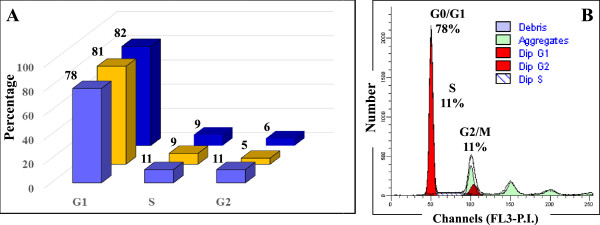
Estrogen-responsive MCF-7 cells were cultured and arrested by serum deprivation in the G1-stage of the cell cycle, and fractionated into nuclear and cytoplasmic fractions. The protein extracts were trypsinized and analyzed by liquid chromatography--mass spectrometry (MS), and the data were interpreted with the Thermo Electron Bioworks software. Biological characterization of the data, selection of cancer markers, and identification of protein interaction networks was accomplished with a combination of bioinformatics tools provided by GoMiner, DAVID and STRING.
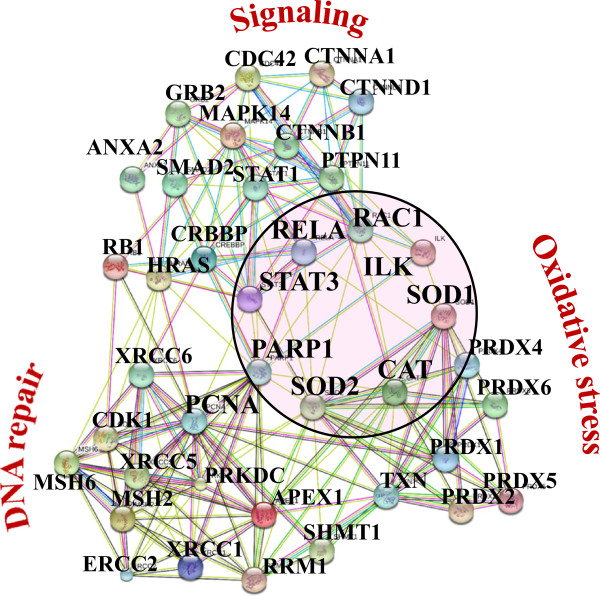
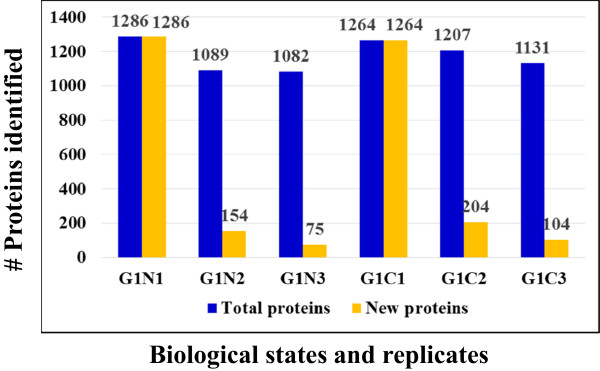
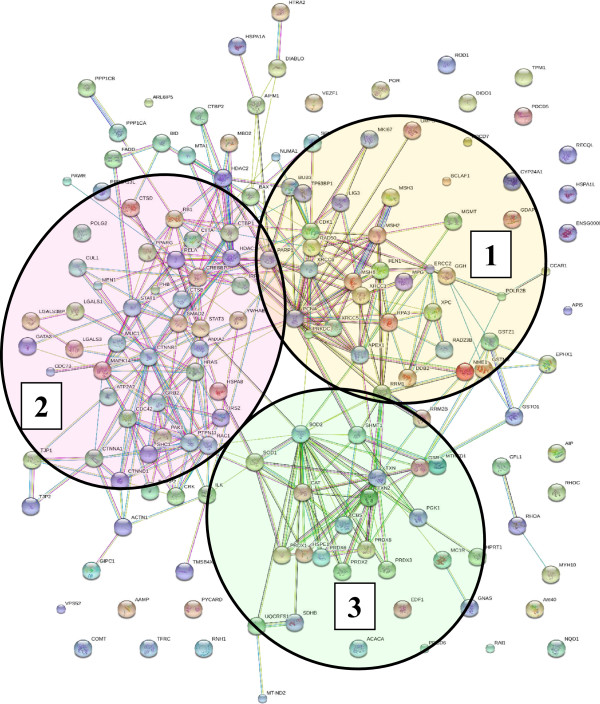
The objective of this work was to explore via MS proteomic profiling technologies and bioinformatics data mining whether randomly identified cancer markers can be associated with the G1-stage of the cell cycle, i.e., the stage in which cancer cells differ most from normal cells, and whether any functional networks can be identified between these markers and placed in the broader context of cell regulatory pathways. The study enabled the identification of over 2000 proteins and 153 cancer markers, and revealed for the first time that the G1-stage of the cell cycle is not only a rich source of cancer markers, but also a host to an intricate network of functional relationships within the majority of these markers. Three major clusters of interacting proteins emerged: (a) signaling, (b) DNA repair, and (c) oxidative phosphorylation.
The identification of cancer marker regulatory components that act not alone, but within networks, represents an invaluable resource for elucidating the moxlecular mechanisms that govern the uncontrolled proliferation of cancer cells, as well as for catalyzing the development of protein panels with biomarker and drug target potential, screening tests with improved sensitivity and specificity, and novel cancer therapies aimed at pursuing multiple drug targets.
癌细胞的特征在于细胞周期失调,通过使细胞绕过诸如G1/S限制点等严格调控的分子检查点来促进异常增殖。为了便于早期诊断和识别新的药物靶点,目前的研究工作集中在能够开发蛋白质组的研究上,这些蛋白质组共同可以提高我们对危及生命疾病检测的反应效果。
培养雌激素反应性MCF-7细胞,通过血清剥夺使其停滞在细胞周期的G1期,然后分离成细胞核和细胞质组分。蛋白质提取物经胰蛋白酶消化后通过液相色谱-质谱(MS)分析,数据用赛默飞世尔生物工程软件解释。利用GoMiner、DAVID和STRING提供的生物信息学工具组合完成数据的生物学特征分析、癌症标志物的选择以及蛋白质相互作用网络的识别。
这项工作的目的是通过MS蛋白质组分析技术和生物信息学数据挖掘,探索随机鉴定的癌症标志物是否能与细胞周期的G1期相关联,即癌细胞与正常细胞差异最大的阶段,以及这些标志物之间是否能识别出任何功能网络,并将其置于更广泛的细胞调节途径背景中。该研究鉴定出了2000多种蛋白质和153种癌症标志物,并首次揭示细胞周期的G1期不仅是癌症标志物的丰富来源,而且在这些标志物中的大多数内还存在一个复杂的功能关系网络。出现了三个主要的相互作用蛋白簇:(a)信号传导,(b)DNA修复,和(c)氧化磷酸化。
鉴定出并非单独起作用而是在网络中起作用的癌症标志物调节成分,对于阐明控制癌细胞不受控制增殖的分子机制,以及促进具有生物标志物和药物靶点潜力的蛋白质组的开发、提高敏感性和特异性的筛查试验以及旨在追求多个药物靶点的新型癌症治疗方法而言,是一种宝贵的资源。