Scott Colleen, Mitrovic Bojan, Eastwood Stephanie, Kinsel Gary
Department of Chemistry & Biochemistry, Southern Illinois University, Carbondale, IL 62901-4409, USA.
Polymer (Guildf). 2014 Aug 5;55(16):3551-3556. doi: 10.1016/j.polymer.2014.06.075.
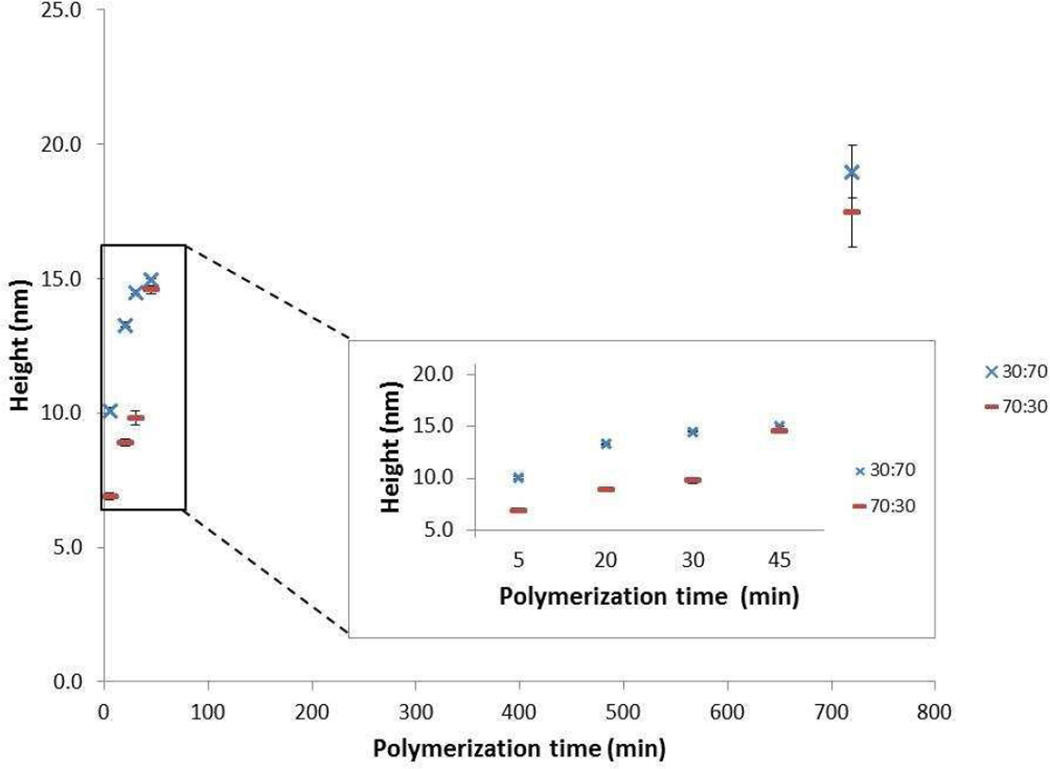
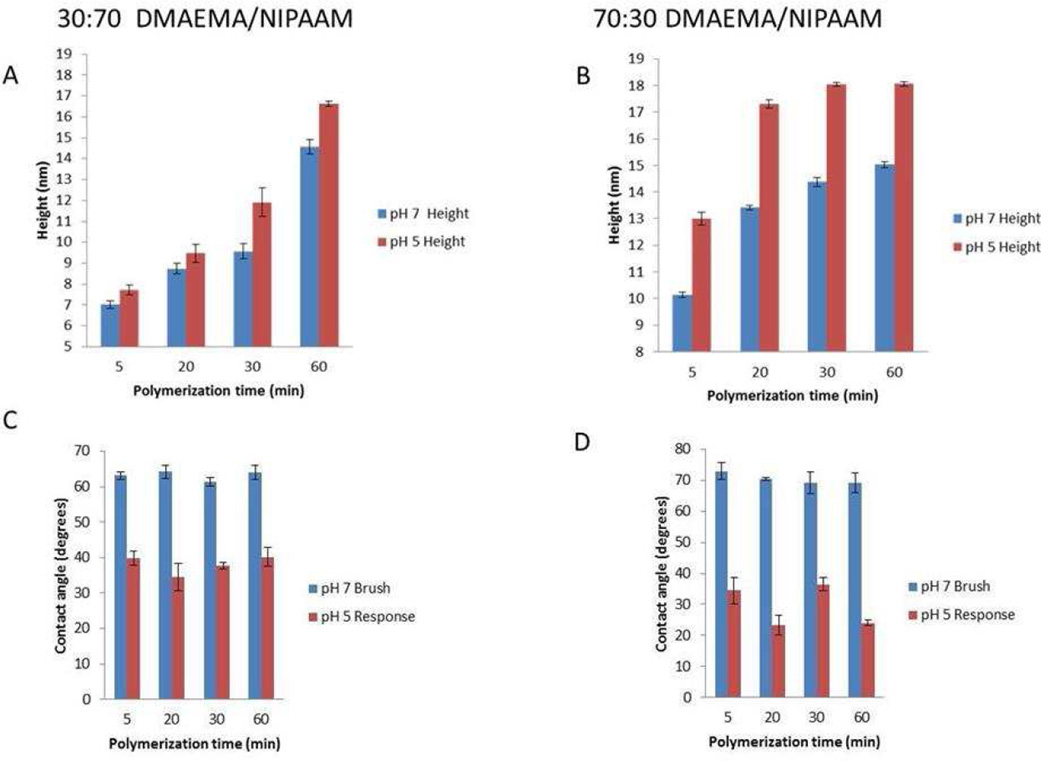
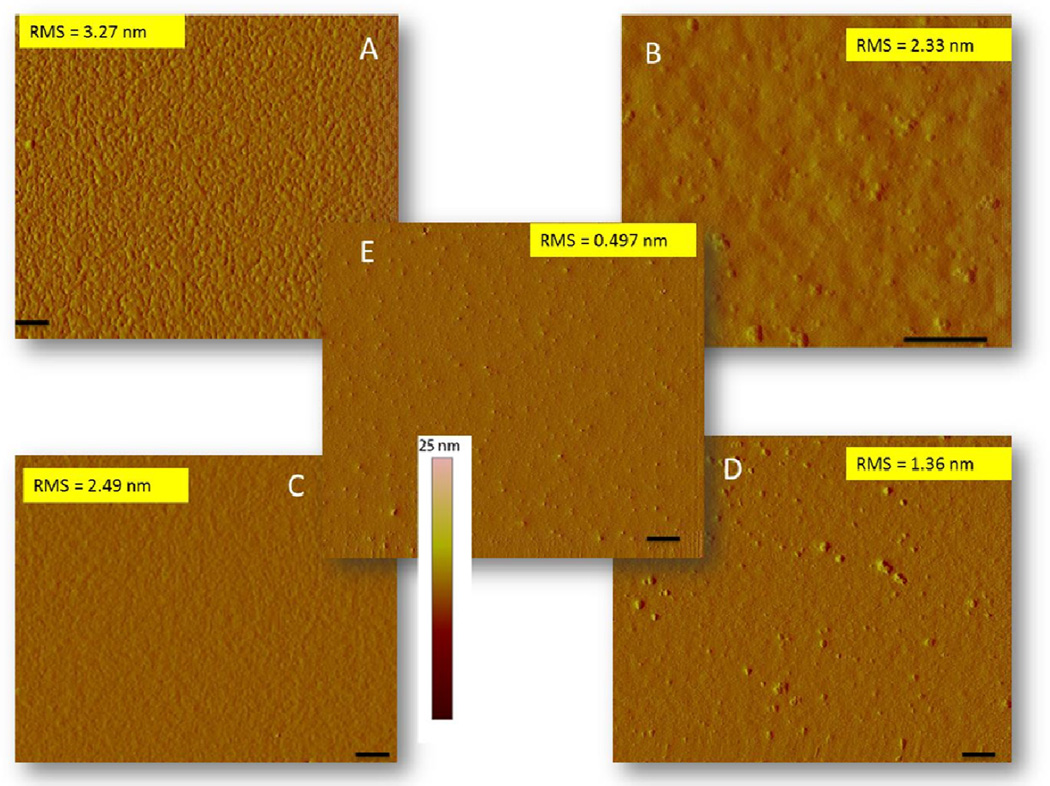
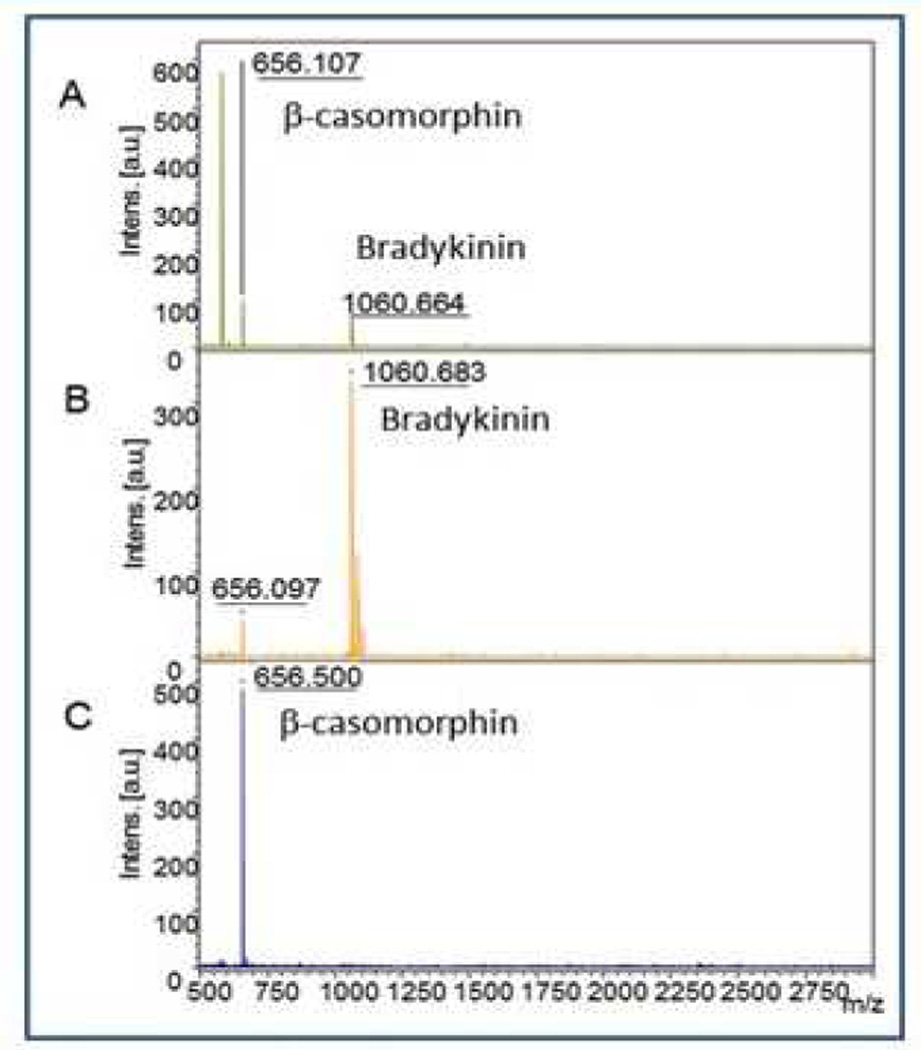
Random cationic copolymer brushes composed of 2-(dimethylamino)ethyl methacrylate (DMAEMA) and -isopropylacrylamide (NIPAAm) were synthesized using the atom transfer radical polymerization (ATRP) method. The effects of varying the monomer feed ratios (30:70 and 70:30 DMAEMA:NIPAAm) and polymerization times on the film height, morphology and stimuli response to pH of the brush were evaluated. While the polymerization time was found to have little influence on the properties of the brushes, the monomer feed ratios had a great impact. The 70 % DMAEMA polymer brush had similar height as the 30 % DMAEMA brush after 45 min; however, it had a greater response to pH and morphological change compared to the 30 % DMAEMA. The 70 % DMAEMA brush was used to demonstrate an efficient approach to alleviate the ion suppression effect in MALDI analysis of complex mixtures by effectively fractionating a binary mixture of peptides prior to MALDI-MS analysis.
采用原子转移自由基聚合(ATRP)法合成了由甲基丙烯酸2-(二甲氨基)乙酯(DMAEMA)和N-异丙基丙烯酰胺(NIPAAm)组成的无规阳离子共聚物刷。评估了改变单体进料比(30:70和70:30 DMAEMA:NIPAAm)和聚合时间对刷的膜高度、形态以及对pH值的刺激响应的影响。虽然发现聚合时间对刷的性能影响不大,但单体进料比对其有很大影响。70% DMAEMA聚合物刷在45分钟后与30% DMAEMA刷具有相似的高度;然而,与30% DMAEMA相比,它对pH值和形态变化有更大的响应。70% DMAEMA刷被用于展示一种有效的方法,即在MALDI-MS分析之前通过有效分离二元肽混合物来减轻复杂混合物MALDI分析中的离子抑制效应。