Messingham Kelly N, Holahan Heather M, Frydman Alexandra S, Fullenkamp Colleen, Srikantha Rupasree, Fairley Janet A
Department of Dermatology, University of Iowa, Iowa City, Iowa, United States of America.
Department of Dermatology, University of Iowa, Iowa City, Iowa, United States of America; Veterans Administration Medical Center, Iowa City, Iowa, United States of America.
PLoS One. 2014 Sep 25;9(9):e107725. doi: 10.1371/journal.pone.0107725. eCollection 2014.
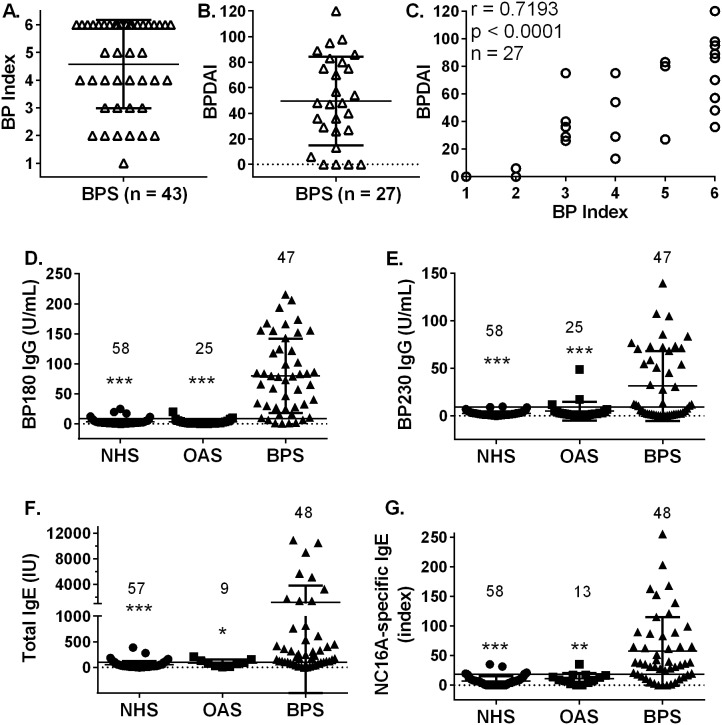
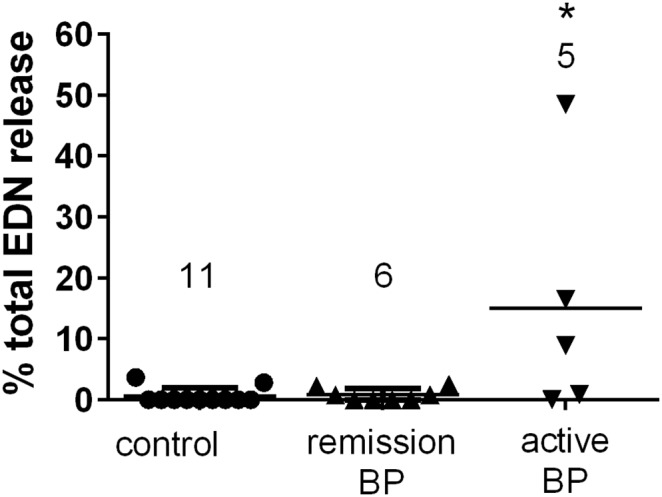
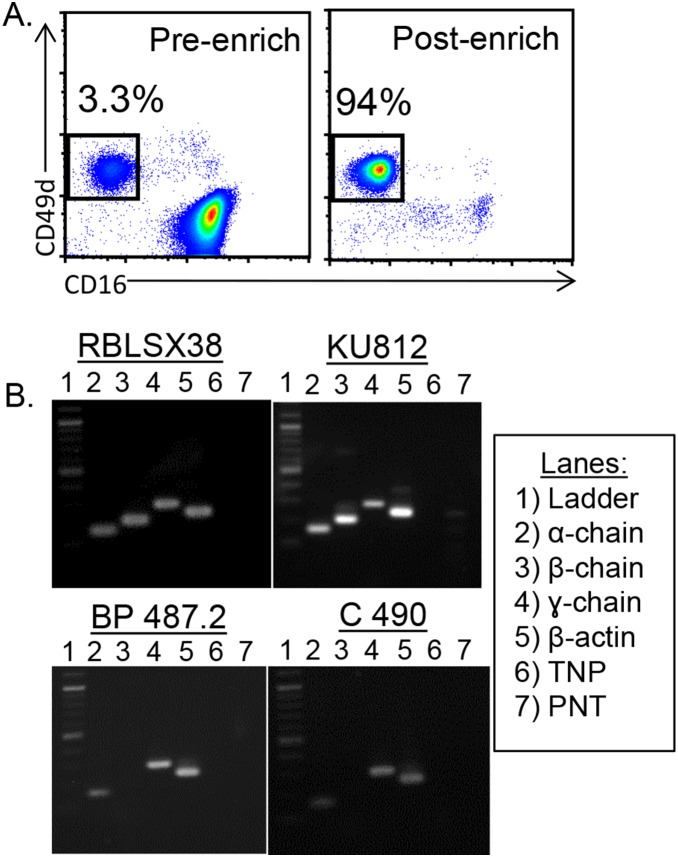
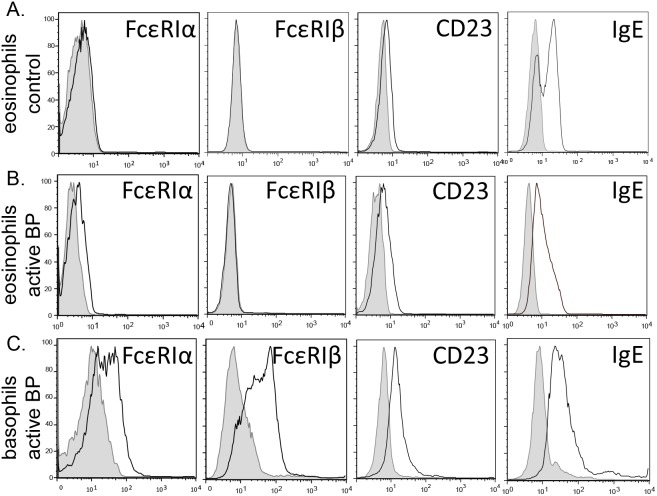
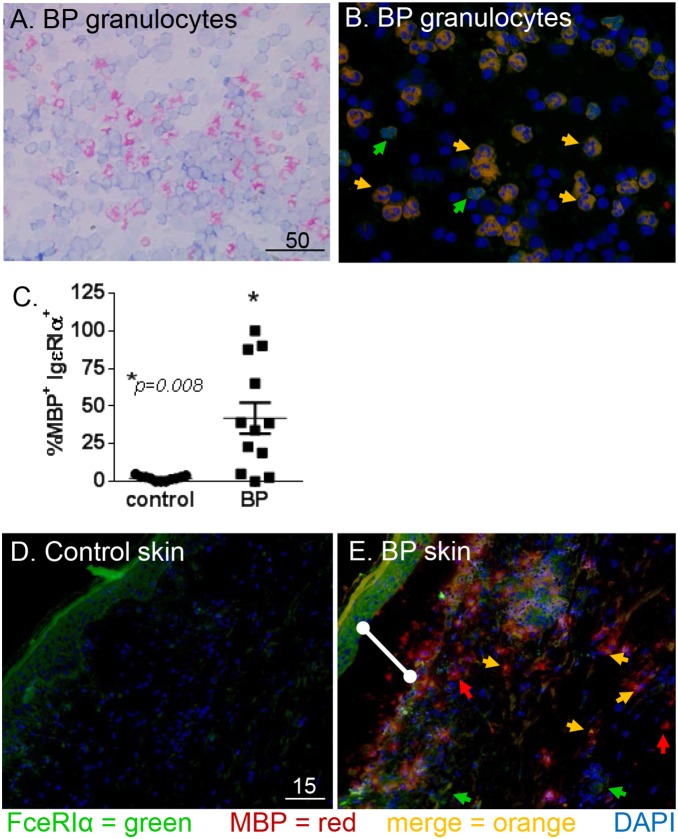
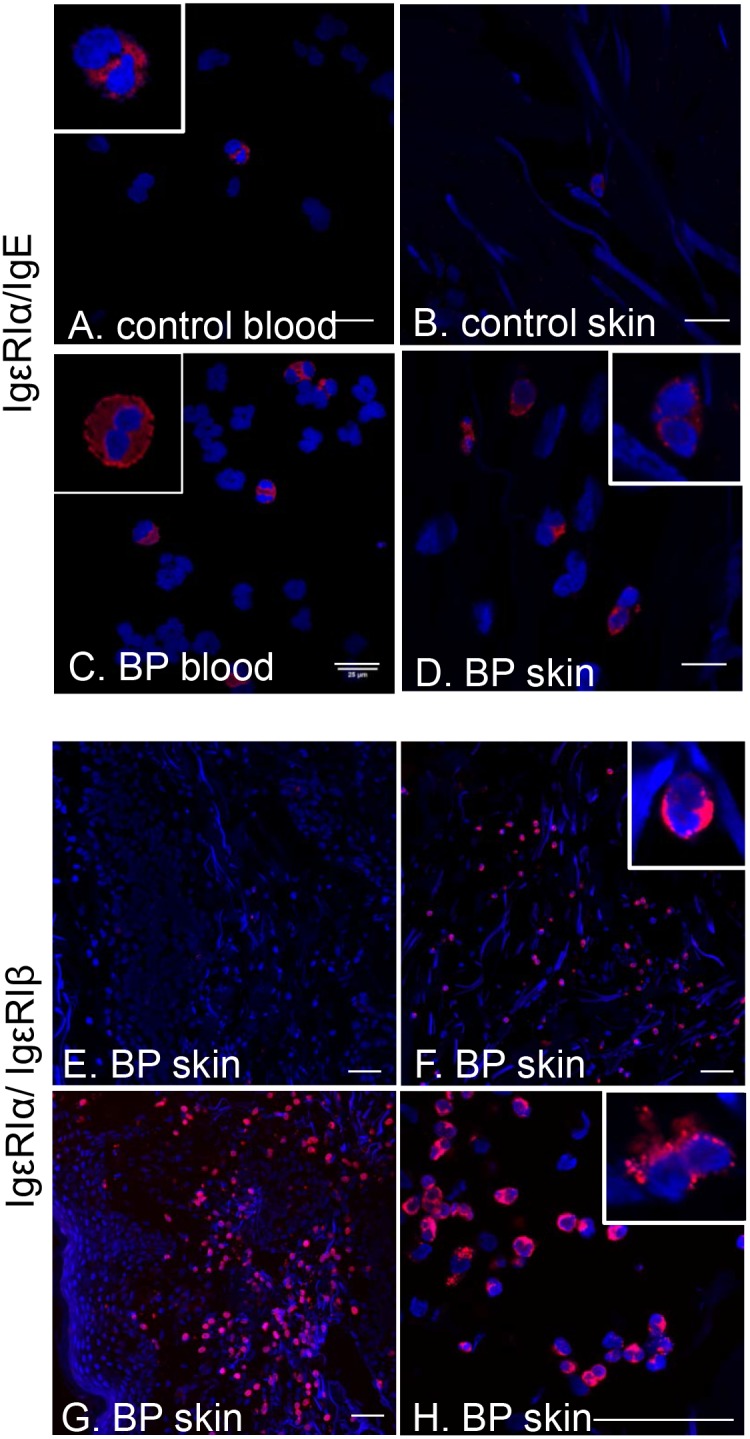
Bullous pemphigoid (BP) is an autoimmune blistering disease mediated by autoantibodies targeting BP180 (type XVII collagen). Patient sera and tissues typically have IgG and IgE autoantibodies and elevated eosinophil numbers. Although the pathogenicity of the IgE autoantibodies is established in BP, their contribution to the disease process is not well understood. Our aims were two-fold: 1) To establish the clinical relationships between total and BP180-specific IgE, eosinophilia and other markers of disease activity; and 2) To determine if eosinophils from BP patients express the high affinity IgE receptor, FcεRI, as a potential mechanism of action for IgE in BP. Our analysis of 48 untreated BP patients revealed a correlation between BP180 IgG and both BP180 IgE and peripheral eosinophil count. Additionally, we established a correlation between total IgE concentration and both BP180 IgE levels and eosinophil count. When only sera from patients (n = 16) with total IgE ≥ 400 IU/ml were analyzed, BP180 IgG levels correlated with disease severity, BP230 IgG, total circulating IgE and BP180 IgE. Finally, peripheral eosinophil count correlated more strongly with levels of BP180 IgE then with BP180 IgG. Next, eosinophil FcεRI expression was investigated in the blood and skin using several methods. Peripheral eosinophils from BP patients expressed mRNA for all three chains (α, β and γ) of the FcεRI. Surface expression of the FcεRIα was confirmed on both peripheral and tissue eosinophils from most BP patients by immunostaining. Furthermore, using a proximity ligation assay, interaction of the α- and β-chains of the FcεRI was observed in some biopsy specimens, suggesting tissue expression of the trimeric receptor form in some patients. These studies provide clinical support for the relevance of IgE in BP disease and provide one mechanism of action of these antibodies, via binding to the FcεRI on eosinophils.
大疱性类天疱疮(BP)是一种自身免疫性水疱病,由靶向BP180(XVII型胶原蛋白)的自身抗体介导。患者血清和组织中通常存在IgG和IgE自身抗体,且嗜酸性粒细胞数量升高。虽然IgE自身抗体在BP中的致病性已得到证实,但其对疾病进程的作用尚不完全清楚。我们的目标有两个:1)确定总IgE和BP180特异性IgE、嗜酸性粒细胞增多症与疾病活动的其他标志物之间的临床关系;2)确定BP患者的嗜酸性粒细胞是否表达高亲和力IgE受体FcεRI,作为IgE在BP中发挥作用的潜在机制。我们对48例未经治疗的BP患者的分析显示,BP180 IgG与BP180 IgE及外周嗜酸性粒细胞计数之间存在相关性。此外,我们还确定了总IgE浓度与BP180 IgE水平及嗜酸性粒细胞计数之间的相关性。当仅分析总IgE≥400 IU/ml患者(n = 16)的血清时,BP180 IgG水平与疾病严重程度、BP230 IgG、总循环IgE和BP180 IgE相关。最后,外周嗜酸性粒细胞计数与BP180 IgE水平的相关性比与BP180 IgG的相关性更强。接下来,使用多种方法研究了血液和皮肤中嗜酸性粒细胞FcεRI的表达。BP患者的外周嗜酸性粒细胞表达FcεRI所有三条链(α、β和γ)的mRNA。通过免疫染色在大多数BP患者的外周和组织嗜酸性粒细胞上证实了FcεRIα的表面表达。此外,使用邻近连接分析,在一些活检标本中观察到FcεRI的α链和β链相互作用,提示在一些患者中三聚体受体形式在组织中表达。这些研究为IgE在BP疾病中的相关性提供了临床支持,并通过与嗜酸性粒细胞上的FcεRI结合提供了这些抗体的一种作用机制。