Jiang Mingjin, Li Jing, Peng Qiuxian, Liu Yi, Liu Wei, Luo Chaohua, Peng Ju, Li Junkui, Yung Ken Kin Lam, Mo Zhixian
J Neuroinflammation. 2014 Sep 26;11:167. doi: 10.1186/s12974-014-0167-6.
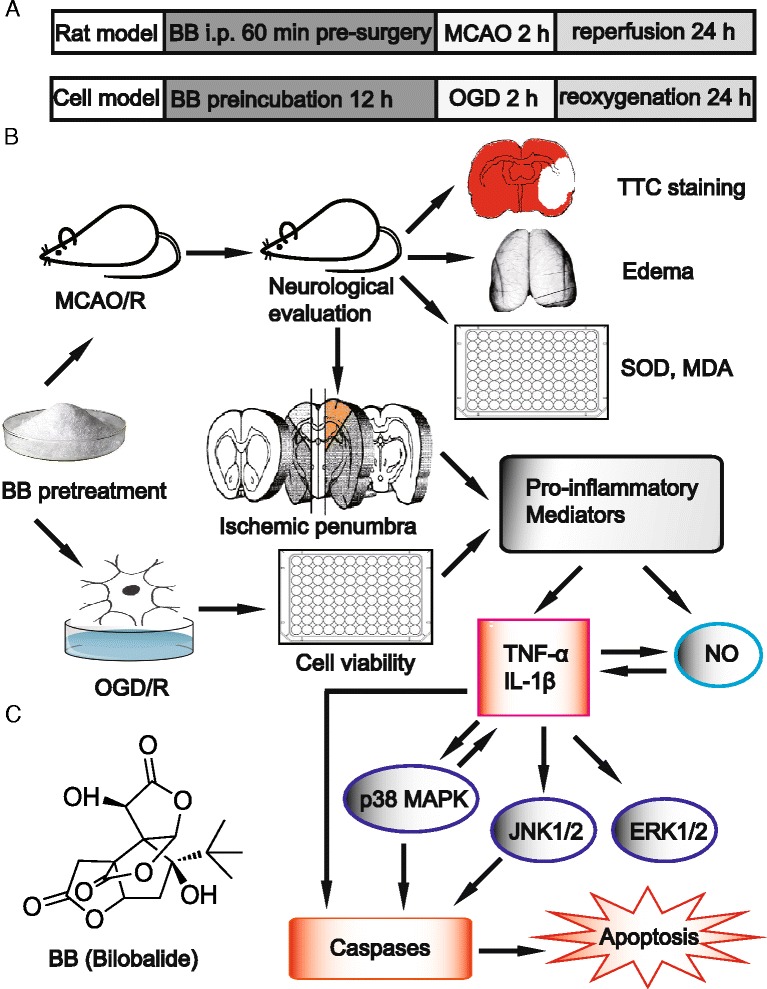
Mitogen-activated protein kinase (MAPK) signaling pathways are implicated in inflammatory and apoptotic processes of cerebral ischemia and reperfusion (I/R) injury. Hence, MAPK pathways represent a promising therapeutic target. Exploring the full potential of inhibitors of MAPK pathways is a useful therapeutic strategy for ischemic stroke. Bilobalide, a predominant sesquiterpene trilactone constituent of Ginkgo biloba leaves, has been shown to exert powerful neuroprotective properties, which are closely related to both anti-inflammatory and anti-apoptotic pathways. We investigated the neuroprotective roles of bilobalide in the models of middle cerebral artery occlusion and reperfusion (MCAO/R) and oxygen-glucose deprivation and reoxygenation (OGD/R) of cerebral I/R injury. Moreover, we attempted to confirm the hypothesis that its protection effect is via modulation of pro-inflammatory mediators and MAPK pathways.
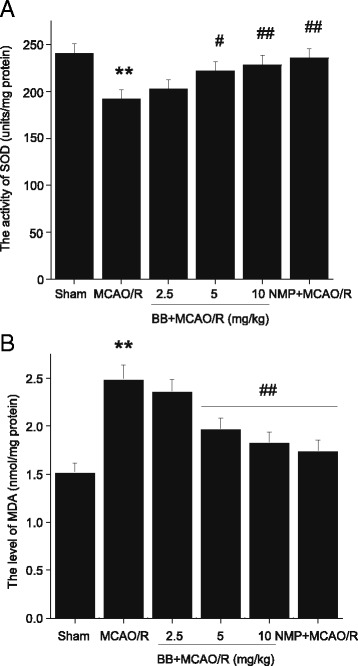
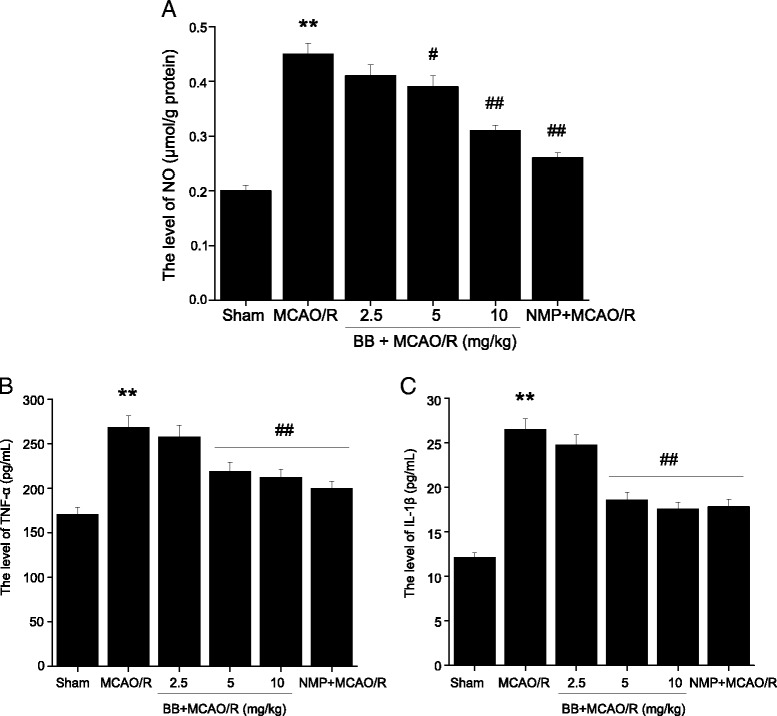
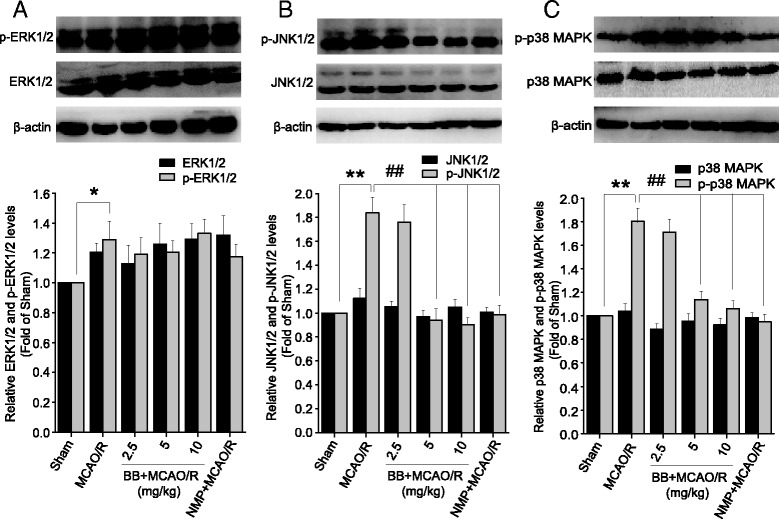
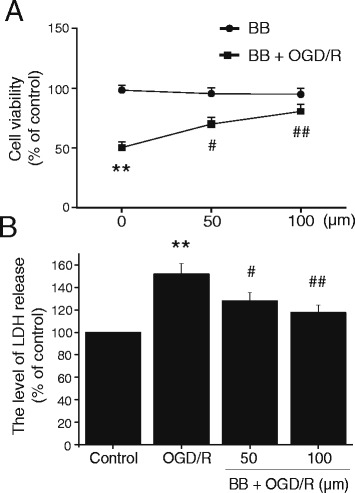
Male Sprague-Dawley rats were subjected to MCAO for 2 h followed by reperfusion for 24 h. Bilobalide was administered intraperitoneally 60 min before induction of middle cerebral artery occlusion (MCAO). After reperfusion, neurological deficit scores, infarct volume, infarct weight, and brain edema were assessed. Ischemic penumbrae of the cerebral cortex were harvested to determine superoxide dismutase (SOD), malondialdehyde (MDA), nitric oxide, TNF-α, interleukin 1β (IL-1β), p-ERK1/2, p-JNK1/2, and p-p38 MAPK concentration. Similarly, the influence of bilobalide on the expression of nitric oxide, TNF-α, IL-1β, p-ERK1/2, p-JNK1/2, and p-p38 MAPK was also observed in an OGD/R in vitro model of I/R injury.
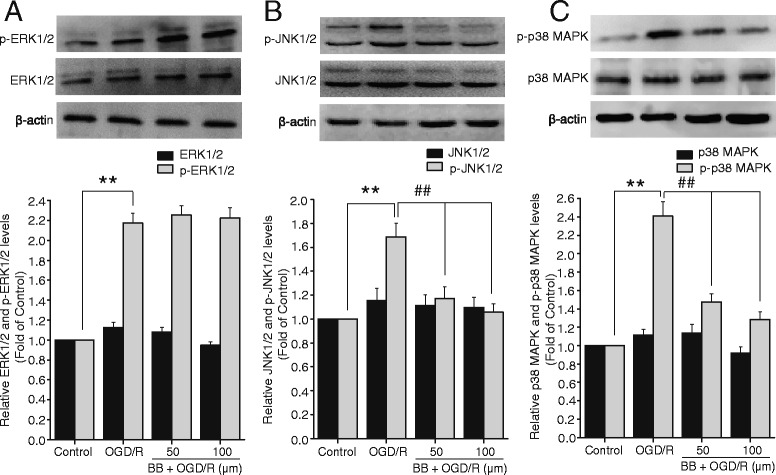
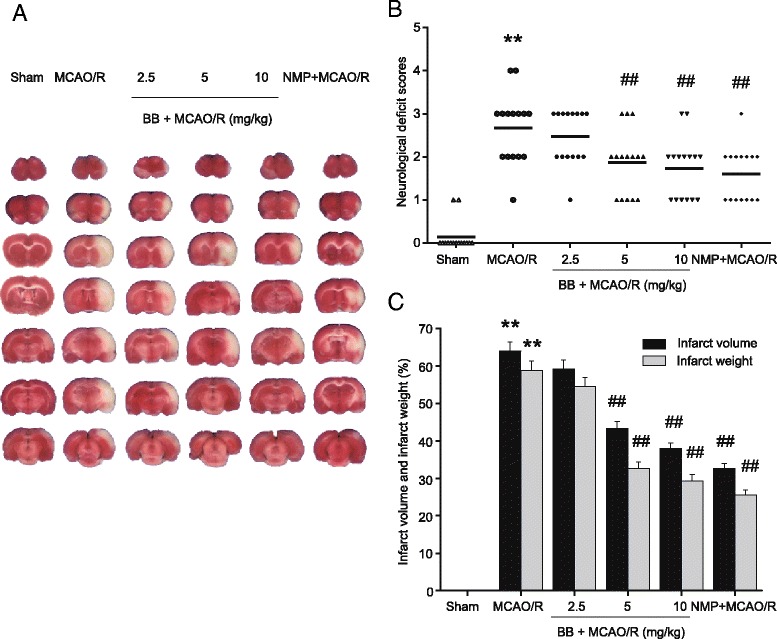
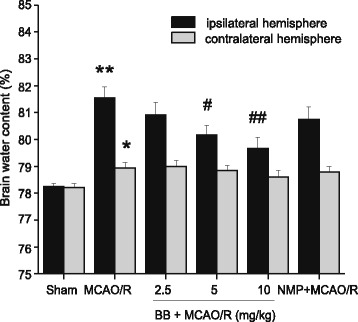
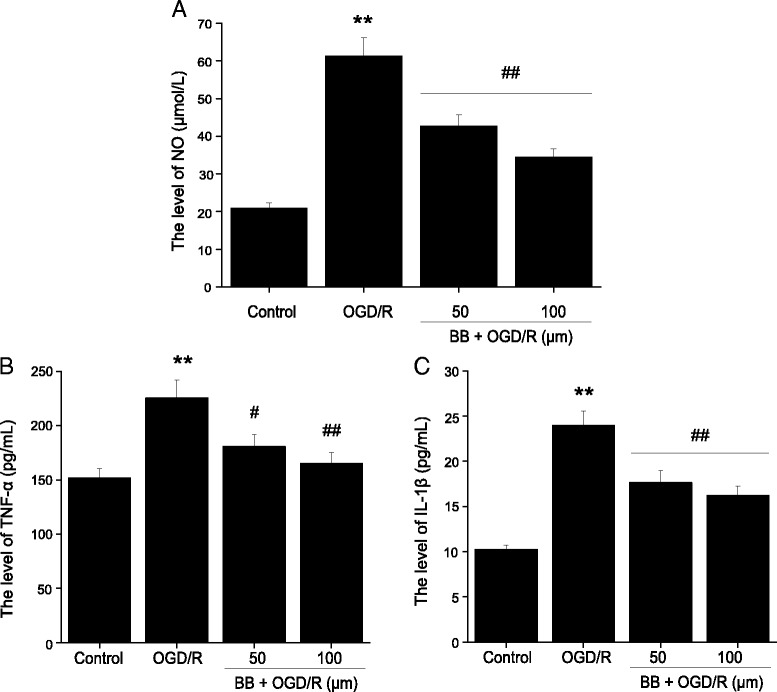
Pretreatment with bilobalide (5, 10 mg/kg) significantly decreased neurological deficit scores, infarct volume, infarct weight, brain edema, and concentrations of MDA, nitric oxide, TNF-α, IL-1β, and increased SOD activity. Furthermore, bilobalide (5, 10 mg/kg) pretreatment significantly down-regulated both p-JNK1/2 and p-p38 MAPK expression, whereas they had no effect on p-ERK1/2 expression in the ischemic penumbra. Supporting these observations in vivo, pretreatment with bilobalide (50, 100 μM) significantly down-regulated nitric oxide, TNF-α, IL-1β, p-JNK1/2, and p-p38 MAPK expression, but did not change p-ERK1/2 expression in rat cortical neurons after OGD/R injury.
These data indicate that the neuroprotective effects of bilobalide on cerebral I/R injury are associated with its inhibition of pro-inflammatory mediator production and down-regulation of JNK1/2 and p38 MAPK activation.
丝裂原活化蛋白激酶(MAPK)信号通路参与脑缺血再灌注(I/R)损伤的炎症和凋亡过程。因此,MAPK通路是一个有前景的治疗靶点。探索MAPK通路抑制剂的全部潜力是缺血性中风的一种有用治疗策略。白果内酯是银杏叶中主要的倍半萜三内酯成分,已显示出强大的神经保护特性,这与抗炎和抗凋亡途径密切相关。我们研究了白果内酯在大脑中动脉闭塞再灌注(MCAO/R)模型以及脑I/R损伤的氧糖剥夺再复氧(OGD/R)模型中的神经保护作用。此外,我们试图证实其保护作用是通过调节促炎介质和MAPK通路这一假说。
雄性Sprague-Dawley大鼠接受2小时的MCAO,随后再灌注24小时。在诱导大脑中动脉闭塞(MCAO)前60分钟腹腔注射白果内酯。再灌注后,评估神经功能缺损评分、梗死体积、梗死重量和脑水肿。采集大脑皮质的缺血半暗带以测定超氧化物歧化酶(SOD)、丙二醛(MDA)、一氧化氮、肿瘤坏死因子-α(TNF-α)、白细胞介素1β(IL-1β)、磷酸化细胞外信号调节激酶1/2(p-ERK1/2)、磷酸化c-Jun氨基末端激酶1/2(p-JNK1/2)和磷酸化p38丝裂原活化蛋白激酶(p-p38 MAPK)的浓度。同样,在I/R损伤的OGD/R体外模型中也观察了白果内酯对一氧化氮、TNF-α、IL-1β、p-ERK1/2、p-JNK1/2和p-p38 MAPK表达的影响。
白果内酯(5、10mg/kg)预处理显著降低神经功能缺损评分、梗死体积、梗死重量、脑水肿以及MDA、一氧化氮、TNF-α、IL-1β的浓度,并增加SOD活性。此外,白果内酯(5、10mg/kg)预处理显著下调缺血半暗带中p-JNK1/2和p-p38 MAPK的表达,而对p-ERK1/2表达无影响。在体内实验中支持这些观察结果的是,白果内酯(50、100μM)预处理显著下调OGD/R损伤后大鼠皮质神经元中一氧化氮、TNF-α、IL-1β、p-JNK1/2和p-p38 MAPK的表达,但不改变p-ERK1/2的表达。
这些数据表明,白果内酯对脑I/R损伤的神经保护作用与其抑制促炎介质产生以及下调JNK1/2和p38 MAPK激活有关。