Liu Xian-Bao, Wang Jian-An, Ji Xiao-Ya, Yu Shan Ping, Wei Ling
Stem Cell Res Ther. 2014 Sep 25;5(5):111. doi: 10.1186/scrt499.
Poor cell survival and limited functional benefits have restricted the efficacy of bone marrow mesenchymal stem cells (BMSCs) in the treatment of myocardial infarction. We showed recently that hypoxia preconditioning of BMSCs and neural progenitor cells before transplantation can enhance the survival and therapeutic properties of these cells in the ischemic brain and heart. The present investigation explores a novel strategy of preconditioning BMSCs using the Hypoxia-inducible factor 1α (HIF-α) prolyl hydroxylase inhibitor dimethyloxalylglycine (DMOG) to enhance their survival and therapeutic efficacy after transplantation into infarcted myocardium.
BMSCs from green fluorescent protein transgenic rats were cultured with or without 1 mM DMOG for 24 hours in complete culture medium before transplantation. Survival and angiogenic factors were evaluated in vitro by trypan blue staining, Western blotting, and tube formation test. In an ischemic heart model of rats, BMSCs with and without DMOG preconditioning were intramyocardially transplanted into the peri-infarct region 30 minutes after permanent myocardial ischemia. Cell death was measured 24 hours after engraftment. Heart function, angiogenesis and infarct size were measured 4 weeks later.
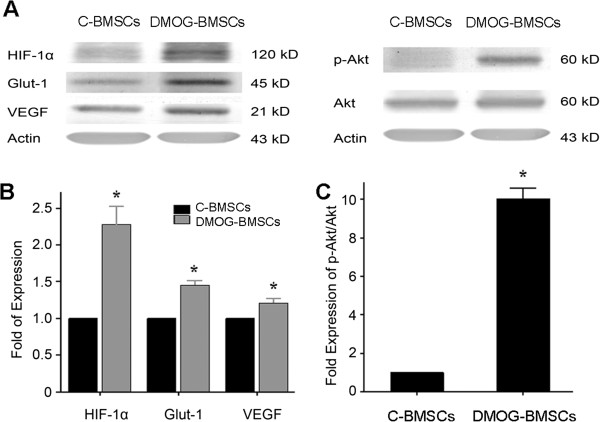
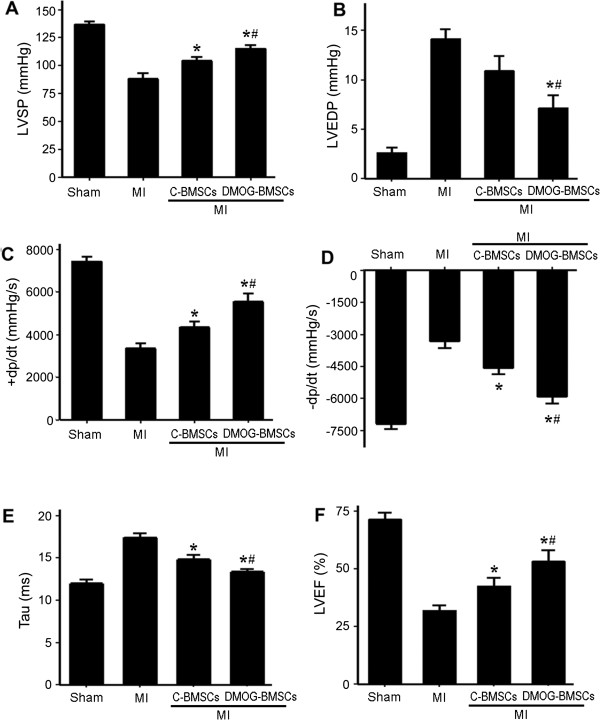
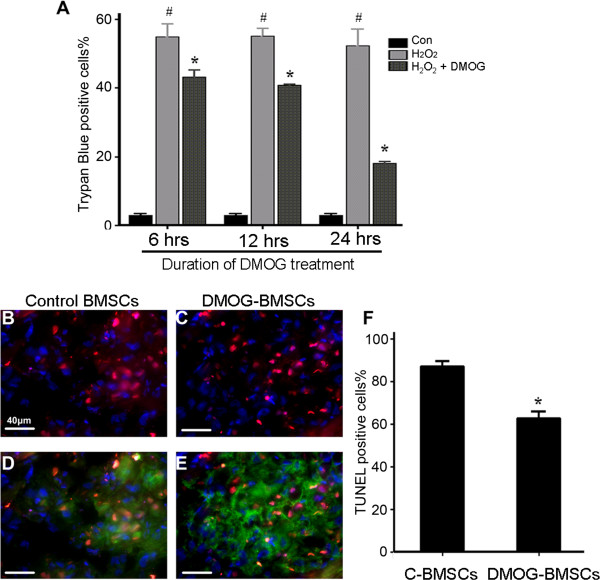
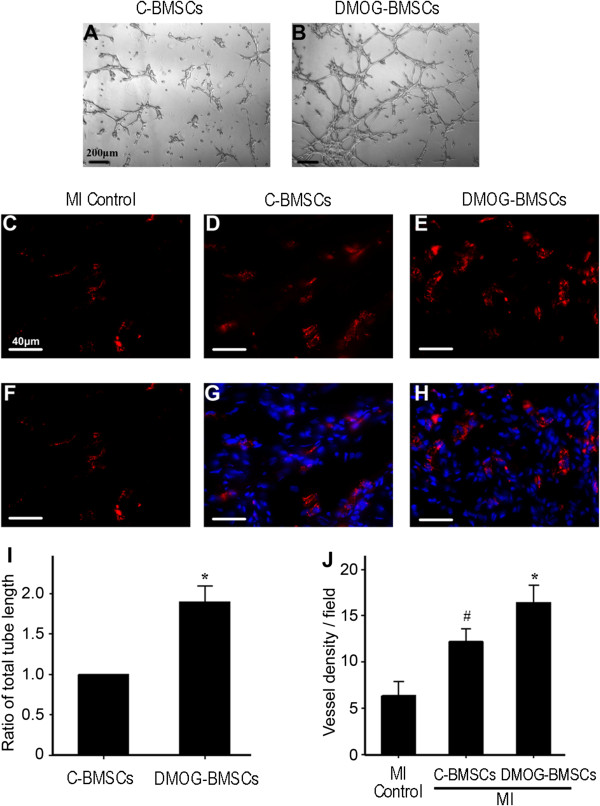
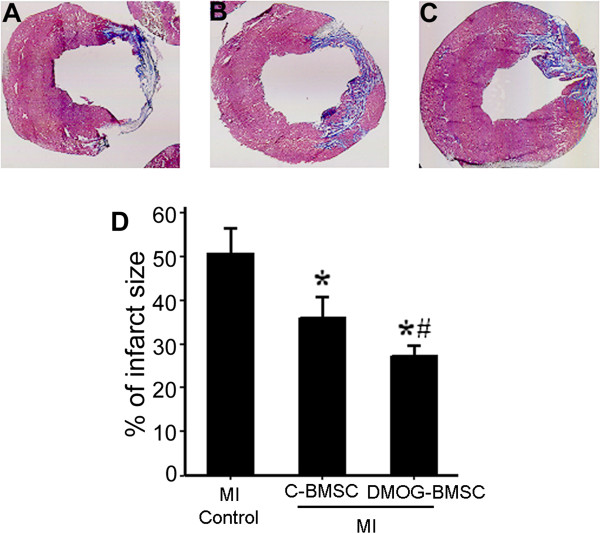
In DMOG preconditioned BMSCs (DMOG-BMSCs), the expression of survival and angiogenic factors including HIF-1α, vascular endothelial growth factor, glucose transporter 1 and phospho-Akt were significantly increased. In comparison with control cells, DMOG-BMSCs showed higher viability and enhanced angiogenesis in both in vitro and in vivo assays. Transplantation of DMOG-BMSCs reduced heart infarct size and promoted functional benefits of the cell therapy.
We suggest that DMOG preconditioning enhances the survival capability of BMSCs and paracrine effects with increased differentiation potential. Prolyl hydroxylase inhibition is an effective and feasible strategy to enhance therapeutic efficacy and efficiency of BMSC transplantation therapy after heart ischemia.
细胞存活率低和功能益处有限限制了骨髓间充质干细胞(BMSCs)在心肌梗死治疗中的疗效。我们最近表明,移植前对BMSCs和神经祖细胞进行缺氧预处理可提高这些细胞在缺血性脑和心脏中的存活率及治疗特性。本研究探索了一种使用缺氧诱导因子1α(HIF-α)脯氨酰羟化酶抑制剂二甲基草酰甘氨酸(DMOG)预处理BMSCs的新策略,以提高其移植到梗死心肌后的存活率和治疗效果。
来自绿色荧光蛋白转基因大鼠的BMSCs在移植前于完全培养基中培养,分别添加或不添加1 mM DMOG培养24小时。通过台盼蓝染色、蛋白质印迹法和管形成试验在体外评估存活和血管生成因子。在大鼠缺血性心脏模型中,永久性心肌缺血30分钟后,将经DMOG预处理和未经预处理的BMSCs心肌内移植到梗死周边区域。移植后24小时测量细胞死亡情况。4周后测量心脏功能、血管生成和梗死面积。
在经DMOG预处理的BMSCs(DMOG-BMSCs)中,包括HIF-1α、血管内皮生长因子、葡萄糖转运蛋白1和磷酸化Akt在内的存活和血管生成因子的表达显著增加。与对照细胞相比,DMOG-BMSCs在体外和体内试验中均显示出更高的活力和增强的血管生成能力。移植DMOG-BMSCs可减小心脏梗死面积并促进细胞治疗的功能益处。
我们认为DMOG预处理可提高BMSCs的存活能力和旁分泌效应,并增加分化潜能。脯氨酰羟化酶抑制是提高心脏缺血后BMSC移植治疗疗效和效率的一种有效且可行的策略。