Bradbury Ian R, Bowman Sharen, Borza Tudor, Snelgrove Paul V R, Hutchings Jeffrey A, Berg Paul R, Rodríguez-Ezpeleta Naiara, Lighten Jackie, Ruzzante Daniel E, Taggart Christopher, Bentzen Paul
Department of Fisheries and Oceans, St. John's, Newfoundland, Canada; Ocean Sciences Center, Memorial University of Newfoundland, St. John's, Newfoundland, Canada.
The Atlantic Genome Centre, Halifax, Nova Scotia, Canada.
PLoS One. 2014 Sep 26;9(9):e106380. doi: 10.1371/journal.pone.0106380. eCollection 2014.
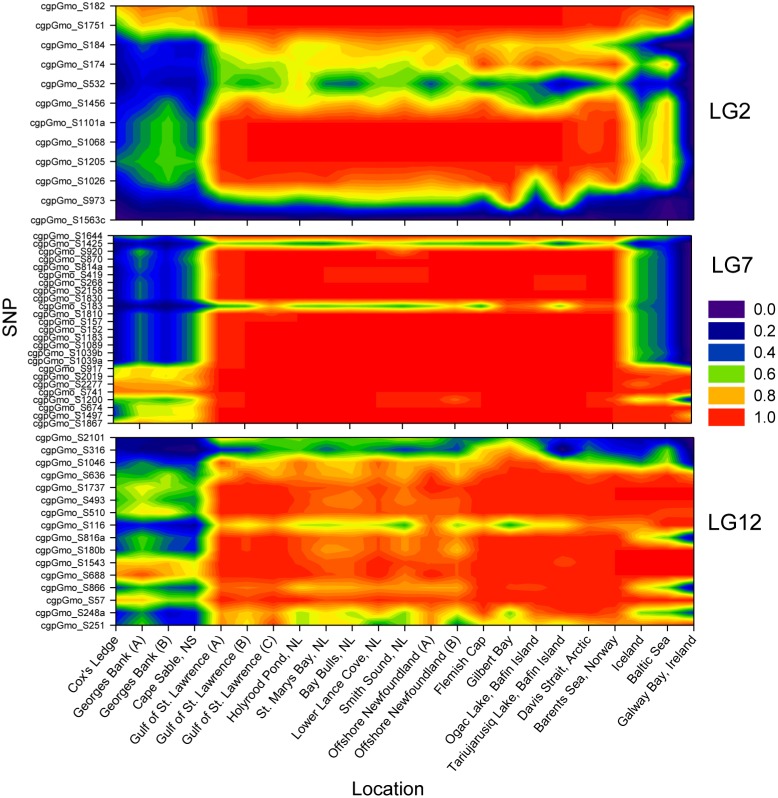
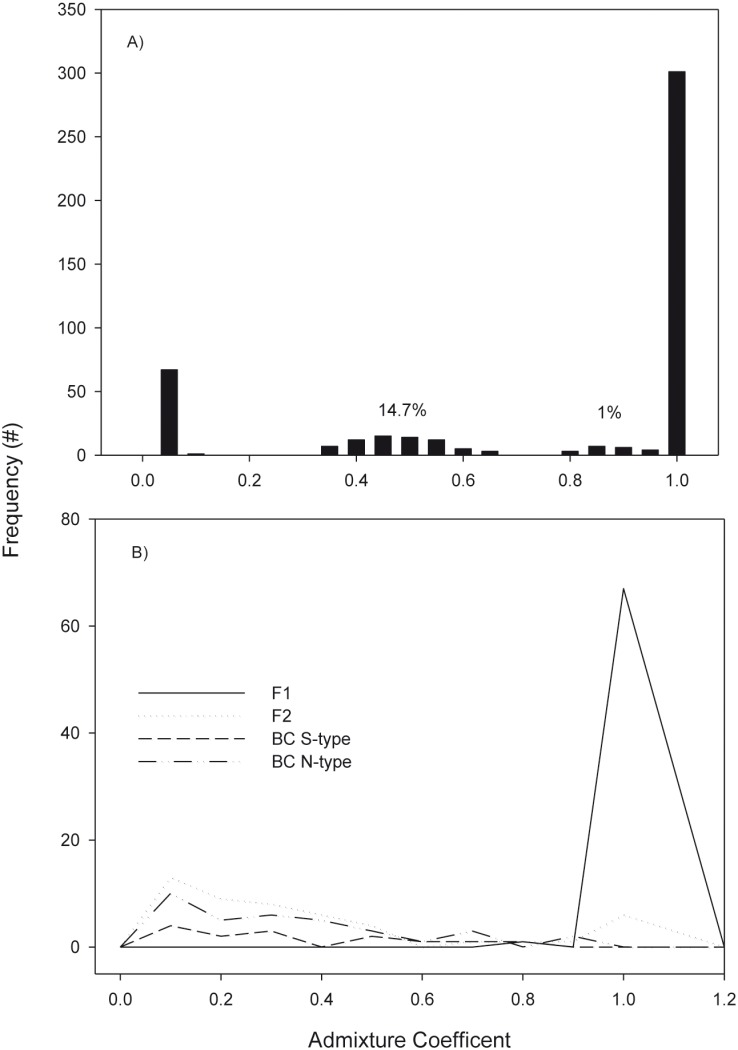
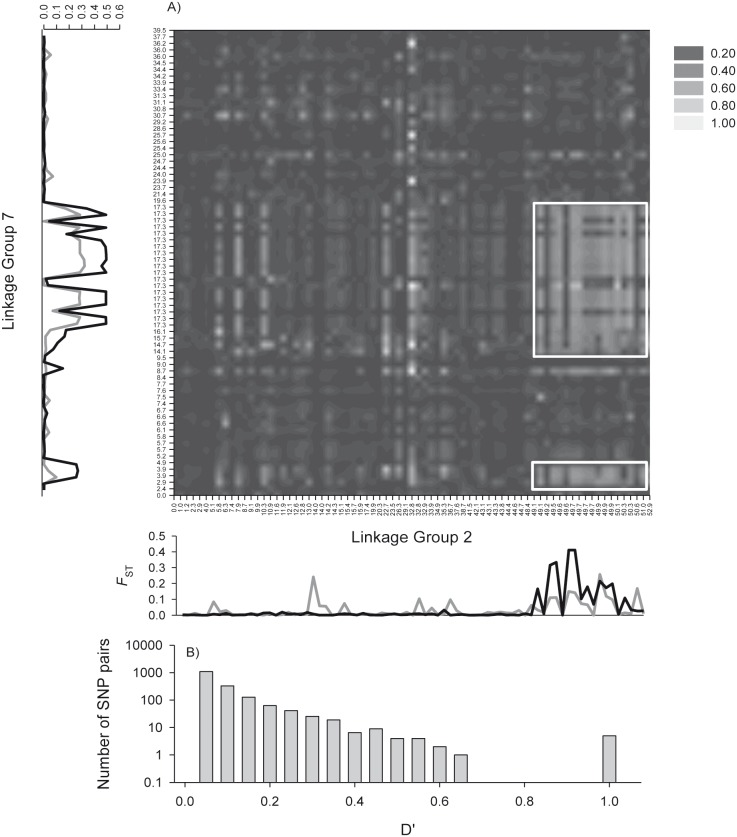
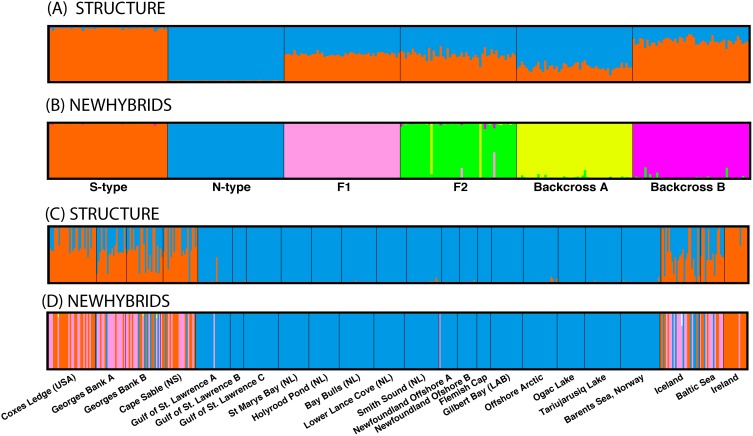
Hybrid zones provide unprecedented opportunity for the study of the evolution of reproductive isolation, and the extent of hybridization across individuals and genomes can illuminate the degree of isolation. We examine patterns of interchromosomal linkage disequilibrium (ILD) and the presence of hybridization in Atlantic cod, Gadus morhua, in previously identified hybrid zones in the North Atlantic. Here, previously identified clinal loci were mapped to the cod genome with most (∼70%) occurring in or associated with (<5 kb) coding regions representing a diverse array of possible functions and pathways. Despite the observation that clinal loci were distributed across three linkage groups, elevated ILD was observed among all groups of clinal loci and strongest in comparisons involving a region of low recombination along linkage group 7. Evidence of ILD supports a hypothesis of divergence hitchhiking transitioning to genome hitchhiking consistent with reproductive isolation. This hypothesis is supported by Bayesian characterization of hybrid classes present and we find evidence of common F1 hybrids in several regions consistent with frequent interbreeding, yet little evidence of F2 or backcrossed individuals. This work suggests that significant barriers to hybridization and introgression exist among these co-occurring groups of cod either through strong selection against hybrid individuals, or genetic incompatibility and intrinsic barriers to hybridization. In either case, the presence of strong clinal trends, and little gene flow despite extensive hybridization supports a hypothesis of reproductive isolation and cryptic speciation in Atlantic cod. Further work is required to test the degree and nature of reproductive isolation in this species.
杂交区域为研究生殖隔离的进化提供了前所未有的机会,个体和基因组间的杂交程度能够阐明隔离的程度。我们研究了北大西洋先前确定的杂交区域中大西洋鳕鱼(Gadus morhua)的染色体间连锁不平衡(ILD)模式以及杂交情况。在这里,先前确定的渐变位点被定位到鳕鱼基因组上,其中大多数(约70%)位于编码区域内或与之相关(<5 kb),这些编码区域代表了一系列多样的可能功能和途径。尽管观察到渐变位点分布在三个连锁群中,但在所有渐变位点组之间均观察到ILD升高,并且在涉及连锁群7上低重组区域的比较中最为强烈。ILD的证据支持了一个假说是,即分歧搭便车正转变为与生殖隔离一致的基因组搭便车。这一假说得到了现存杂交类别的贝叶斯特征分析的支持,并且我们在几个区域发现了常见F1杂种的证据,这与频繁杂交一致,但几乎没有F2或回交个体的证据。这项研究表明,在这些共存的鳕鱼群体之间,要么通过对杂交个体的强烈选择,要么通过遗传不相容性和杂交的内在障碍,存在着显著的杂交和基因渗入障碍。无论哪种情况,强烈渐变趋势的存在以及尽管广泛杂交但基因流动很少,都支持了大西洋鳕鱼存在生殖隔离和隐性物种形成的假说。需要进一步开展工作来测试该物种生殖隔离的程度和性质。