Yamamoto Shinya, Jaiswal Manish, Charng Wu-Lin, Gambin Tomasz, Karaca Ender, Mirzaa Ghayda, Wiszniewski Wojciech, Sandoval Hector, Haelterman Nele A, Xiong Bo, Zhang Ke, Bayat Vafa, David Gabriela, Li Tongchao, Chen Kuchuan, Gala Upasana, Harel Tamar, Pehlivan Davut, Penney Samantha, Vissers Lisenka E L M, de Ligt Joep, Jhangiani Shalini N, Xie Yajing, Tsang Stephen H, Parman Yesim, Sivaci Merve, Battaloglu Esra, Muzny Donna, Wan Ying-Wooi, Liu Zhandong, Lin-Moore Alexander T, Clark Robin D, Curry Cynthia J, Link Nichole, Schulze Karen L, Boerwinkle Eric, Dobyns William B, Allikmets Rando, Gibbs Richard A, Chen Rui, Lupski James R, Wangler Michael F, Bellen Hugo J
Program in Developmental Biology, Baylor College of Medicine (BCM), Houston, TX 77030, USA; Department of Molecular and Human Genetics, BCM, Houston, TX 77030, USA; Jan and Dan Duncan Neurological Research Institute, Houston, TX 77030, USA.
Department of Molecular and Human Genetics, BCM, Houston, TX 77030, USA; Howard Hughes Medical Institute, Houston, TX 77030, USA.
Cell. 2014 Sep 25;159(1):200-214. doi: 10.1016/j.cell.2014.09.002.
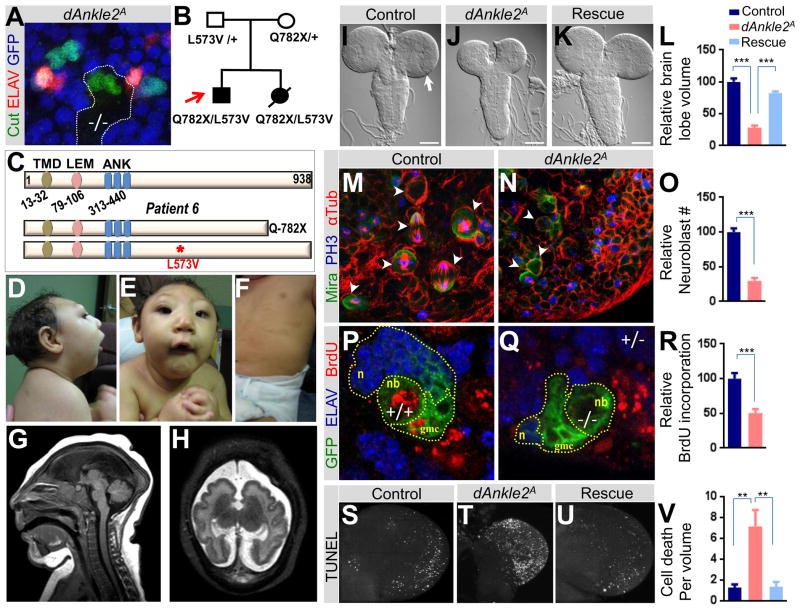
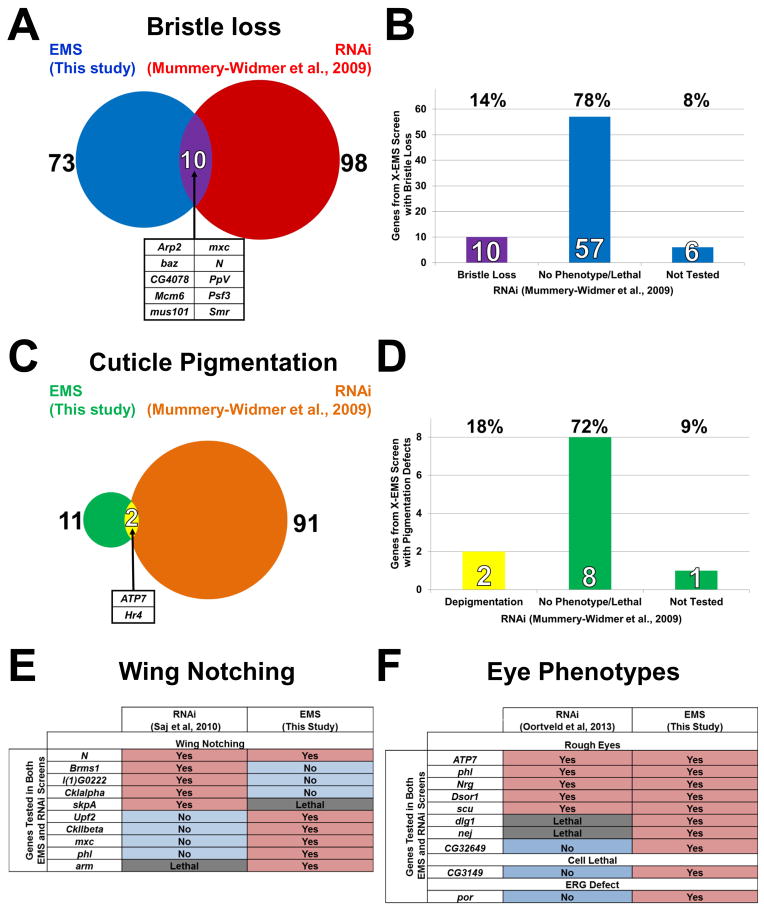
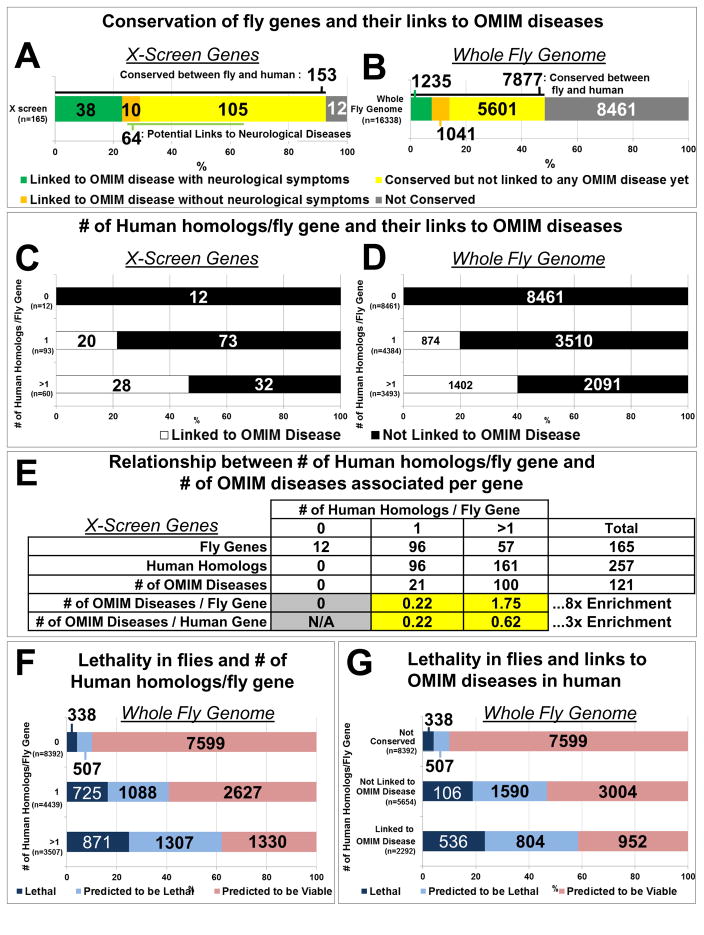
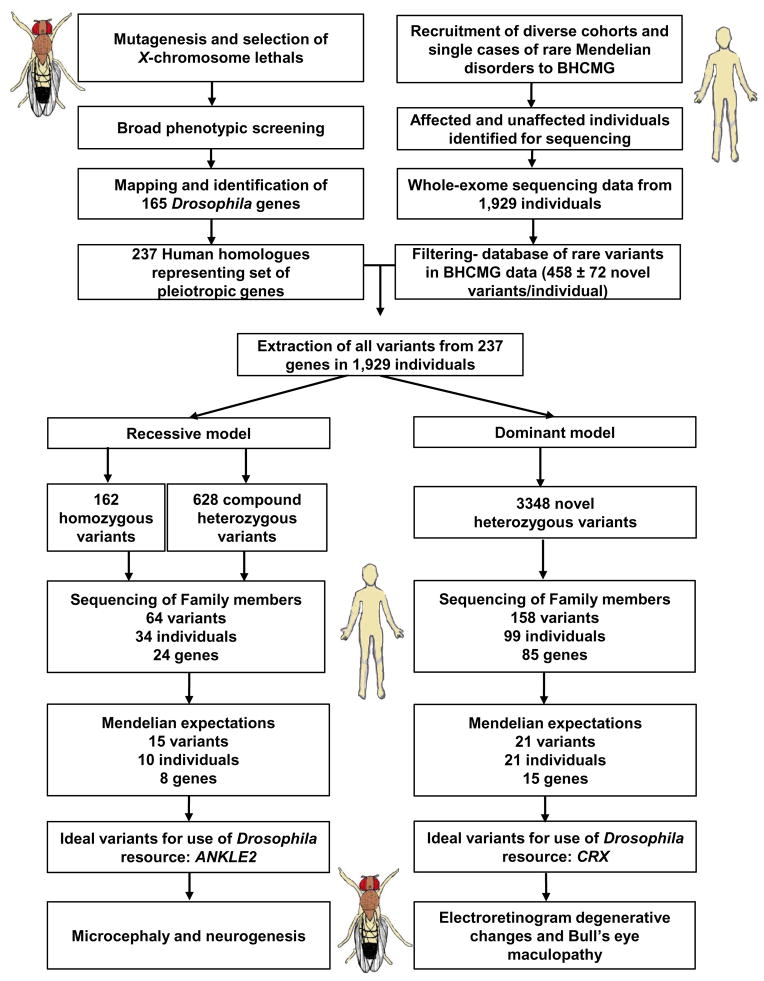
Invertebrate model systems are powerful tools for studying human disease owing to their genetic tractability and ease of screening. We conducted a mosaic genetic screen of lethal mutations on the Drosophila X chromosome to identify genes required for the development, function, and maintenance of the nervous system. We identified 165 genes, most of whose function has not been studied in vivo. In parallel, we investigated rare variant alleles in 1,929 human exomes from families with unsolved Mendelian disease. Genes that are essential in flies and have multiple human homologs were found to be likely to be associated with human diseases. Merging the human data sets with the fly genes allowed us to identify disease-associated mutations in six families and to provide insights into microcephaly associated with brain dysgenesis. This bidirectional synergism between fly genetics and human genomics facilitates the functional annotation of evolutionarily conserved genes involved in human health.
由于其遗传易处理性和易于筛选,无脊椎动物模型系统是研究人类疾病的有力工具。我们对果蝇X染色体上的致死突变进行了镶嵌遗传筛选,以确定神经系统发育、功能和维持所需的基因。我们鉴定出165个基因,其中大多数基因的功能尚未在体内进行研究。同时,我们调查了来自患有未解决孟德尔疾病家庭的1929份人类外显子组中的罕见变异等位基因。发现在果蝇中至关重要且有多个人类同源物的基因可能与人类疾病相关。将人类数据集与果蝇基因相结合,使我们能够在六个家庭中鉴定出与疾病相关的突变,并深入了解与脑发育不全相关的小头畸形。果蝇遗传学和人类基因组学之间的这种双向协同作用有助于对涉及人类健康的进化保守基因进行功能注释。