Department of Biochemistry, ‡Department of Pharmacology, and §Department of Medicine (Hematology/Oncology), Vanderbilt University School of Medicine , Nashville, Tennessee 37232-0146, United States.
Biochemistry. 2014 Oct 21;53(41):6595-602. doi: 10.1021/bi5010816. Epub 2014 Oct 10.
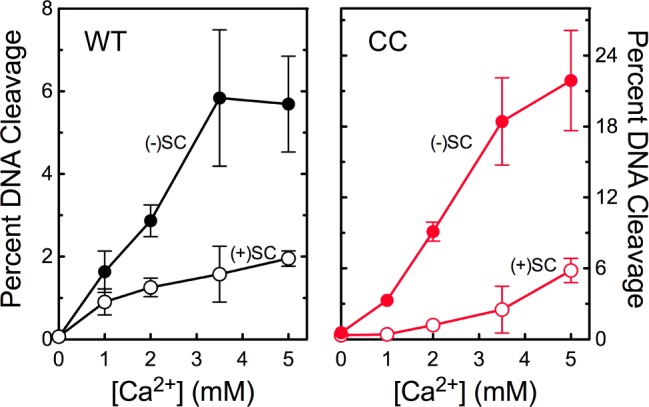
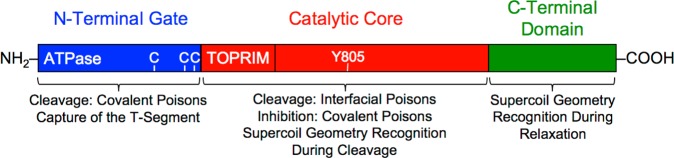
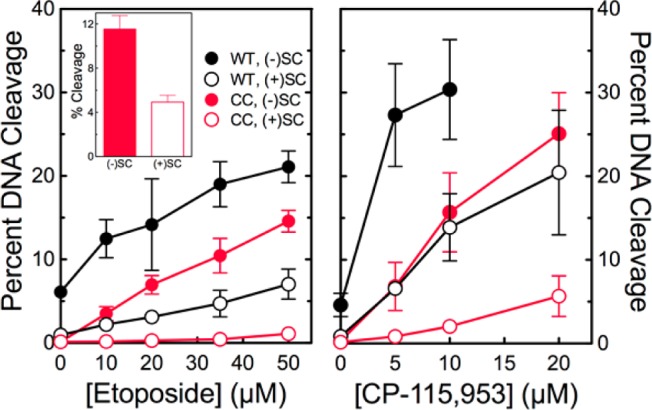
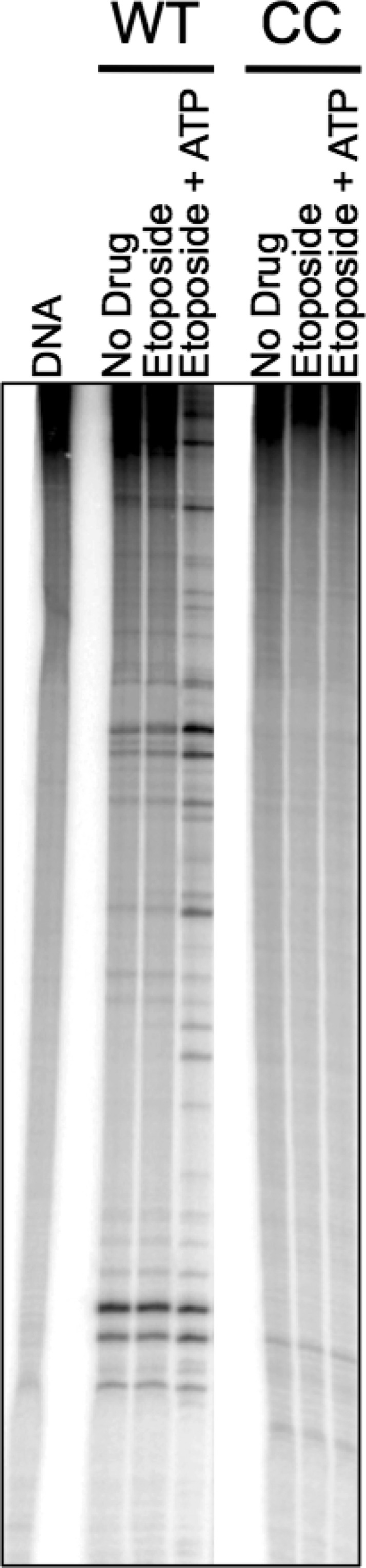
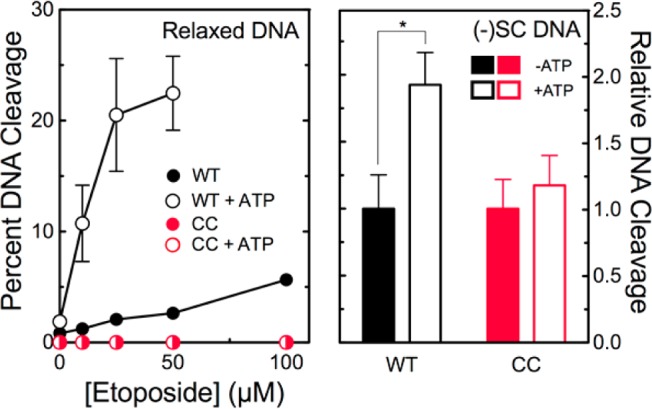
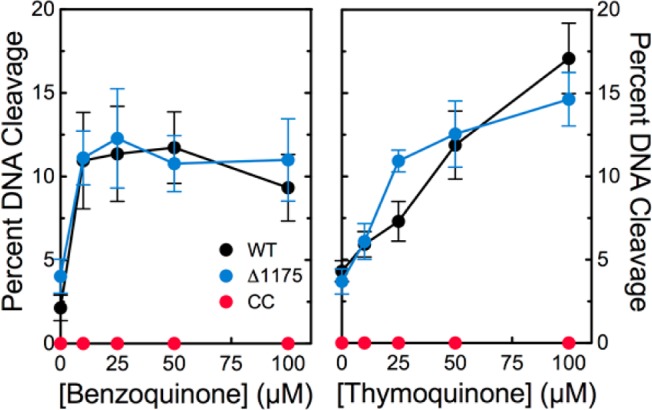
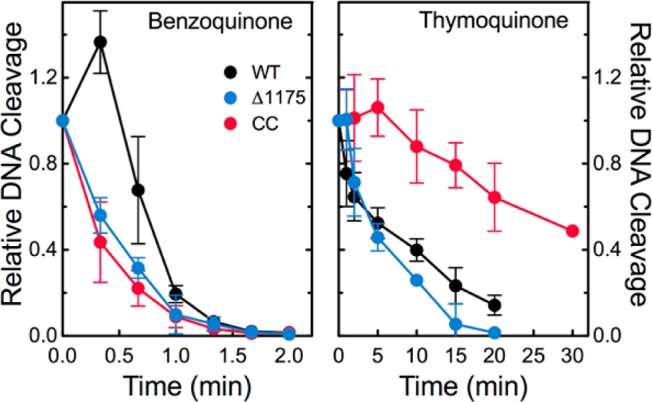
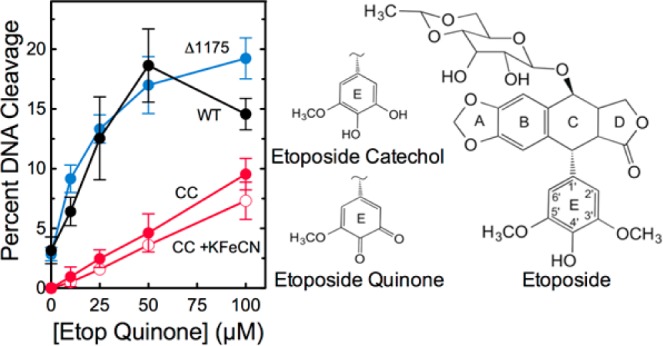
Coordination between the N-terminal gate and the catalytic core of topoisomerase II allows the proper capture, cleavage, and transport of DNA during the catalytic cycle. Because the activities of these domains are tightly linked, it has been difficult to discern their individual contributions to enzyme-DNA interactions and drug mechanism. To further address the roles of these domains, we analyzed the activity of the catalytic core of human topoisomerase IIα. The catalytic core and the wild-type enzyme both maintained higher levels of cleavage with negatively (as compared to positively) supercoiled plasmid, indicating that the ability to distinguish supercoil handedness is embedded within the catalytic core. However, the catalytic core alone displayed little ability to cleave DNA substrates that did not intrinsically provide the enzyme with a transport segment (i.e., substrates that did not contain crossovers). Finally, in contrast to interfacial topoisomerase II poisons, covalent poisons did not enhance DNA cleavage mediated by the catalytic core. This distinction allowed us to further characterize the mechanism of etoposide quinone, a drug metabolite that functions primarily as a covalent poison. Etoposide quinone retained some ability to enhance DNA cleavage mediated by the catalytic core, indicating that it still can function as an interfacial poison. These results further define the distinct contributions of the N-terminal gate and the catalytic core to topoisomerase II function. The catalytic core senses the handedness of DNA supercoils during cleavage, while the N-terminal gate is critical for capturing the transport segment and for the activity of covalent poisons.
拓扑异构酶 II 的 N 端门控与催化核心之间的协调允许在催化循环过程中正确捕获、切割和转运 DNA。由于这些结构域的活性紧密相关,因此很难区分它们各自对酶-DNA 相互作用和药物机制的贡献。为了进一步研究这些结构域的作用,我们分析了人拓扑异构酶 IIα 的催化核心的活性。催化核心和野生型酶都保持着更高水平的切割活性,与负超螺旋质粒(与正超螺旋质粒相比)相比,表明区分超螺旋手性的能力嵌入在催化核心中。然而,单独的催化核心几乎没有能力切割那些本身不提供酶转运片段的 DNA 底物(即不包含交叉的底物)。最后,与界面拓扑异构酶 II 毒物不同,共价毒物不会增强催化核心介导的 DNA 切割。这种区别使我们能够进一步表征依托泊苷醌的作用机制,依托泊苷醌是一种主要作为共价毒物的药物代谢物。依托泊苷醌仍保留一定的能力增强催化核心介导的 DNA 切割,表明它仍然可以作为界面毒物发挥作用。这些结果进一步定义了 N 端门控和催化核心对拓扑异构酶 II 功能的不同贡献。催化核心在切割过程中感知 DNA 超螺旋的手性,而 N 端门控对于捕获转运片段和共价毒物的活性至关重要。