Department of Obstetrics and Gynecology, Peking Union Medical College Hospital, Peking Union Medical College, Chinese Academy of Medical Sciences, Beijing, People's Republic of China.
Department of Pathology, Peking Union Medical College Hospital, Peking Union Medical College, Chinese Academy of Medical Sciences, Beijing, People's Republic of China.
Onco Targets Ther. 2014 Sep 25;7:1705-16. doi: 10.2147/OTT.S67570. eCollection 2014.
To investigate tumor heterogeneity in the recurrence of epithelial ovarian cancer demonstrated by polycomb group (PcG) proteins.
Tissue microarrays containing matched primary and recurrent ovarian tumors from the same patients were constructed for detection of PcG protein expression. Survival analyses of clinicopathological parameters and expression of PcG proteins were performed on progression-free survival (PFS) and overall survival (OS) of patients. Genetic and epigenetic heterogeneity was explored in aspects of gene copy number and microRNA (miRNA) profiling.
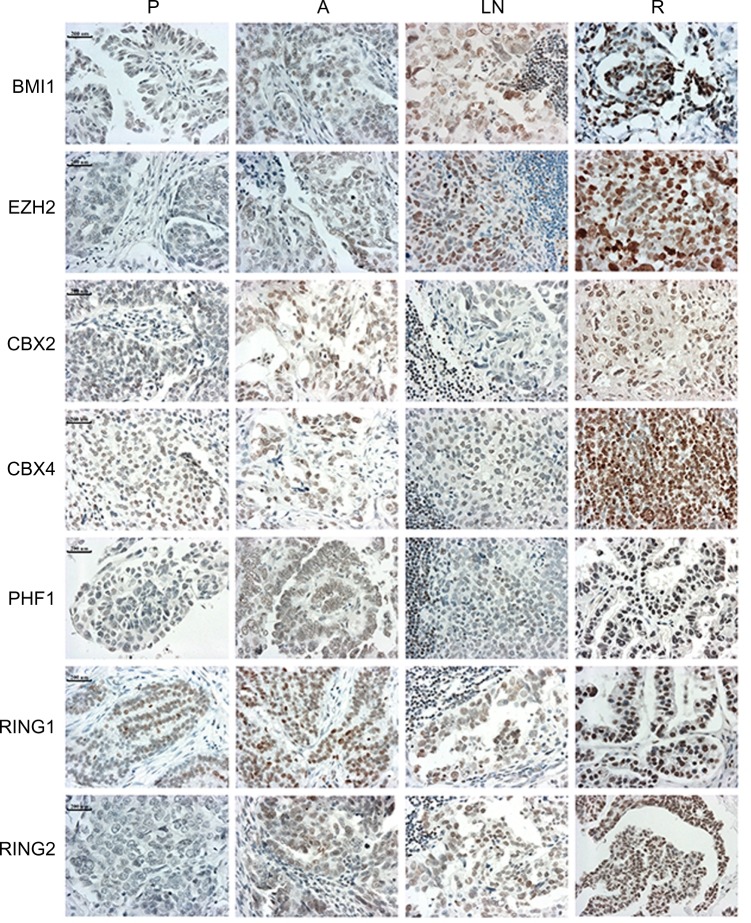
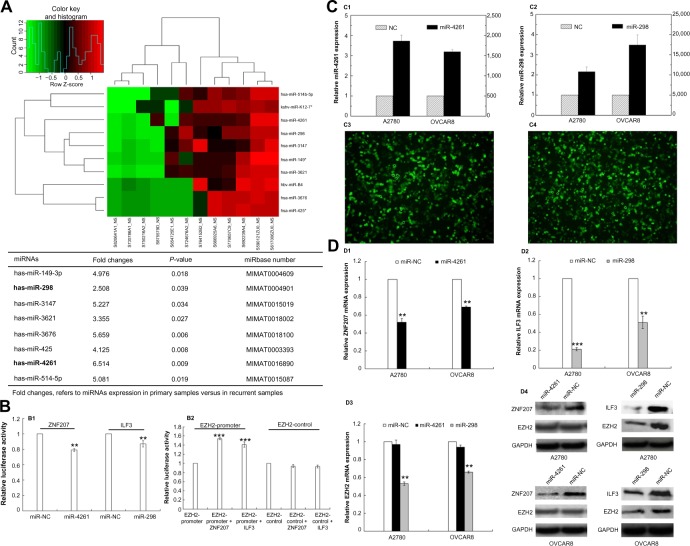
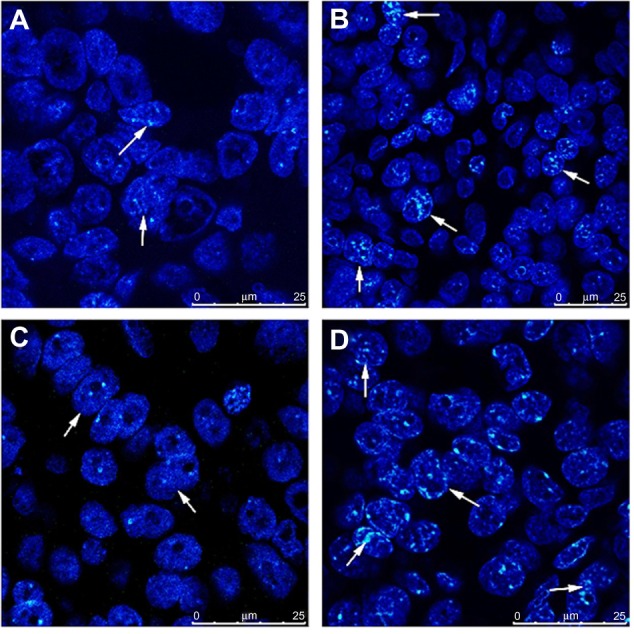
PcG proteins were heterogeneously expressed in primary versus recurrent tumors (P<0.05). In univariate survival analysis of the ovarian carcinoma cohorts, a significant association of intensive expression of BMI1 and EZH2 in first-onset lymph node metastases with shortened PFS was demonstrated (P=0.010, P=0.019); and a significant association of intensive expression of BMI1 and EZH2 in recurrent tumors with shortened OS was demonstrated (P=0.042, P=0.047). Importantly, BMI1 and EZH2 expression provided significant independent prognostic parameters in multivariate analyses (P<0.05). Gene amplification did not always coincide with PcG protein expression. Eight miRNAs were found to be downregulated in recurrent tumors, among which miR-298 might indirectly regulate the expression of EZH2 through transcription factor ILF3.
Tumor heterogeneity exists in the recurrence of epithelial ovarian cancer, manifested by PcG protein expression and underlying genetic and epigenetic alterations. Intensive expression of BMI1 and EZH2 are predictors of earlier relapse and shorter OS, independent of grade and chemotherapy sensitivity. EZH2 and miR-298 have great potential to be new targets for treatment of recurrent ovarian cancer.
通过多梳组(PcG)蛋白研究上皮性卵巢癌复发中的肿瘤异质性。
构建包含同一患者原发和复发性卵巢肿瘤的组织微阵列,用于检测 PcG 蛋白表达。对无进展生存(PFS)和总生存(OS)的临床病理参数和 PcG 蛋白表达进行生存分析。从基因拷贝数和 microRNA(miRNA)谱方面探讨遗传和表观遗传异质性。
PcG 蛋白在原发与复发性肿瘤中存在异质性表达(P<0.05)。在卵巢癌队列的单因素生存分析中,首次淋巴结转移中 BMI1 和 EZH2 高表达与 PFS 缩短显著相关(P=0.010,P=0.019);复发性肿瘤中 BMI1 和 EZH2 高表达与 OS 缩短显著相关(P=0.042,P=0.047)。重要的是,BMI1 和 EZH2 表达在多变量分析中提供了显著的独立预后参数(P<0.05)。基因扩增并不总是与 PcG 蛋白表达一致。在复发性肿瘤中发现 8 个 miRNA 下调,其中 miR-298 可能通过转录因子 ILF3 间接调节 EZH2 的表达。
上皮性卵巢癌在复发中存在肿瘤异质性,表现为 PcG 蛋白表达及潜在的遗传和表观遗传改变。BMI1 和 EZH2 的高表达是复发较早和 OS 较短的预测因子,与分级和化疗敏感性无关。EZH2 和 miR-298 具有成为治疗复发性卵巢癌新靶点的巨大潜力。