Department of Psychology, Institute of Psychiatry, King's College London London, UK.
Department of Neuroimaging, Institute of Psychiatry, King's College London London, UK.
Front Psychol. 2014 Sep 19;5:1027. doi: 10.3389/fpsyg.2014.01027. eCollection 2014.
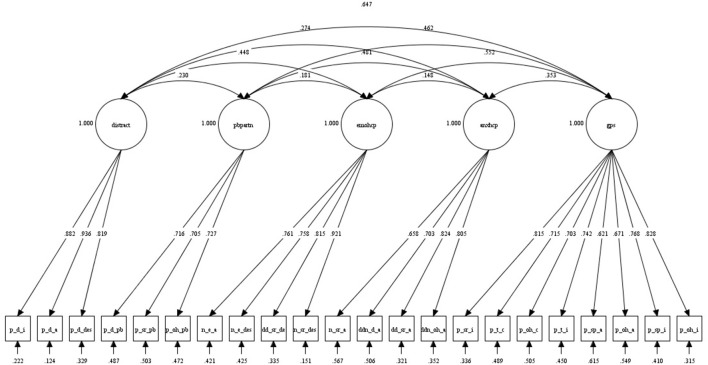
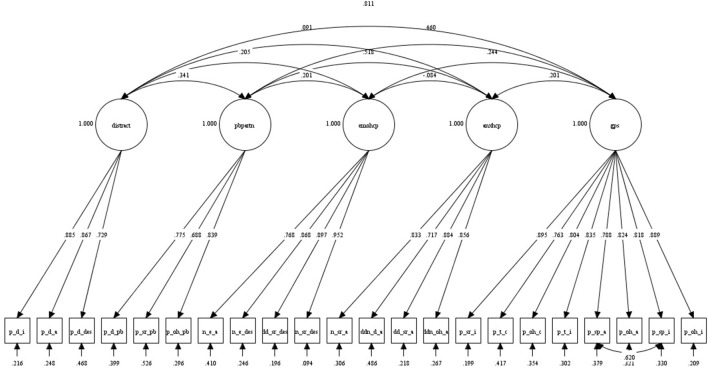
Social support can have beneficial effects on psychological and physiological well-being. During acute bodily pain, however, the effects of social support on pain are mixed. This variability may be due to the multifaceted nature of both pain and social support, as well as individual differences. In this paper, we present the development, psychometric assessment, and initial validation of the first self-report measure designed to address this variability in the general population; the Responses and Attitudes to Support during Pain questionnaire (RASP). The RASP includes questions on social support from the romantic partner as well as healthcare professionals (HCPs) and addresses different types of social support and pain responses. The development and validation of the RASP comprised four studies. In Study 1, a preliminary RASP version was completed by 179 healthy individuals regarding any type of acute pain. In Study 2, the reduced RASP was completed by 256 women with experiences of menstrual pain. Principal component analysis indicated a 22-item solution with five underlying dimensions reflecting General Partner Support, Emotional Support from HCPs, Anxiety in the Context of HCPs, Pain Behaviors during Partner Support, and Distraction by the Partner. Construct validity was assessed using a measure of adult attachment style. The RASP showed good validity and test-retest reliability. In Study 3, the 5-factor model received initial support through confirmatory factor analysis in a new sample of 120 individuals with recent musculoskeletal pain. Study 4 provided additional validation of the RASP in a sample of 180 individuals responding in reference to acute back pain. Overall, the RASP is a valid and reliable measure for assessing individual differences in attitudes and responses to social support in relation to acute pain.
社会支持对心理和生理健康都有有益的影响。然而,在急性身体疼痛期间,社会支持对疼痛的影响是混杂的。这种可变性可能是由于疼痛和社会支持的多面性以及个体差异所致。在本文中,我们提出了第一个自我报告的测量工具的开发、心理测量评估和初步验证,旨在解决一般人群中这种可变性;疼痛期间支持的反应和态度问卷(RASP)。RASP 包括来自浪漫伴侣以及医疗保健专业人员(HCPs)的社会支持问题,并涉及不同类型的社会支持和疼痛反应。RASP 的开发和验证包括四项研究。在研究 1 中,179 名健康个体完成了初步的 RASP 版本,涉及任何类型的急性疼痛。在研究 2 中,256 名经历月经痛的女性完成了简化的 RASP。主成分分析表明,22 项解决方案有五个潜在维度,反映了一般伴侣支持、HCPs 的情感支持、HCPs 背景下的焦虑、伴侣支持期间的疼痛行为和伴侣的分心。使用成人依恋风格的测量来评估构念效度。RASP 显示出良好的有效性和重测信度。在研究 3 中,5 因素模型在新的 120 名最近患有肌肉骨骼疼痛的个体样本中通过验证性因素分析得到了初步支持。研究 4 在 180 名急性背痛个体的样本中提供了 RASP 的额外验证。总体而言,RASP 是一种有效且可靠的测量工具,用于评估与急性疼痛相关的个体差异对社会支持的态度和反应。