Patel Jigisha
BMC Med. 2014 Jul 30;12:128. doi: 10.1186/s12916-014-0128-z.
The purpose and effectiveness of peer review is currently a subject of hot debate, as is the need for greater openness and transparency in the conduct of clinical trials. Innovations in peer review have focused on the process of peer review rather than its quality.
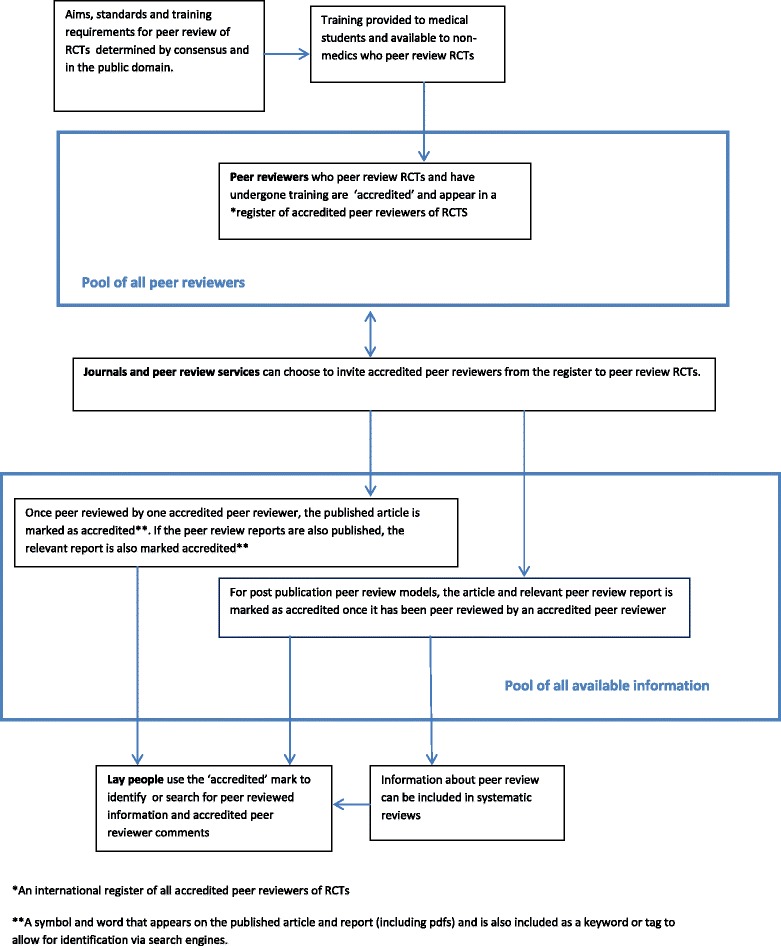
The aims of peer review are poorly defined, with no evidence that it works and no established way to provide training. However, despite the lack of evidence for its effectiveness, evidence-based medicine, which directly informs patient care, depends on the system of peer review. The current system applies the same process to all fields of research and all study designs. While the volume of available health related information is vast, there is no consistent means for the lay person to judge its quality or trustworthiness. Some types of research, such as randomized controlled trials, may lend themselves to a more specialized form of peer review where training and ongoing appraisal and revalidation is provided to individuals who peer review randomized controlled trials. Any randomized controlled trial peer reviewed by such a trained peer reviewer could then have a searchable 'quality assurance' symbol attached to the published articles and any published peer reviewer reports, thereby providing some guidance to the lay person seeking to inform themselves about their own health or medical treatment.
Specialization, training and ongoing appraisal and revalidation in peer review, coupled with a quality assurance symbol for the lay person, could address some of the current limitations of peer review for randomized controlled trials.
同行评审的目的和有效性目前是激烈辩论的主题,临床试验实施中提高开放性和透明度的必要性也是如此。同行评审的创新主要集中在评审过程而非评审质量上。
同行评审的目标定义不明确,没有证据表明其有效,也没有既定的培训方法。然而,尽管缺乏其有效性的证据,但直接为患者护理提供依据的循证医学却依赖于同行评审系统。当前系统对所有研究领域和所有研究设计都采用相同的流程。虽然与健康相关的可用信息量巨大,但外行人没有一致的方法来判断其质量或可信度。某些类型的研究,如随机对照试验,可能更适合采用一种更专业化的同行评审形式,即对参与随机对照试验同行评审的个人提供培训以及持续的评估和再验证。任何经过此类训练有素的同行评审员评审的随机对照试验,都可以在发表的文章以及任何发表的同行评审报告上附上一个可搜索的“质量保证”标志,从而为那些希望了解自身健康或医疗情况的外行人提供一些指导。
同行评审中的专业化、培训以及持续的评估和再验证,再加上为外行人设置的质量保证标志,可以解决当前随机对照试验同行评审的一些局限性。