Bertolde Fabiana Z, Almeida Alex-Alan F, Pirovani Carlos P
Instituto Federal de Educação Ciência e Tecnologia, Campus Eunápolis, Eunápolis, Bahia, Brazil.
Departamento de Ciências Biológicas, Universidade Estadual de Santa Cruz, Ilhéus, Bahia, Brazil.
PLoS One. 2014 Oct 7;9(10):e108705. doi: 10.1371/journal.pone.0108705. eCollection 2014.
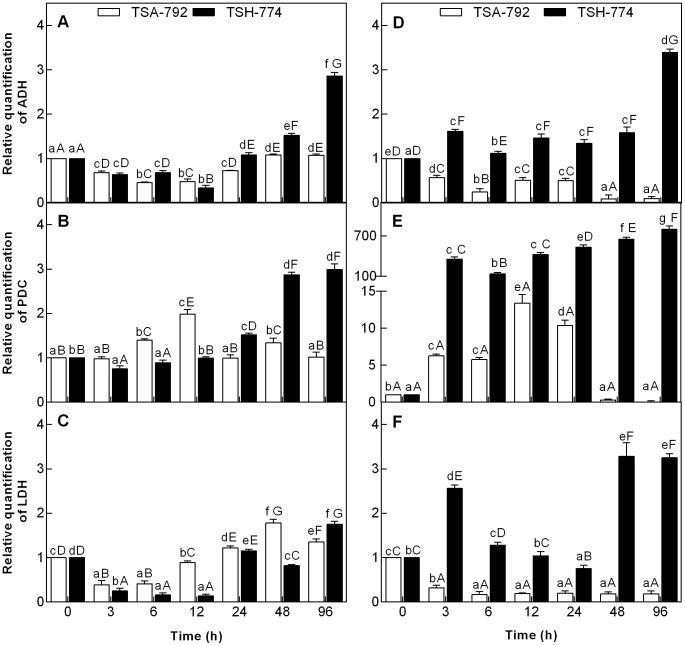
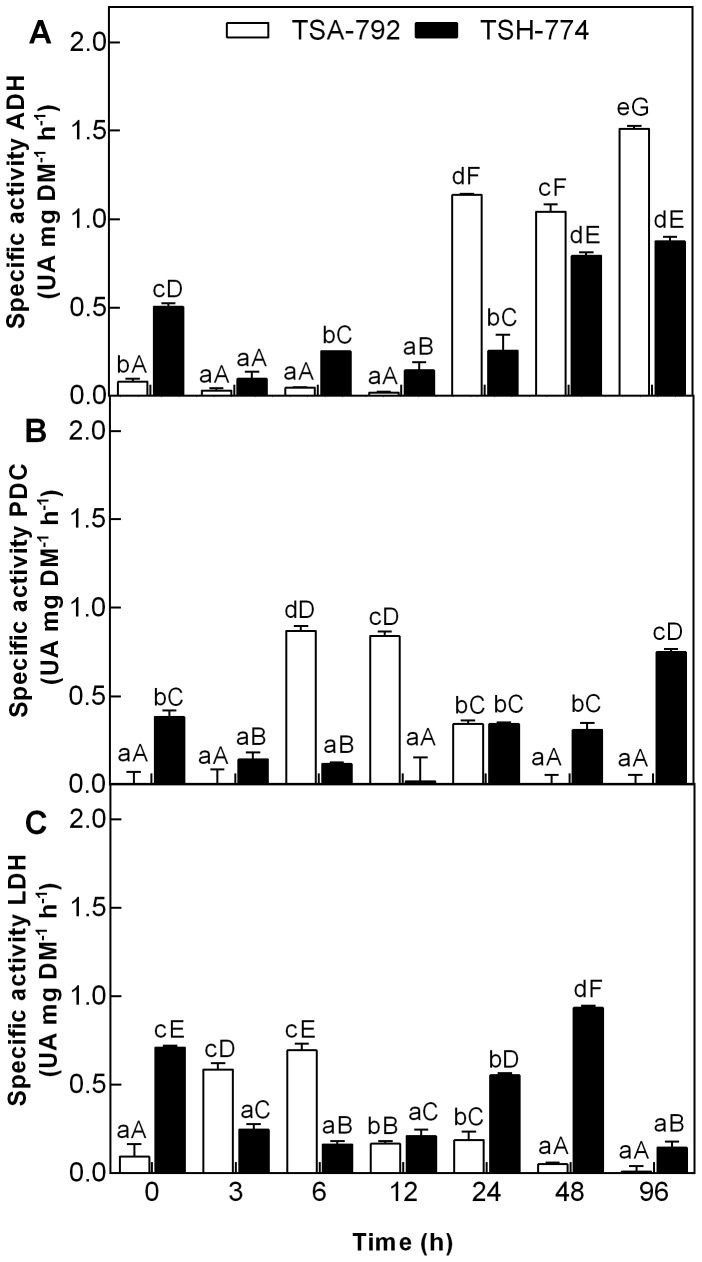
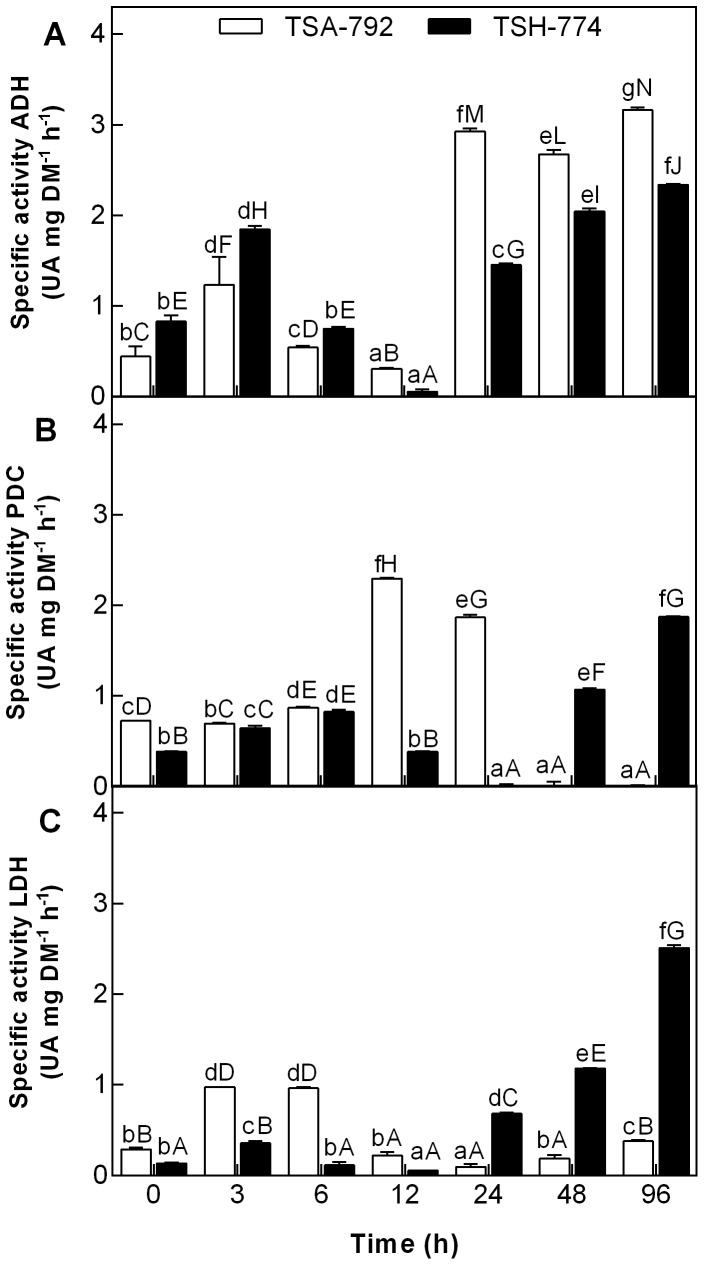
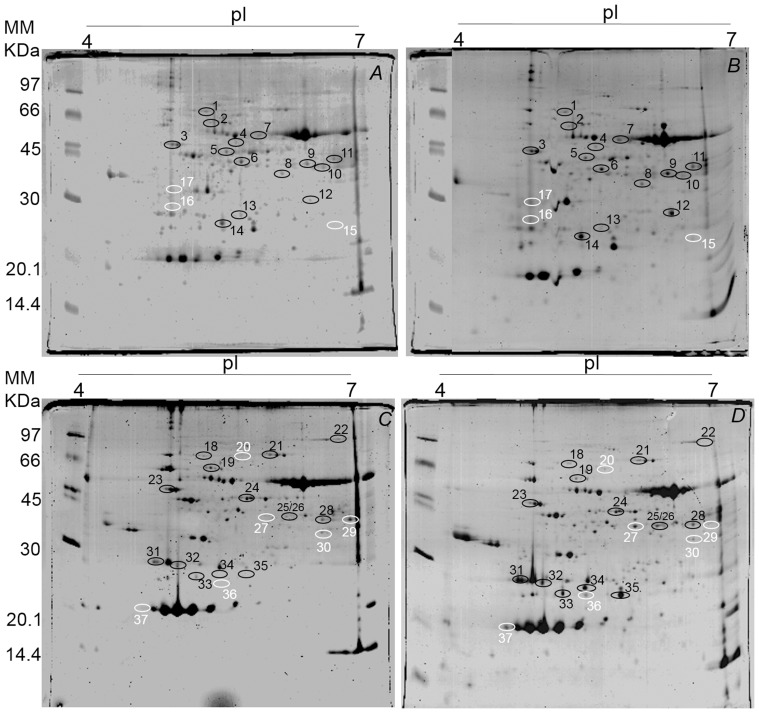
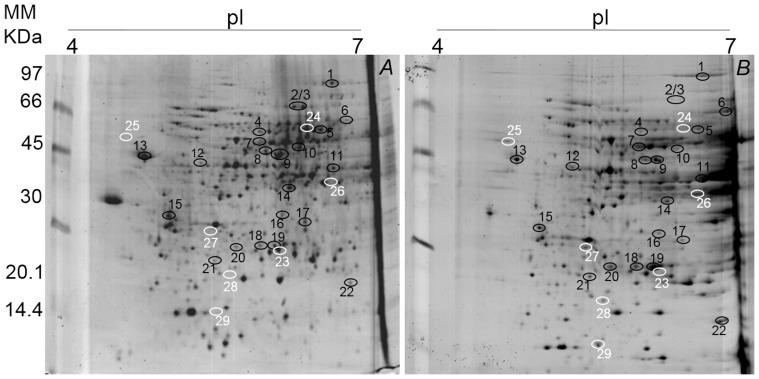
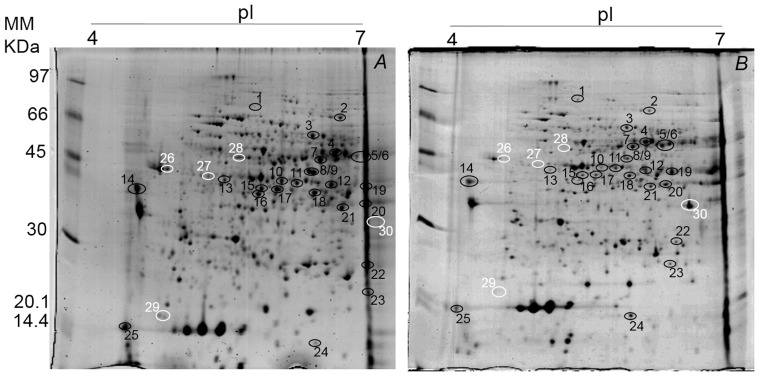
Soil flooding causes changes in gene transcription, synthesis and degradation of proteins and cell metabolism. The main objective of this study was to understand the biological events of Theobroma cacao during soil flooding-induced stress, using the analyses of gene expression and activity of key enzymes involved in fermentation, as well as the identification of differentially expressed proteins by mass spectrometry in two contrasting genotypes for flooding tolerance (tolerant - TSA-792 and susceptible - TSH-774). Soil anoxia caused by flooding has led to changes in the expression pattern of genes associated with the biosynthesis of alcohol dehydrogenase (ADH), pyruvate decarboxylase (PDC) and lactate dehydrogenase (LDH) in leaves and roots of the two evaluated genotypes. Significant differences were observed between the enzyme activities of the two genotypes. Leaves and roots of the TSA-792 genotype showed higher ADH activity as compared to the TSH-774 genotype, whereas the activities of PDC and LDH have varied over the 96 h of soil flooding, being higher for TSA-792 genotype, at the initial stage, and TSH-774 genotype, at the final stage. Some of the identified proteins are those typical of the anaerobic metabolism-involved in glycolysis and alcoholic fermentation-and different proteins associated with photosynthesis, protein metabolism and oxidative stress. The ability to maintain glycolysis and induce fermentation was observed to play an important role in anoxia tolerance in cacao and may also serve to distinguish tolerant and susceptible genotypes in relation to this stressor.
土壤淹水会导致基因转录、蛋白质合成与降解以及细胞代谢发生变化。本研究的主要目的是通过分析参与发酵的关键酶的基因表达和活性,以及利用质谱法鉴定两种耐淹性不同的基因型(耐淹型 - TSA - 792和敏感型 - TSH - 774)中差异表达的蛋白质,来了解可可树在土壤淹水胁迫期间的生物学事件。淹水导致的土壤缺氧已使两种评估基因型的叶片和根系中与乙醇脱氢酶(ADH)、丙酮酸脱羧酶(PDC)和乳酸脱氢酶(LDH)生物合成相关的基因表达模式发生变化。观察到两种基因型的酶活性存在显著差异。与TSH - 774基因型相比,TSA - 792基因型的叶片和根系显示出更高的ADH活性,而在土壤淹水的96小时内,PDC和LDH的活性有所变化,在初始阶段TSA - 792基因型的活性较高,在最后阶段TSH - 774基因型的活性较高。鉴定出的一些蛋白质是参与糖酵解和酒精发酵的典型厌氧代谢蛋白,以及与光合作用、蛋白质代谢和氧化应激相关的不同蛋白质。维持糖酵解和诱导发酵的能力在可可树的耐缺氧性中起着重要作用,也可能有助于区分耐淹和敏感基因型对这种胁迫的反应。