Li Lily, Lin Marvin, Krassilnikova Maria, Ostrow Katya, Bader Amanda, Radbill Brian, Uribarri Jaime, Tokita Joji, Leisman Staci, Lapsia Vijay, Albrecht Randy A, García-Sastre Adolfo, Branch Andrea D, Heeger Peter S, Mehrotra Anita
Division of Nephrology, Icahn School of Medicine at Mount Sinai, New York, New York, United States of America; Department of Medicine, Icahn School of Medicine at Mount Sinai, New York, New York, United States of America.
Department of Microbiology, Icahn School of Medicine at Mount Sinai, New York, New York, United States of America; Global Health and Emerging Pathogens Institute, Icahn School of Medicine at Mount Sinai, New York, New York, United States of America.
PLoS One. 2014 Oct 8;9(10):e109998. doi: 10.1371/journal.pone.0109998. eCollection 2014.
Memory T-cells are mediators of transplant injury, and no therapy is known to prevent the development of cross-reactive memory alloimmunity. Activated vitamin D is immunomodulatory, and vitamin D deficiency, common in hemodialysis patients awaiting transplantation, is associated with a heightened alloimmune response. Thus, we tested the hypothesis that vitamin D3 supplementation would prevent alloreactive T-cell memory formation in vitamin D-deficient hemodialysis patients.
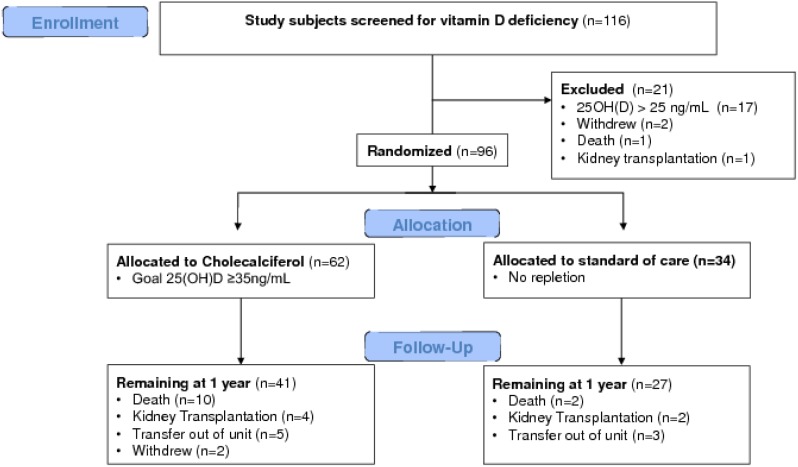
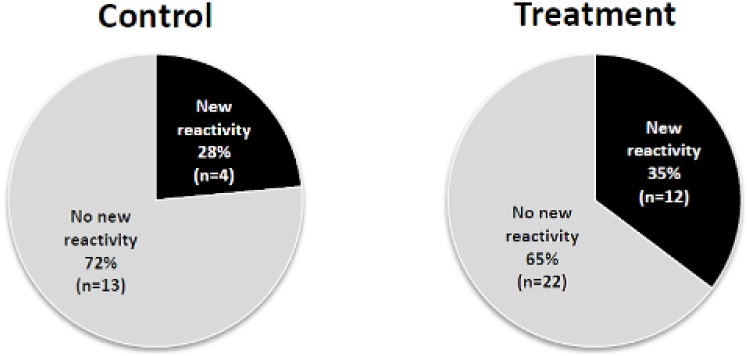
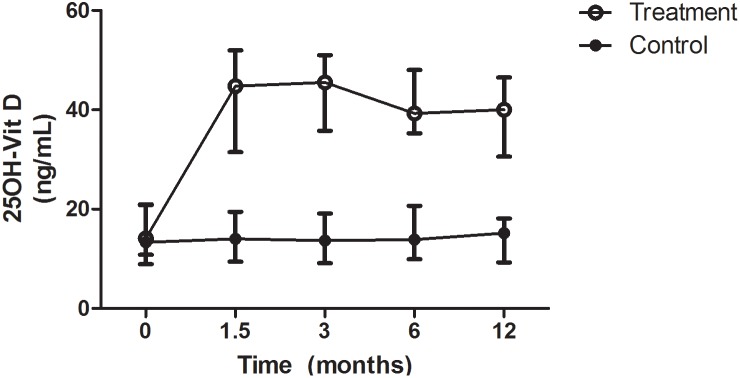
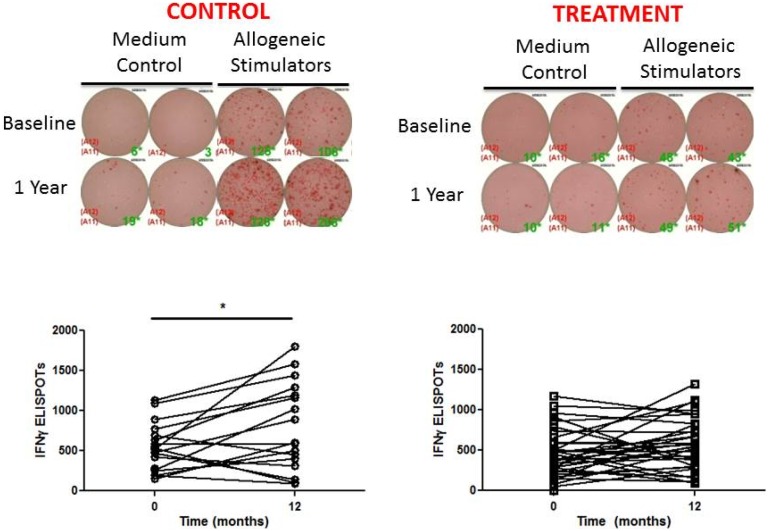
We performed a 12-month single-center pilot randomized, controlled trial of 50,000 IU/week of cholecalciferol (D3) versus no supplementation in 96 hemodialysis patients with serum 25(OH)D<25 ng/mL, measuring effects on serum 25(OH)D and phenotypic and functional properties of T-cells. Participants were randomized 2:1 to active treatment versus control. D3 supplementation increased serum 25(OH)D at 6 weeks (13.5 [11.2] ng/mL to 42.5 [18.5] ng/mL, p<0.001) and for the duration of the study. No episodes of sustained hypercalcemia occurred in either group. Results of IFNγ ELISPOT-based panel of reactive T-cell assays (PRT), quantifying alloreactive memory, demonstrated greater increases in the controls over 1 year compared to the treatment group (delta PRT in treatment 104.8+/-330.8 vs 252.9+/-431.3 in control), but these changes in PRT between groups did not reach statistical significance (p = 0.25).
D3 supplements are safe, effective at treating vitamin D deficiency, and may prevent time-dependent increases in T-cell alloimmunity in hemodialysis patients, but their effects on alloimmunity need to be confirmed in larger studies. These findings support the routine supplementation of vitamin D-deficient transplant candidates on hemodialysis and highlight the need for large-scale prospective studies of vitamin D supplementation in transplant candidates and recipients.
Clinicaltrials.gov NCT01175798.
记忆性T细胞是移植损伤的介导因素,目前尚无已知疗法可预防交叉反应性记忆同种免疫的发生。活性维生素D具有免疫调节作用,而在等待移植的血液透析患者中常见的维生素D缺乏与同种免疫反应增强有关。因此,我们检验了以下假设:补充维生素D3可预防维生素D缺乏的血液透析患者中同种反应性T细胞记忆的形成。
我们对96名血清25(OH)D<25 ng/mL的血液透析患者进行了一项为期12个月的单中心试验性随机对照试验,比较每周50,000 IU胆钙化醇(D3)与不补充的效果,测量其对血清25(OH)D以及T细胞表型和功能特性的影响。参与者以2:1的比例随机分为活性治疗组和对照组。补充D3在6周时使血清25(OH)D升高(从13.5 [11.2] ng/mL升至42.5 [18.5] ng/mL,p<0.001),且在研究期间持续升高。两组均未发生持续性高钙血症事件。基于IFNγ ELISPOT的反应性T细胞检测(PRT)小组的结果,用于量化同种反应性记忆,结果显示与治疗组相比,对照组在1年中的增加幅度更大(治疗组的PRT变化为104.8±330.8,对照组为252.9±431.3),但两组之间PRT的这些变化未达到统计学显著性(p = 0.25)。
D3补充剂安全有效,可治疗维生素D缺乏,并且可能预防血液透析患者中T细胞同种免疫随时间的增加,但其对同种免疫的影响需要在更大规模的研究中得到证实。这些发现支持对维生素D缺乏的血液透析移植候选者进行常规补充,并强调需要对移植候选者和接受者补充维生素D进行大规模前瞻性研究。
Clinicaltrials.gov NCT01175798。