Cao Mingyu, He Chunrong, Gong Matthew, Wu Song, He Jinshen
Department of Orthopaedic Surgery, Third Xiangya Hospital of Central South University, Changsha, China.
Department of Orthopaedic Surgery, University of Pittsburgh, Pittsburgh, PA, United States.
Front Nutr. 2023 Jun 22;10:1132528. doi: 10.3389/fnut.2023.1132528. eCollection 2023.
To conduct a solid evidence by synthesizing meta-analyses and updated RCTs about the effects of vitamin D on all-cause mortality in different health conditions.
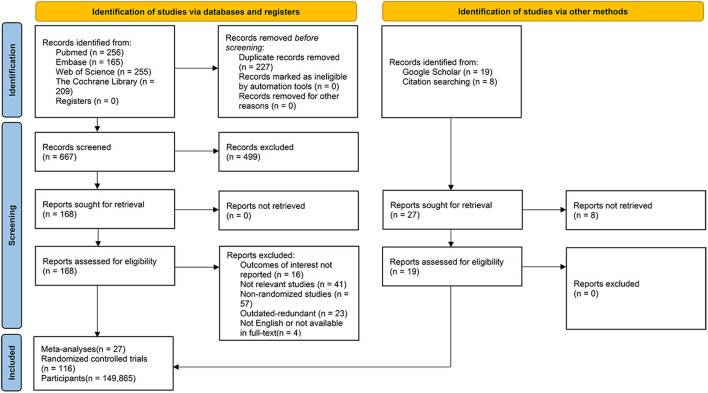
Data sources: Pubmed, Embase, Web of Science, the Cochrane Library, Google Scholar from inception until 25th April, 2022. Study selection: English-language, meta-analyses and updated RCTs assessing the relationships between vitamin D and all-cause mortality. Data synthesis: Information of study characteristics, mortality, supplementation were extracted, estimating with fixed-effects model. A Measurement Tool to Assess Systematic Reviews, Grading of Recommendations Assessment, Development and Evaluation, and funnel plot was used to assess risk of bias. Main outcomes: All-cause mortality, cancer mortality, cardiovascular disease mortality.
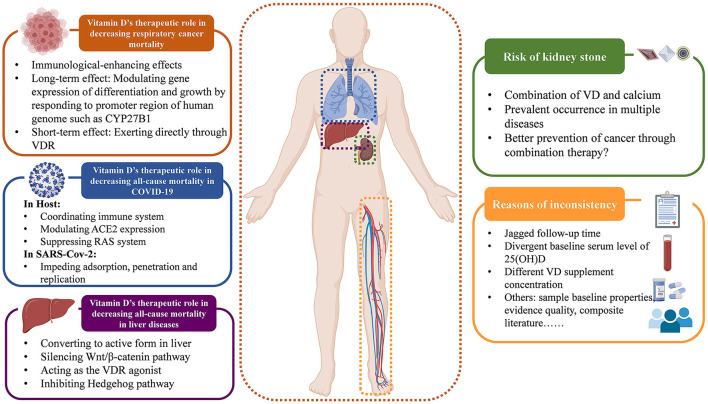
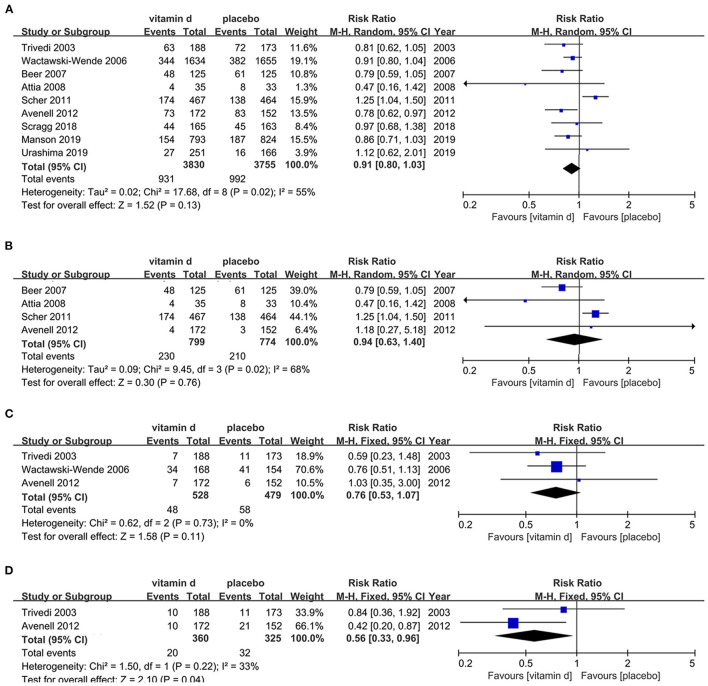
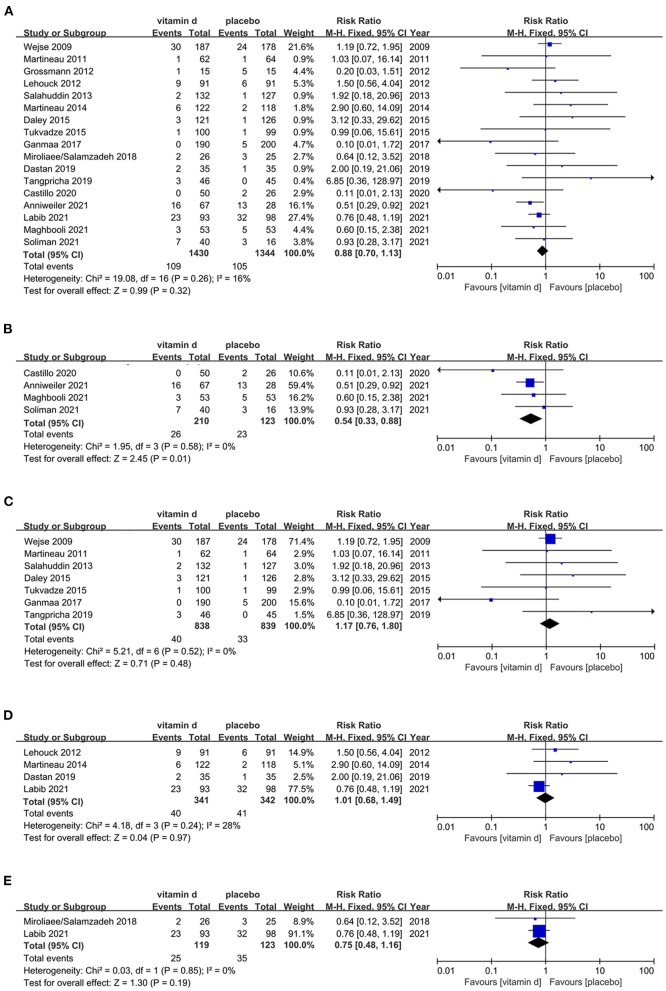
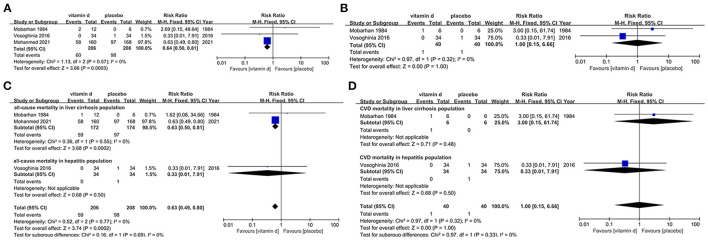
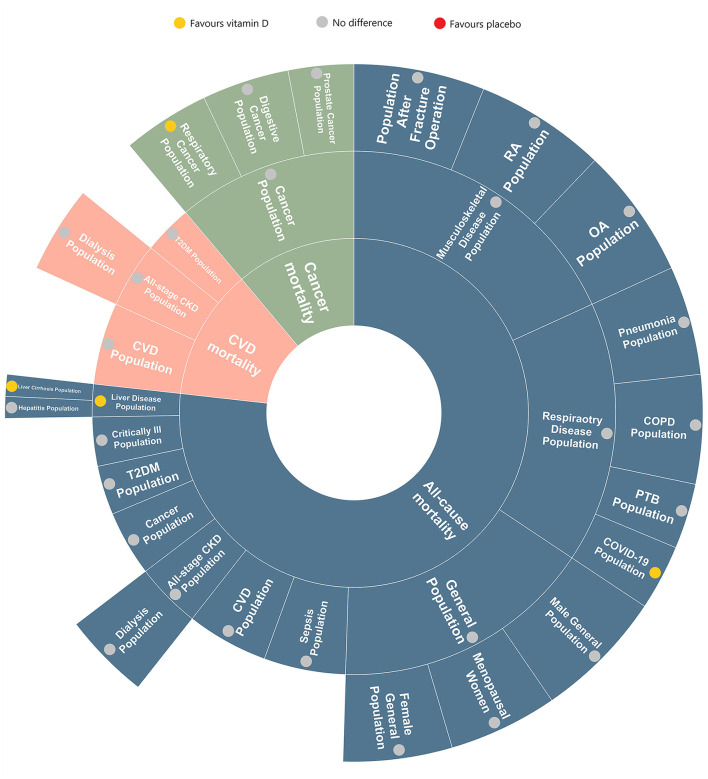
In total of 27 meta-analyses and 19 updated RCTs were selected, with a total of 116 RCTs and 149, 865 participants. Evidence confirms that vitamin D reduces respiratory cancer mortality (RR, 0.56 [95%CI, 0.33 to 0.96]). All-cause mortality is decreased in patients with COVID-19 (RR, 0.54[95%CI, 0.33 to 0.88]) and liver diseases (RR, 0.64 [95%CI, 0.50 to 0.81]), especially in liver cirrhosis (RR, 0.63 [95%CI, 0.50 to 0.81]). As for other health conditions, such as the general health, chronic kidney disease, critical illness, cardiovascular diseases, musculoskeletal diseases, sepsis, type 2 diabetes, no significant association was found between vitamin D and all-cause mortality.
Vitamin D may reduce respiratory cancer mortality in respiratory cancer patients and all-cause mortality in COVID-19 and liver disorders' patients. No benefits showed in all-cause mortality after vitamin D intervention among other health conditions. The hypothesis of reduced mortality with vitamin D still requires exploration.
https://www.crd.york.ac.uk/PROSPERO/display_record.php?RecordID=252921, identifier: CRD42021252921.
通过综合荟萃分析和更新的随机对照试验,获取关于维生素D对不同健康状况下全因死亡率影响的确凿证据。
数据来源:从创刊至2022年4月25日的PubMed、Embase、科学网、Cochrane图书馆、谷歌学术。研究选择:评估维生素D与全因死亡率之间关系的英文荟萃分析和更新的随机对照试验。数据合成:提取研究特征、死亡率、补充剂信息,采用固定效应模型进行估计。使用评估系统评价的测量工具、推荐分级评估、制定与评价以及漏斗图来评估偏倚风险。主要结局:全因死亡率、癌症死亡率、心血管疾病死亡率。
共纳入27项荟萃分析和19项更新的随机对照试验,总计116项随机对照试验和149,865名参与者。证据证实维生素D可降低呼吸道癌症死亡率(风险比,0.56 [95%置信区间,0.33至0.96])。维生素D可降低COVID-19患者(风险比,0.54[95%置信区间,0.33至0.88])和肝病患者(风险比,0.64 [95%置信区间,0.50至0.81])的全因死亡率,在肝硬化患者中尤其明显(风险比,0.63 [95%置信区间,0.50至0.81])。至于其他健康状况,如一般健康、慢性肾病、危重病、心血管疾病、肌肉骨骼疾病、败血症、2型糖尿病,未发现维生素D与全因死亡率之间存在显著关联。
维生素D可能降低呼吸道癌症患者的呼吸道癌症死亡率以及COVID-19和肝病患者的全因死亡率。在其他健康状况下,维生素D干预后全因死亡率未显示出益处。维生素D降低死亡率的假说仍需探索。
https://www.crd.york.ac.uk/PROSPERO/display_record.php?RecordID=252921,标识符:CRD42021252921