Department of Psychiatry, Addis Ababa University, College of Health Sciences, School of Medicine, Addis Ababa, Ethiopia.
BMC Psychiatry. 2014 Oct 9;14:280. doi: 10.1186/s12888-014-0280-1.
Spontaneous Movements Disorders (SMDs) or dyskinetic movements are often seen in patients with schizophrenia and other psychotic disorders, and are widely considered to be adverse consequences of the use of antipsychotic medications. Nevertheless, SMDs are also observed in the pre-neuroleptic ear and among patients who were never exposed to antipsychotic medications. The aim of this study was to determine the extent of SMDs among antipsychotic-naïve patients in a low income setting, and to evaluate contextually relevant risk factors.
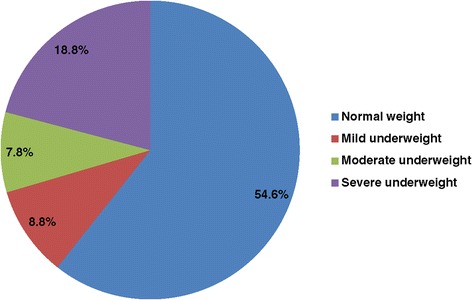
The study was a cross-sectional facility-based survey conducted at a specialist psychiatric hospital in Addis Ababa, Ethiopia. Consecutive consenting treatment-naïve patients with a diagnosis of schizophrenia, schizoaffective disorder and schizophreniform disorder contacting services for the first time were assessed using the Simpson-Angus Rating Scale (SAS) and the Abnormal Involuntary Movement Scale (AIMS) to evaluate the presence of SMDS. Scale for the Assessment of Negative Symptoms (SANS) and Scale for the Assessment of Positive Symptoms (SAPS) were administered to evaluate negative and positive symptom profiles respectively. Body mass index (BMI) was used as a proxy measure for nutritional status.
Sixty-four patients, 67.2% male (n = 43), with first contact psychosis who met the DSM-IV-TR criteria for schizophrenia (n = 47), schizophreniform disorder (n= 5), and schizoaffective disorder (n = 12) were assessed over a two month study period. Seven patients (10.9%) had SMDs. BMI (OR = 0.6, 95% CI = 0.40, 0.89; p = 0.011) and increasing age (OR = 1.10; 95% CI = 1.02, 1.20; p = 0.017) were associated with SMD.
This finding supports previous suggestions that abnormal involuntary movements in schizophrenia and other psychotic disorders may be related to the pathophysiology of psychotic disorders and therefore cannot be attributed entirely to the adverse effects of neuroleptic medication.
自发性运动障碍(SMD)或运动障碍常发生于精神分裂症和其他精神障碍患者中,且被广泛认为是抗精神病药物使用的不良后果。然而,在神经阻滞剂出现之前的时期和从未接触过抗精神病药物的患者中也观察到了 SMD。本研究旨在确定在低收入环境中,抗精神病药物初治患者中 SMD 的程度,并评估相关的风险因素。
本研究是在埃塞俄比亚亚的斯亚贝巴的一家专科精神病院进行的一项横断面、基于机构的调查。连续同意参加的、首次接触服务的、符合精神分裂症、分裂情感性障碍和分裂样障碍诊断的、抗精神病药物初治患者,使用 Simpson-Angus 评定量表(SAS)和异常不自主运动量表(AIMS)评估 SMD 的存在。同时使用阴性症状评定量表(SANS)和阳性症状评定量表(SAPS)评估阴性和阳性症状谱。体重指数(BMI)被用作营养状况的替代指标。
在为期两个月的研究期间,评估了 64 名患者,其中 67.2%为男性(n = 43),首次接触精神病,符合 DSM-IV-TR 精神分裂症(n = 47)、分裂样障碍(n = 5)和分裂情感性障碍(n = 12)的标准。7 名患者(10.9%)存在 SMD。BMI(OR = 0.6,95%CI = 0.40,0.89;p = 0.011)和年龄增长(OR = 1.10;95%CI = 1.02,1.20;p = 0.017)与 SMD 相关。
这一发现支持了先前的观点,即精神分裂症和其他精神障碍中的异常不自主运动可能与精神障碍的病理生理学有关,因此不能完全归因于神经阻滞剂的不良反应。