Kumar Manoj, Duda Jeffery T, Hwang Wei-Ting, Kenworthy Charles, Ittyerah Ranjit, Pickup Stephen, Brodkin Edward S, Gee James C, Abel Ted, Poptani Harish
Department of Radiology, Perelman School of Medicine at the University of Pennsylvania, Philadelphia, Pennsylvania, United States of America.
Department of Biostatistics and Epidemiology, Center for Clinical Epidemiology and Biostatistics, Perelman School of Medicine at the University of Pennsylvania, Philadelphia, Pennsylvania, United States of America.
PLoS One. 2014 Oct 9;9(10):e109872. doi: 10.1371/journal.pone.0109872. eCollection 2014.
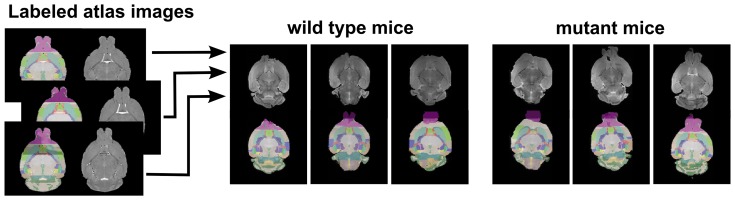
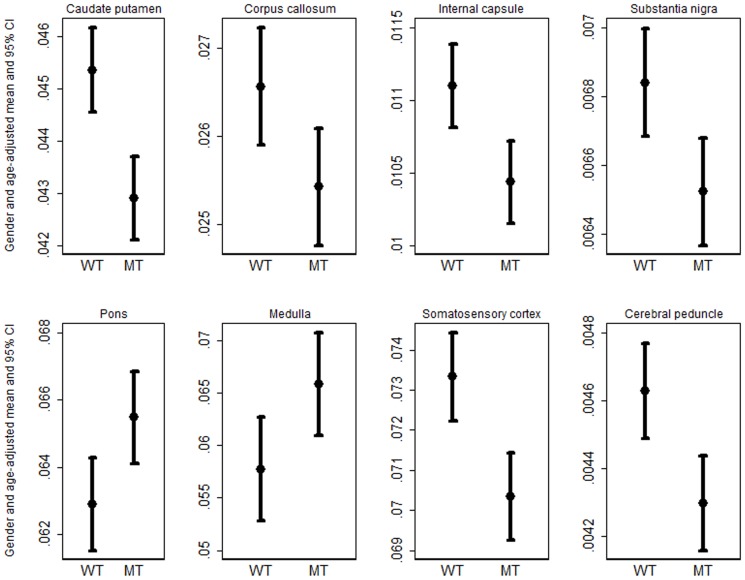
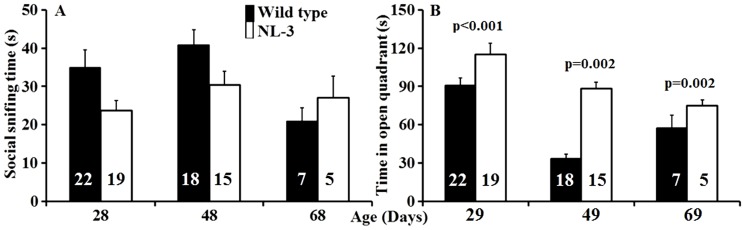
Autism spectrum disorders (ASD) comprise an etiologically heterogeneous set of neurodevelopmental disorders. Neuroligin-3 (NL-3) is a cell adhesion protein that mediates synapse development and has been implicated in ASD. We performed ex-vivo high resolution magnetic resonance imaging (MRI), including diffusion tensor imaging (DTI) and behavioral (social approach and zero maze) tests at 3 different time points (30, 50 and 70 days-of-age) on NL-3 and wild-type littermates to assess developmental brain abnormalities in NL-3 mice. MRI data were segmented in 39 different gray and white matter regions. Volumetric measurements, along with DTI indices from these segmented regions were also performed. After controlling for age and gender, the NL-3 knock-in animals demonstrated significantly reduced sociability and lower anxiety-related behavior in comparison to their wild type littermates. Significantly reduced volume of several white and gray matter regions in the NL-3 knock-in mice were also observed after considering age, gender and time point as covariates. These findings suggest that structural changes in the brain of NL-3 mice are induced by the mutation in the NL-3 gene. No significant differences in DTI indices were observed, which suggests that the NL-3 mutation may not have a profound effect on water diffusion as detected by DTI. The volumetric and DTI studies aid in understanding the biology of disrupting function on an ASD risk model and may assist in the development of imaging biomarkers for ASD.
自闭症谱系障碍(ASD)是一组病因异质性的神经发育障碍。神经连接蛋白-3(NL-3)是一种介导突触发育的细胞粘附蛋白,与ASD有关。我们在3个不同时间点(30、50和70日龄)对NL-3小鼠及其野生型同窝小鼠进行了离体高分辨率磁共振成像(MRI),包括扩散张量成像(DTI)和行为(社交接近和零迷宫)测试,以评估NL-3小鼠的脑发育异常。MRI数据被分割为39个不同的灰质和白质区域。还对这些分割区域进行了体积测量以及DTI指数测量。在控制年龄和性别后,与野生型同窝小鼠相比,NL-3基因敲入动物表现出明显降低的社交能力和较低的焦虑相关行为。在将年龄、性别和时间点作为协变量考虑后,还观察到NL-3基因敲入小鼠的几个白质和灰质区域体积显著减小。这些发现表明,NL-3基因的突变诱导了NL-3小鼠大脑的结构变化。未观察到DTI指数有显著差异,这表明NL-3突变可能对DTI检测到的水扩散没有深远影响。体积和DTI研究有助于理解ASD风险模型中功能破坏的生物学机制,并可能有助于开发ASD的成像生物标志物。