Al Dhaheri Yusra, Attoub Samir, Ramadan Gaber, Arafat Kholoud, Bajbouj Khuloud, Karuvantevida Noushad, AbuQamar Synan, Eid Ali, Iratni Rabah
Department of Biology, College of Science, United Arab Emirates University, Al Ain, United Arab Emirates.
Department of Pharmacology & Therapeutics, Faculty of Medicine & Health Sciences, United Arab Emirates University, Al Ain, United Arab Emirates.
PLoS One. 2014 Oct 9;9(10):e109630. doi: 10.1371/journal.pone.0109630. eCollection 2014.
In this study we investigated the in vitro and in vivo anticancer effect of carnosol, a naturally occurring polyphenol, in triple negative breast cancer.
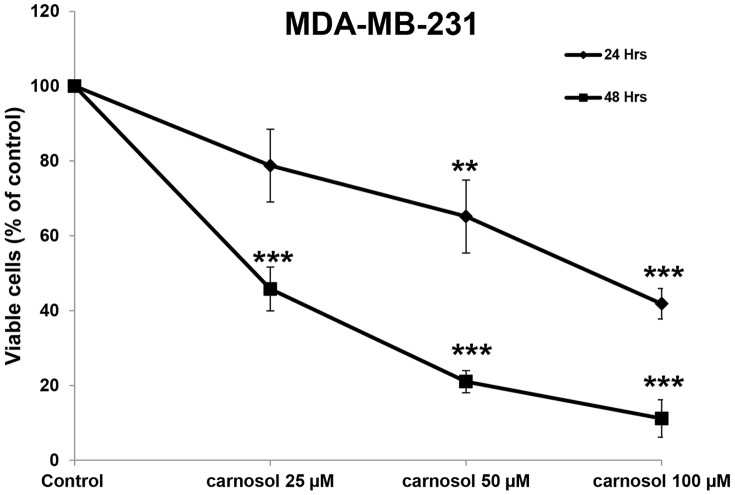
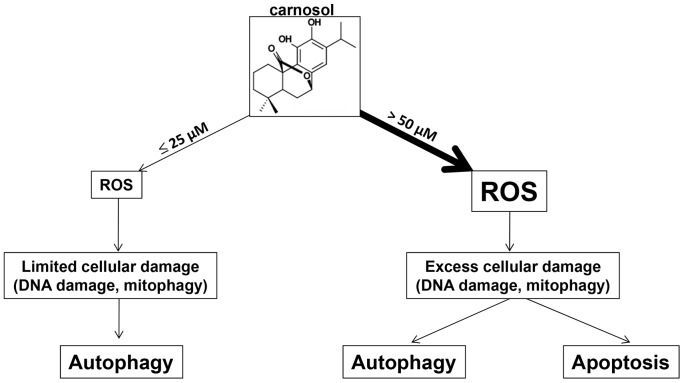
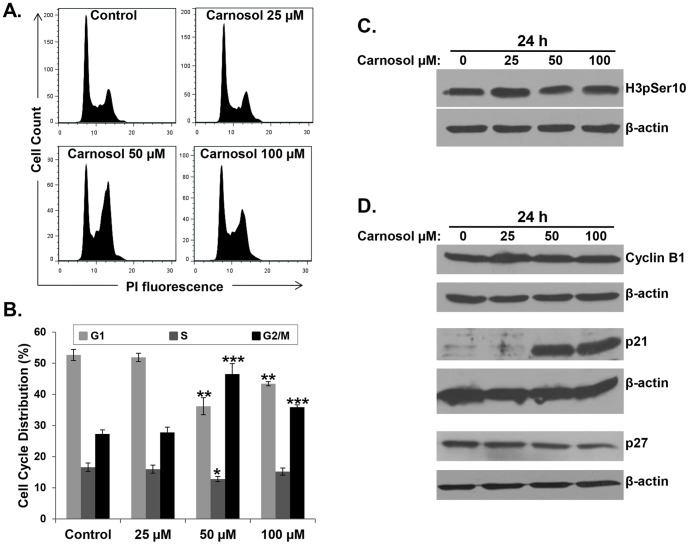
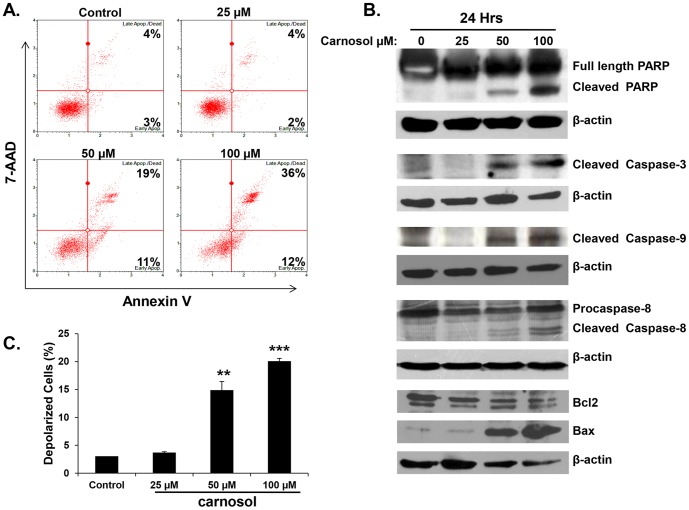
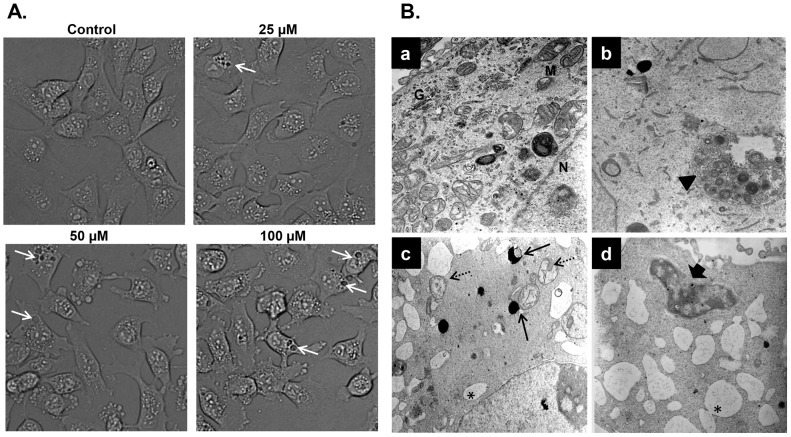
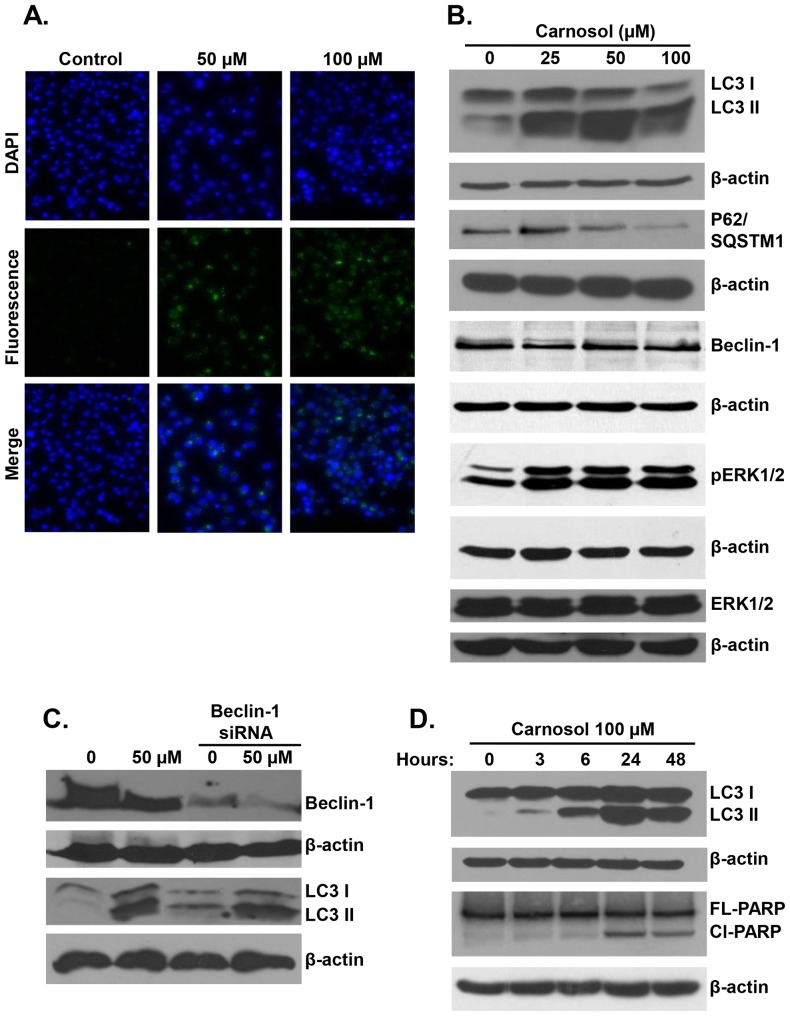
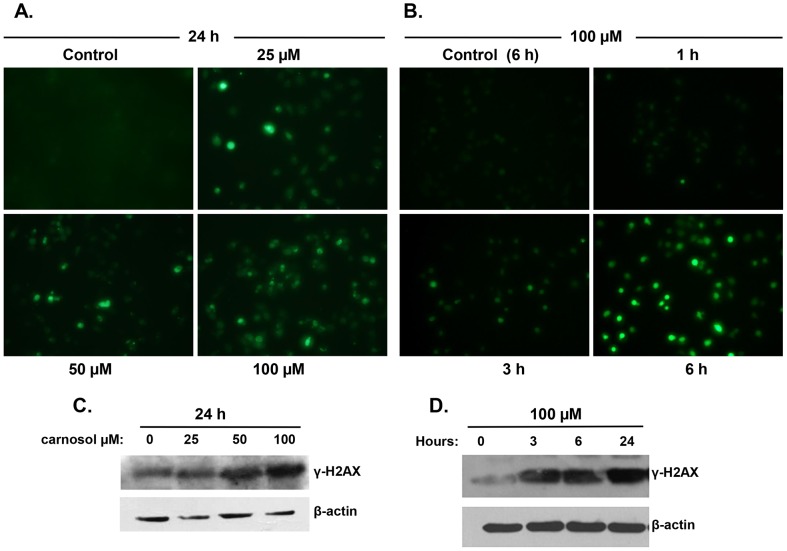
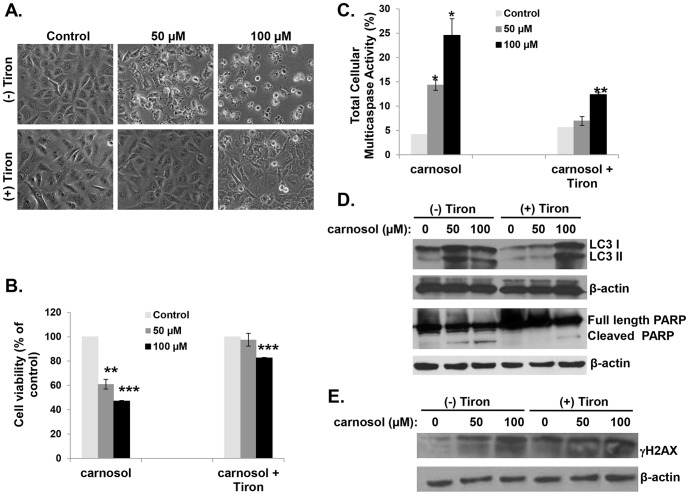
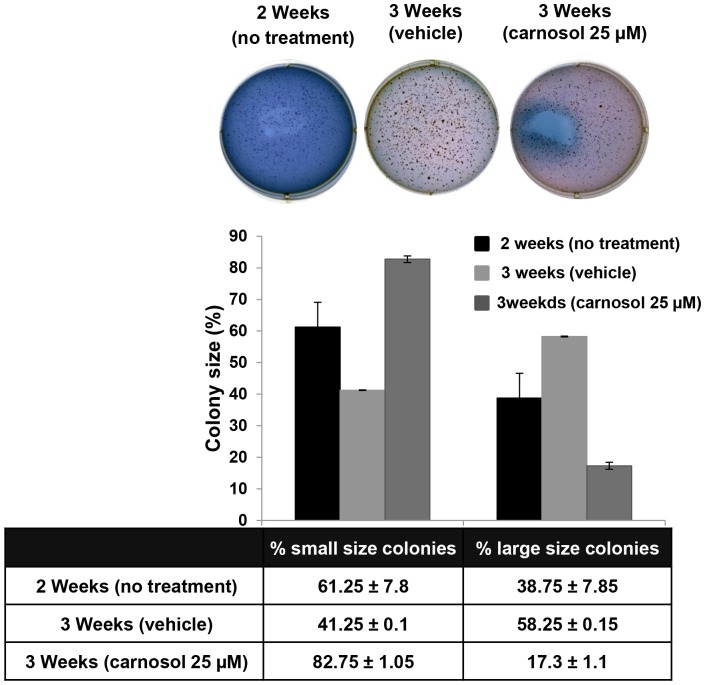
We found that carnosol significantly inhibited the viability and colony growth induced G2 arrest in the triple negative MDA-MB-231. Blockade of the cell cycle was associated with increased p21/WAF1 expression and downregulation of p27. Interestingly, carnosol was found to induce beclin1-independent autophagy and apoptosis in MDA-MB-231 cells. The coexistence of both events, autophagy and apoptosis, was confirmed by electron micrography. Induction of autophagy was found to be an early event, detected within 3 h post-treatment, which subsequently led to apoptosis. Carnosol treatment also caused a dose-dependent increase in the levels of phosphorylated extracellular signal-regulated kinase 1 and 2 (pERK1/2). Moreover, we show that carnosol induced DNA damage, reduced the mitochondrial potential and triggered the activation of the intrinsic and extrinsic apoptotic pathway. Furthermore, we found that carnosol induced a dose-dependent generation of reactive oxygen species (ROS) and inhibition of ROS by tiron, a ROS scavenger, blocked the induction of autophagy and apoptosis and attenuated DNA damage. To our knowledge, this is the first report to identify the induction of autophagy by carnosol.
In conclusion our findings provide strong evidence that carnosol may be an alternative therapeutic candidate against the aggressive form of breast cancer and hence deserves more exploration.
在本研究中,我们调查了天然存在的多酚肉豆蔻醇对三阴性乳腺癌的体外和体内抗癌作用。
我们发现肉豆蔻醇显著抑制三阴性MDA-MB-231细胞的活力和集落生长,并诱导G2期阻滞。细胞周期的阻断与p21/WAF1表达增加和p27下调有关。有趣的是,发现肉豆蔻醇可在MDA-MB-231细胞中诱导不依赖于beclin1的自噬和凋亡。电子显微镜证实了自噬和凋亡这两种事件的共存。发现自噬的诱导是一个早期事件,在处理后3小时内即可检测到,随后导致凋亡。肉豆蔻醇处理还导致磷酸化细胞外信号调节激酶1和2(pERK1/2)水平呈剂量依赖性增加。此外,我们表明肉豆蔻醇诱导DNA损伤,降低线粒体电位,并触发内源性和外源性凋亡途径的激活。此外,我们发现肉豆蔻醇诱导剂量依赖性的活性氧(ROS)生成,而ROS清除剂钛铁试剂对ROS的抑制作用可阻断自噬和凋亡的诱导,并减轻DNA损伤。据我们所知,这是第一份鉴定肉豆蔻醇诱导自噬的报告。
总之,我们的研究结果提供了有力证据,表明肉豆蔻醇可能是治疗侵袭性乳腺癌的一种替代候选药物,因此值得进一步探索。