Hsu I, Parkinson L G, Shen Y, Toro A, Brown T, Zhao H, Bleackley R C, Granville D J
Department of Pathology and Laboratory Medicine, University of British Columbia, Vancouver, British Columbia, Canada.
1] Department of Pathology and Laboratory Medicine, University of British Columbia, Vancouver, British Columbia, Canada [2] Centre for Heart Lung Innovation, St. Paul's Hospital, University of British Columbia, Vancouver, British Columbia, Canada.
Cell Death Dis. 2014 Oct 9;5(10):e1458. doi: 10.1038/cddis.2014.423.
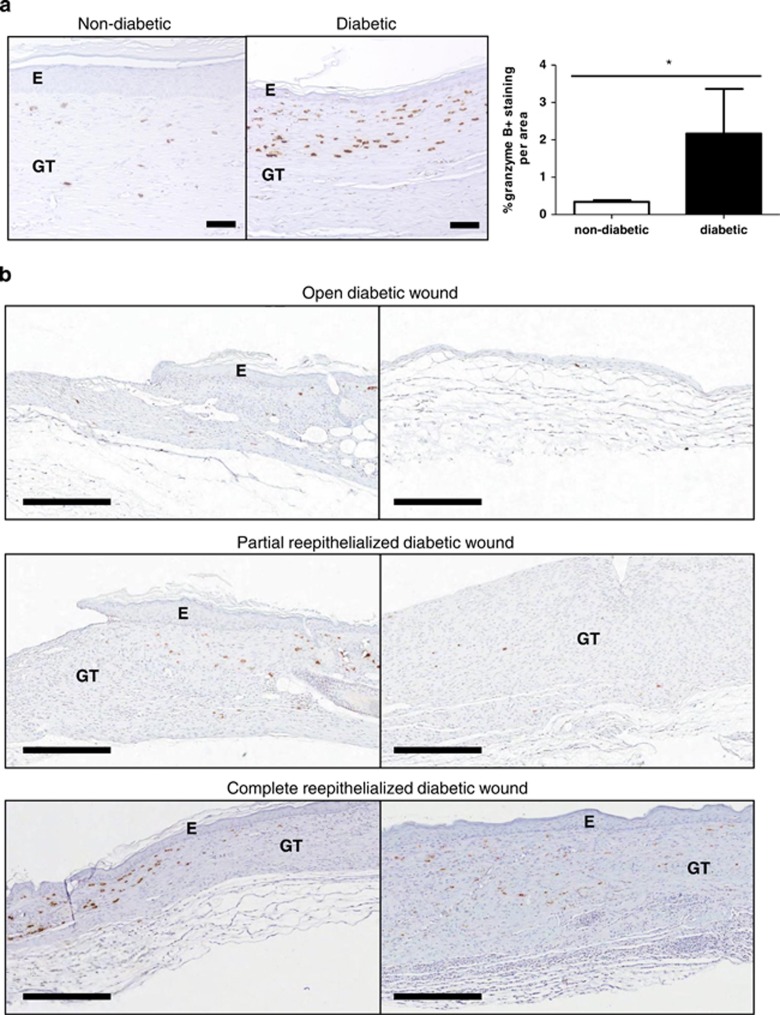
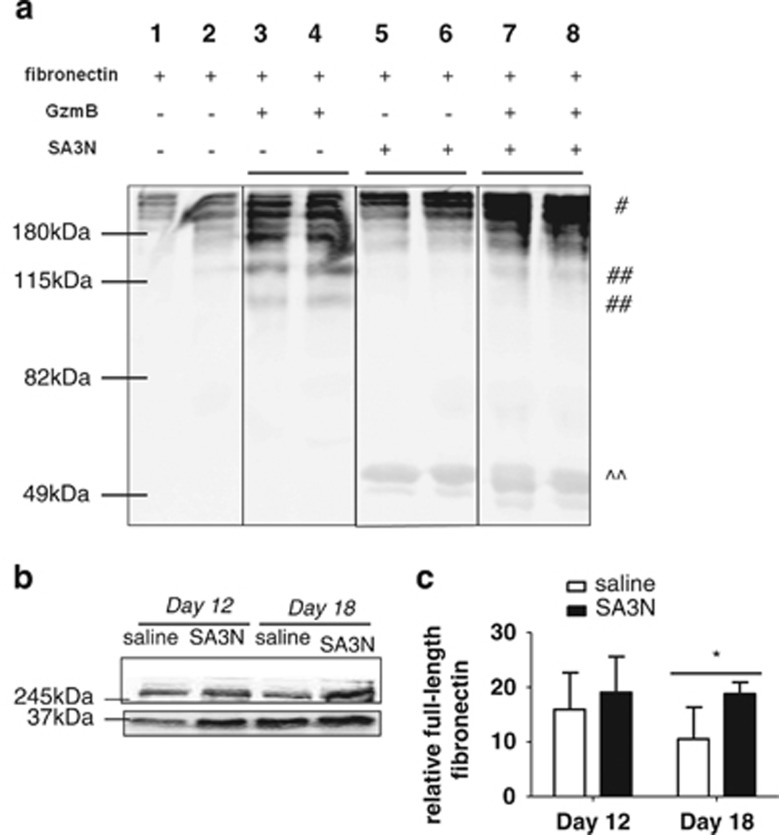
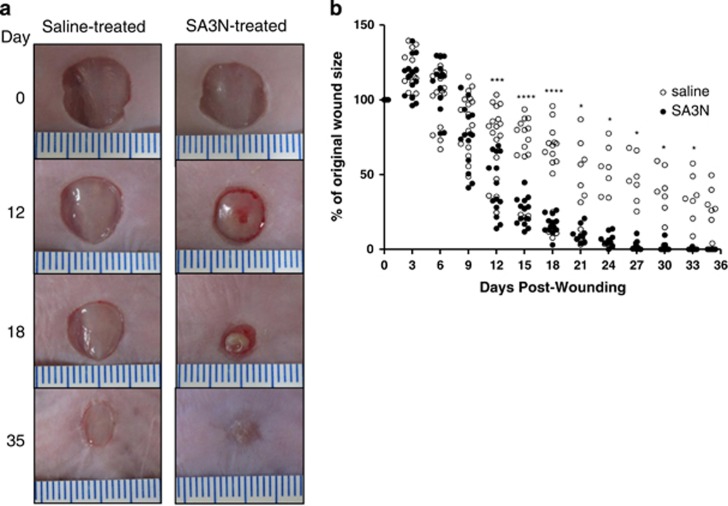
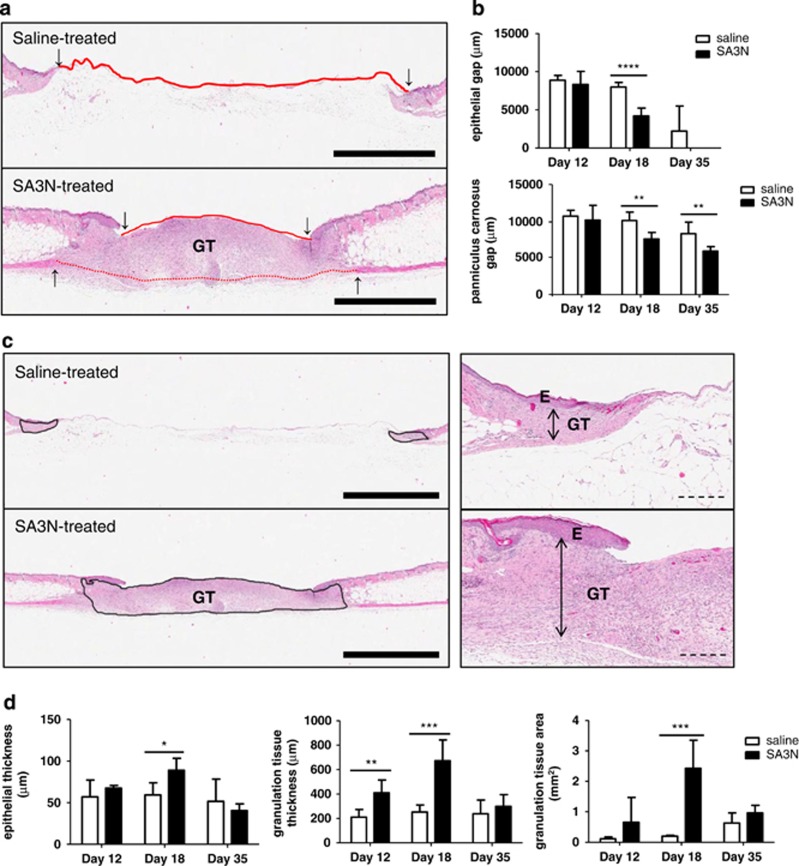
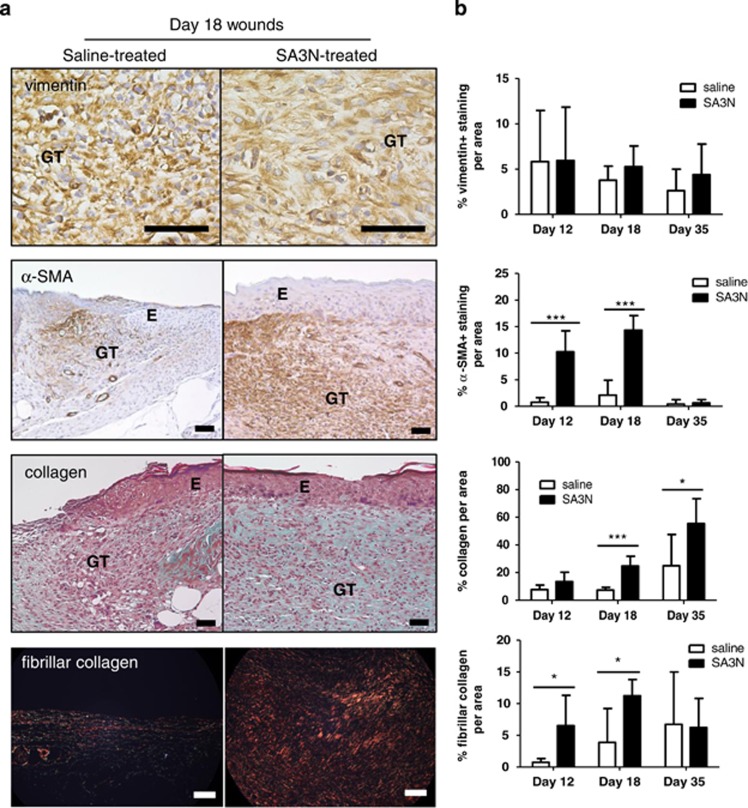
Chronic, non-healing wounds are a major complication of diabetes and are characterized by chronic inflammation and excessive protease activity. Although once thought to function primarily as a pro-apoptotic serine protease, granzyme B (GzmB) can also accumulate in the extracellular matrix (ECM) during chronic inflammation and cleave ECM proteins that are essential for proper wound healing, including fibronectin. We hypothesized that GzmB contributes to the pathogenesis of impaired diabetic wound healing through excessive ECM degradation. In the present study, the murine serine protease inhibitor, serpina3n (SA3N), was administered to excisional wounds created on the dorsum of genetically induced type-II diabetic mice. Wound closure was monitored and skin wound samples were collected for analyses. Wound closure, including both re-epithelialization and contraction, were significantly increased in SA3N-treated wounds. Histological and immunohistochemical analyses of SA3N-treated wounds revealed a more mature, proliferative granulation tissue phenotype as indicated by increased cell proliferation, vascularization, fibroblast maturation and differentiation, and collagen deposition. Skin homogenates from SA3N-treated wounds also exhibited greater levels of full-length intact fibronectin compared with that of vehicle wounds. In addition, GzmB-induced detachment of mouse embryonic fibroblasts correlated with a rounded and clustered phenotype that was prevented by SA3N. In summary, topical administration of SA3N accelerated wound healing. Our findings suggest that GzmB contributes to the pathogenesis of diabetic wound healing through the proteolytic cleavage of fibronectin that is essential for normal wound closure, and that SA3N promotes granulation tissue maturation and collagen deposition.
慢性难愈合伤口是糖尿病的主要并发症,其特征为慢性炎症和蛋白酶活性过高。颗粒酶B(GzmB)曾被认为主要作为一种促凋亡丝氨酸蛋白酶发挥作用,但在慢性炎症过程中它也会在细胞外基质(ECM)中蓄积,并切割对伤口正常愈合至关重要的ECM蛋白,包括纤连蛋白。我们推测GzmB通过过度降解ECM导致糖尿病伤口愈合受损的发病机制。在本研究中,将小鼠丝氨酸蛋白酶抑制剂丝氨酸蛋白酶抑制剂A3N(SA3N)施用于基因诱导的II型糖尿病小鼠背部的切除伤口。监测伤口闭合情况,并收集皮肤伤口样本进行分析。SA3N处理的伤口的伤口闭合,包括再上皮化和收缩,均显著增加。对SA3N处理的伤口进行组织学和免疫组织化学分析显示,细胞增殖、血管生成、成纤维细胞成熟和分化以及胶原蛋白沉积增加,表明肉芽组织表型更成熟、增殖性更强。与载体处理的伤口相比,SA3N处理的伤口的皮肤匀浆中全长完整纤连蛋白的水平也更高。此外,GzmB诱导的小鼠胚胎成纤维细胞脱离与圆形和聚集的表型相关,而SA3N可阻止这种表型。总之,局部应用SA3N可加速伤口愈合。我们的研究结果表明,GzmB通过蛋白水解切割对正常伤口闭合至关重要的纤连蛋白导致糖尿病伤口愈合的发病机制,并且SA3N可促进肉芽组织成熟和胶原蛋白沉积。