Stigliano Robert V, Shubitidze Fridon, Petryk Alicia A, Tate Jennifer A, Hoopes P Jack
Thayer School of Engineering, Dartmouth College, Hanover NH 03755 USA.
Thayer School of Engineering, Dartmouth College, Hanover NH 03755 USA ; Dartmouth Medical School, Hanover NH 03755 USA.
Proc SPIE Int Soc Opt Eng. 2013 Feb 26;8584:858410. doi: 10.1117/12.2007673.
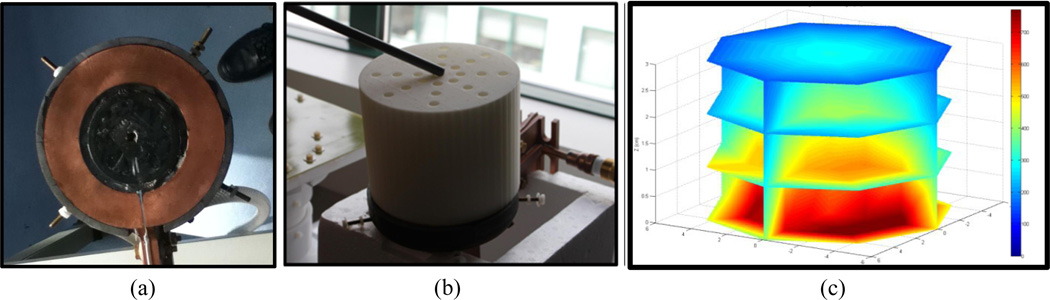
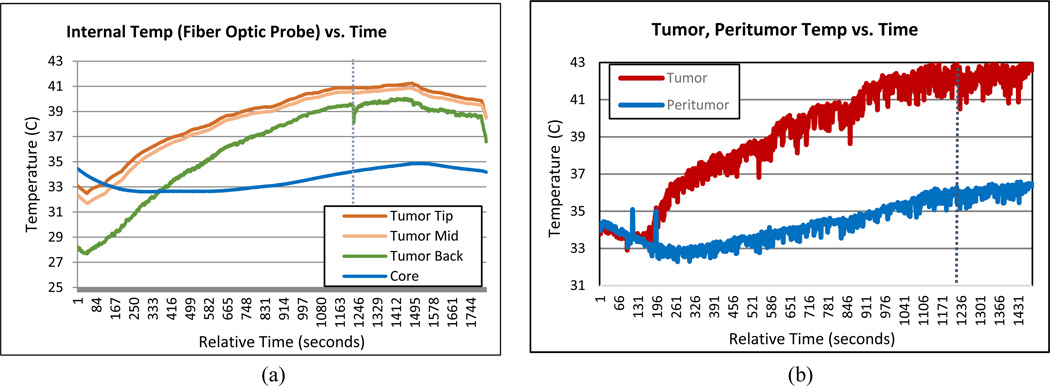
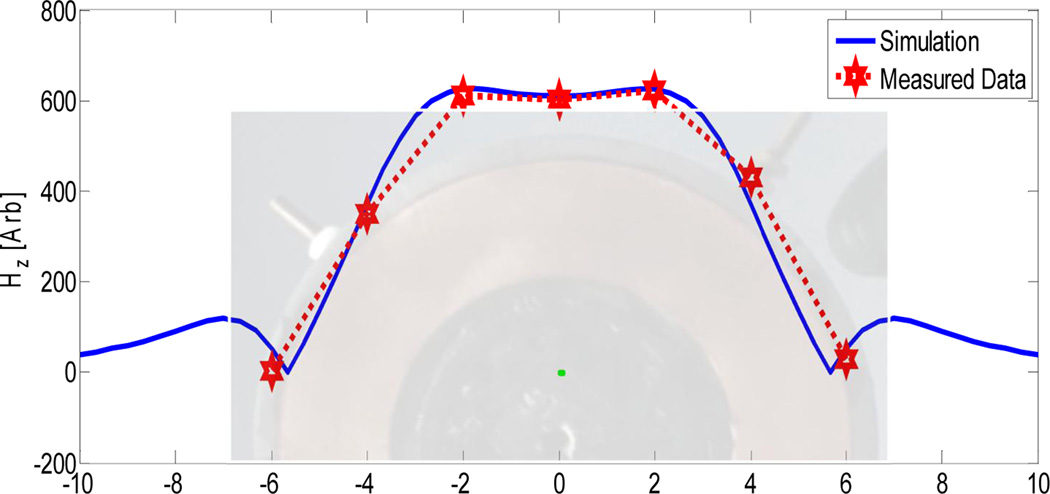
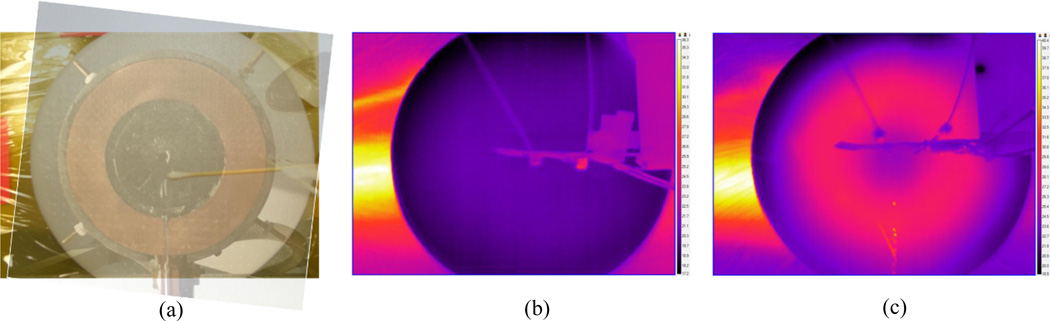
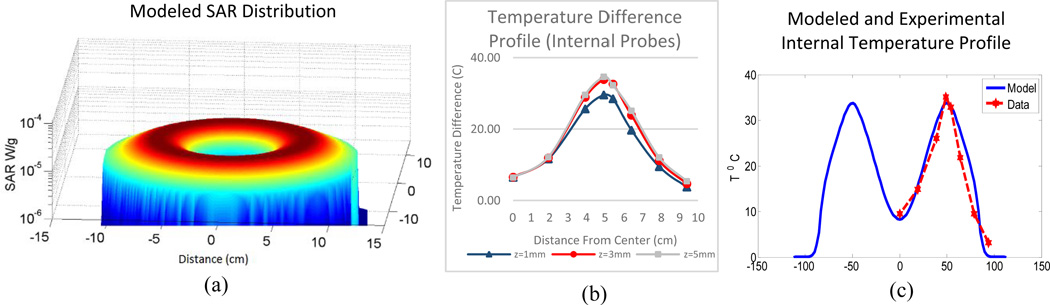
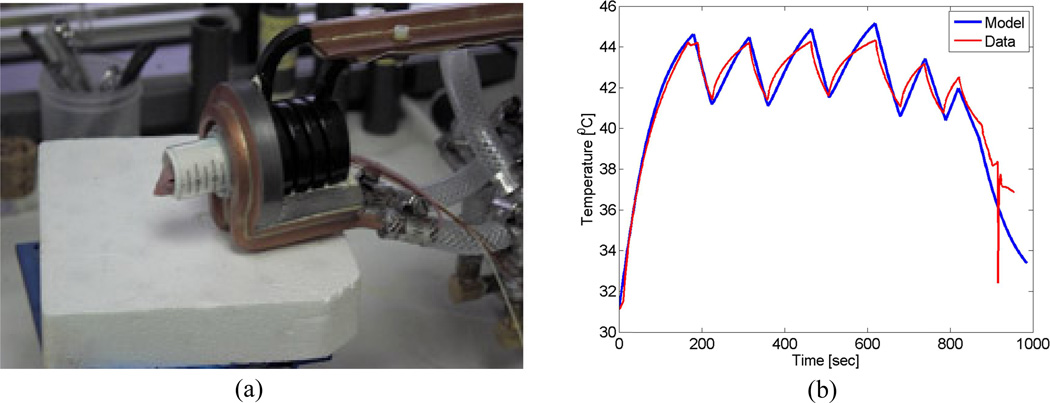
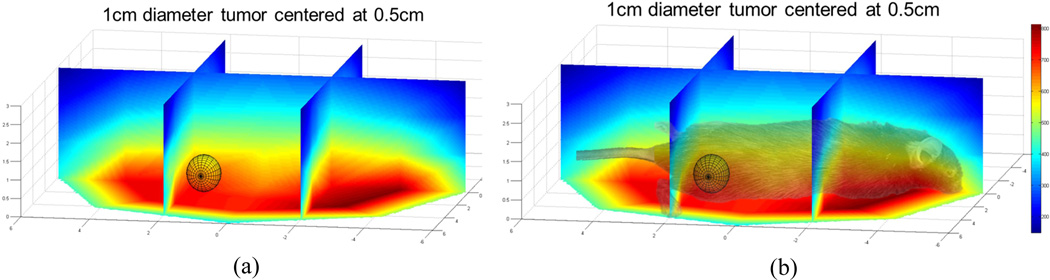
Magnetic nanoparticle (mNP) hyperthermia is a promising adjuvant cancer therapy. mNP's are delivered intravenously or directly into a tumor, and excited by applying an alternating magnetic field (AMF). The mNP's are, in many cases, sequestered by cells and packed into endosomes. The proximity of the mNP's has a strong influence on their ability to heat due to inter-particle magnetic interaction effects. This is an important point to take into account when modeling the mNP's. Generally, more mNP heating can be achieved using higher magnetic field strengths. The factor which limits the maximum field strength applied to clinically relevant volumes of tissue is the heating caused by eddy currents, which are induced in the noncancerous tissue. A coupled electromagnetic and thermal model has been developed to predict dynamic thermal distributions during AMF treatment. The EM model is based on the method of auxiliary sources and the thermal modeling is based on the Pennes bioheat equation. The results of our phantom study are used to validate the model which takes into account nanoparticle heating, interaction effects, particle spatial distribution, particle size distribution, EM field distribution, and eddy current generation in a controlled environment. Preliminary data for model validation are also presented. Once fully developed and validated, the model will have applications in experimental design, AMF coil design, and treatment planning.
磁性纳米颗粒(mNP)热疗是一种很有前景的辅助癌症治疗方法。磁性纳米颗粒通过静脉注射或直接注入肿瘤,并通过施加交变磁场(AMF)来激发。在许多情况下,磁性纳米颗粒被细胞隔离并包装进内体。由于颗粒间的磁相互作用效应,磁性纳米颗粒的 proximity 对其发热能力有很大影响。这是在对磁性纳米颗粒进行建模时需要考虑的一个重要因素。一般来说,使用更高的磁场强度可以实现更多的磁性纳米颗粒发热。限制应用于临床相关组织体积的最大场强的因素是由非癌组织中感应产生的涡流所导致的发热。已经开发了一种电磁和热耦合模型来预测交变磁场治疗期间的动态热分布。电磁模型基于辅助源方法,热模型基于 Pennes 生物热方程。我们的体模研究结果用于验证该模型,该模型在受控环境中考虑了纳米颗粒发热、相互作用效应、颗粒空间分布、颗粒尺寸分布、电磁场分布和涡流产生。还给出了用于模型验证的初步数据。一旦完全开发和验证,该模型将在实验设计、交变磁场线圈设计和治疗规划中得到应用。