1] Department of Chemistry and Chemical Biology, Harvard University, Cambridge, Massachusetts, USA. [2] Howard Hughes Medical Institute, Harvard University, Cambridge, Massachusetts, USA.
1] Howard Hughes Medical Institute, Harvard University, Cambridge, Massachusetts, USA. [2] Department of Molecular and Cellular Biology, Harvard University, Cambridge, Massachusetts, USA.
Nat Chem Biol. 2014 Dec;10(12):1049-54. doi: 10.1038/nchembio.1655. Epub 2014 Oct 12.
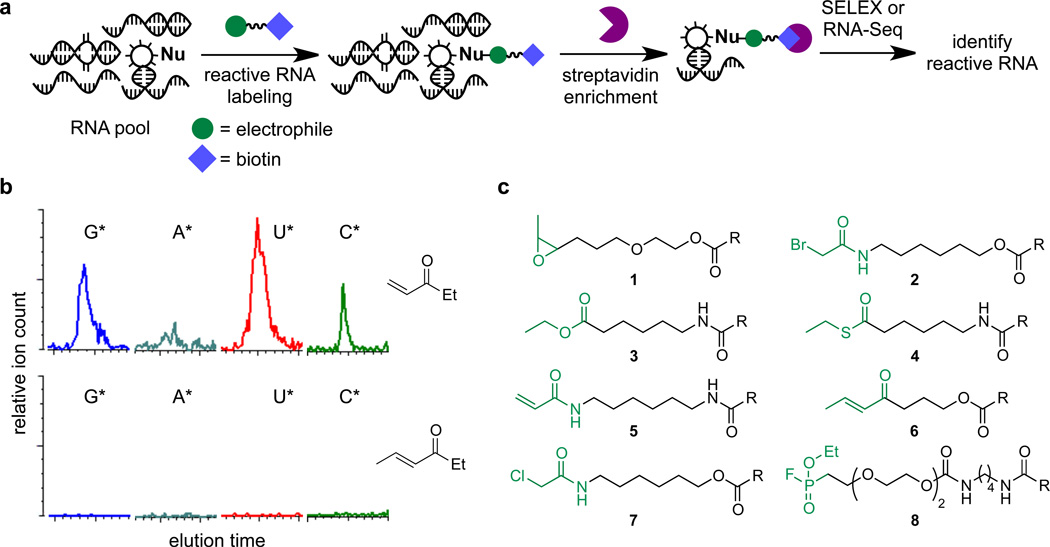
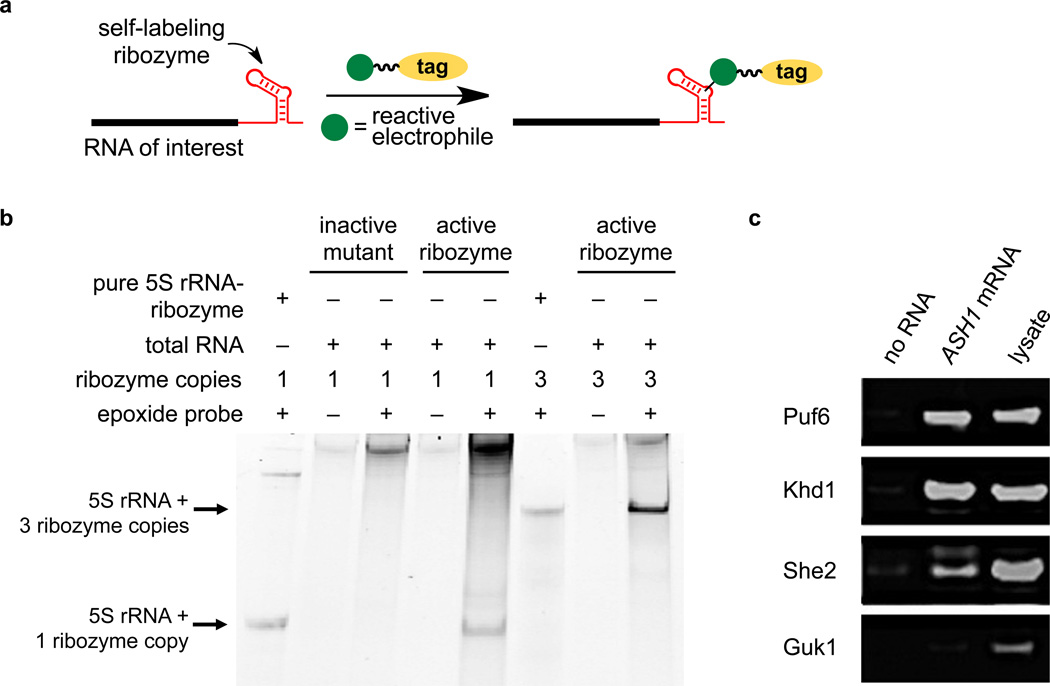
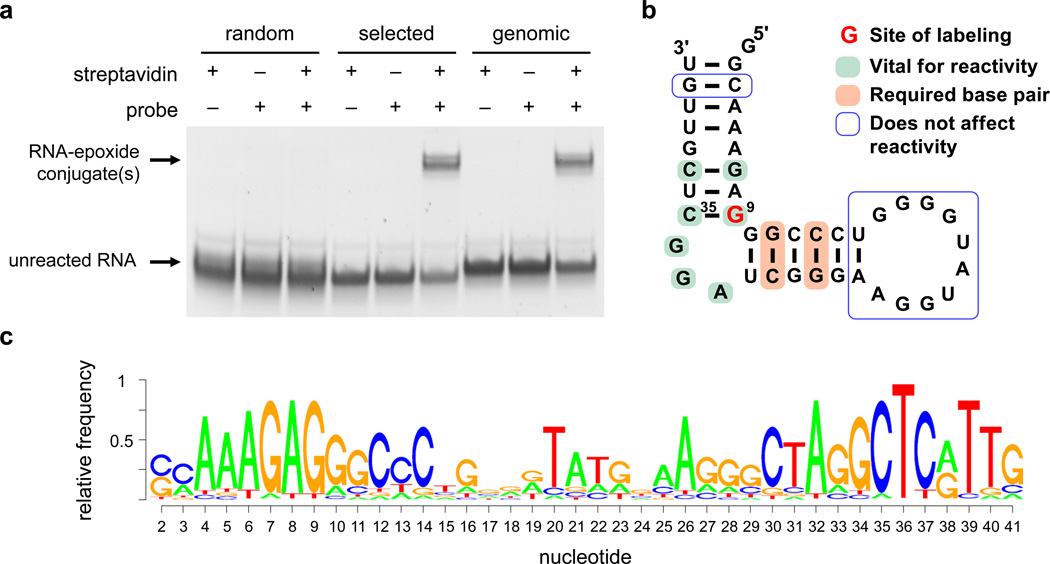
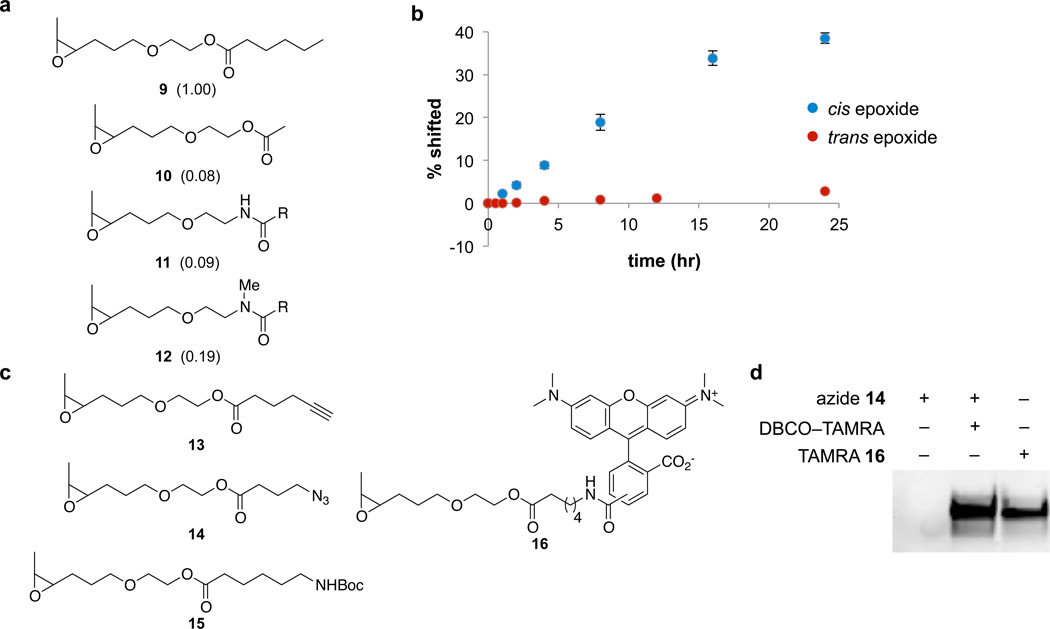
Probes that form covalent bonds with RNA molecules on the basis of their chemical reactivity would advance our ability to study the transcriptome. We developed a set of electrophilic activity-based RNA probes designed to react with unusually nucleophilic RNAs. We used these probes to identify reactive genome-encoded RNAs, resulting in the discovery of a 42-nt catalytic RNA from an archaebacterium that reacts with a 2,3-disubstituted epoxide at N7 of a specific guanosine. Detailed characterization of the catalytic RNA revealed the structural requirements for reactivity. We developed this catalytic RNA into a general tool to selectively conjugate a small molecule to an RNA of interest. This strategy enabled up to 500-fold enrichment of target RNA from total mammalian RNA or from cell lysate. We demonstrated the utility of this approach by selectively capturing proteins in yeast cell lysate that bind the ASH1 mRNA.
基于化学反应性与 RNA 分子形成共价键的探针将提高我们研究转录组的能力。我们开发了一组亲电活性的基于 RNA 的探针,旨在与异常亲核的 RNA 反应。我们使用这些探针来鉴定反应性基因组编码的 RNA,从而发现了一种来自古细菌的 42 个核苷酸的催化 RNA,它与特定鸟苷的 N7 上的 2,3-二取代环氧化物反应。对催化 RNA 的详细特征分析揭示了反应性的结构要求。我们将这种催化 RNA 开发成一种通用工具,可将小分子选择性地连接到感兴趣的 RNA 上。这种策略可使目标 RNA 从总哺乳动物 RNA 或细胞裂解物中富集多达 500 倍。我们通过选择性捕获酵母细胞裂解物中与 ASH1 mRNA 结合的蛋白质来证明这种方法的实用性。