Bravi Riccardo, Quarta Eros, Cohen Erez J, Gottard Anna, Minciacchi Diego
Department of Experimental and Clinical Medicine, University of Florence Florence, Italy.
Department of Statistics, Informatics, Applications, University of Florence Florence, Italy.
Front Syst Neurosci. 2014 Sep 25;8:181. doi: 10.3389/fnsys.2014.00181. eCollection 2014.
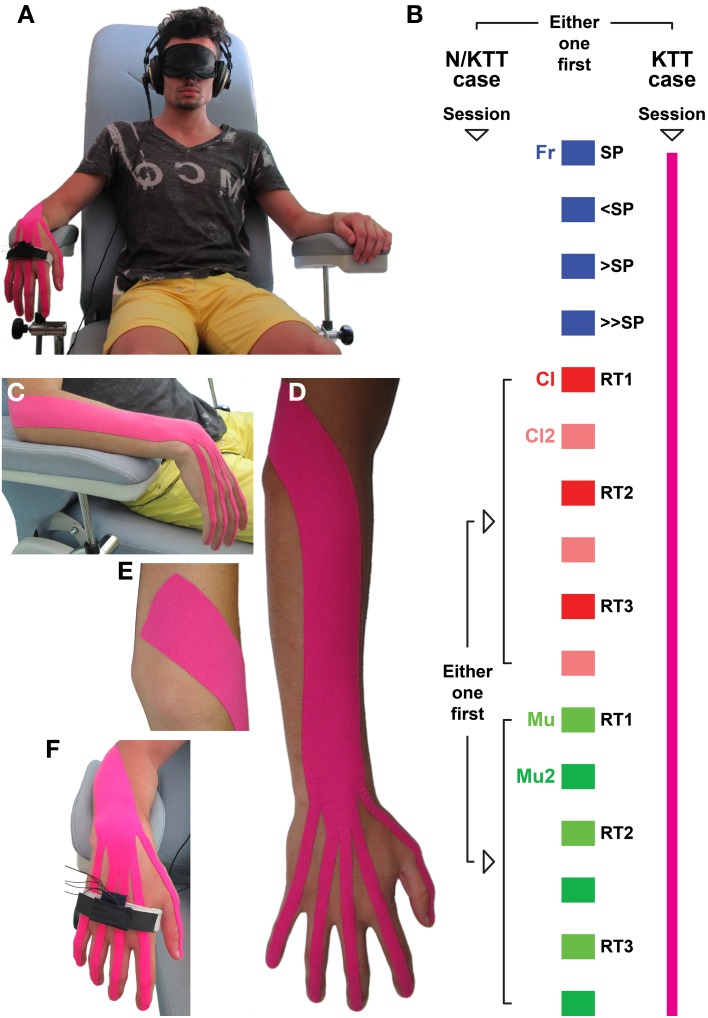
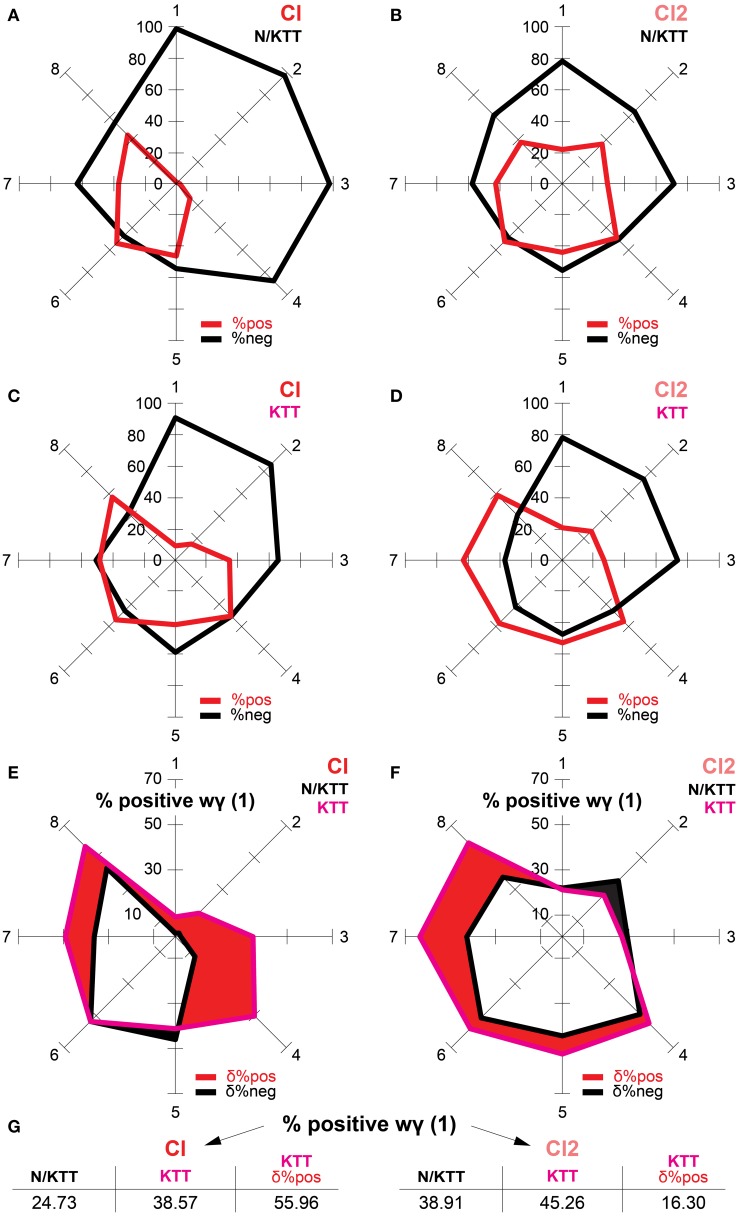
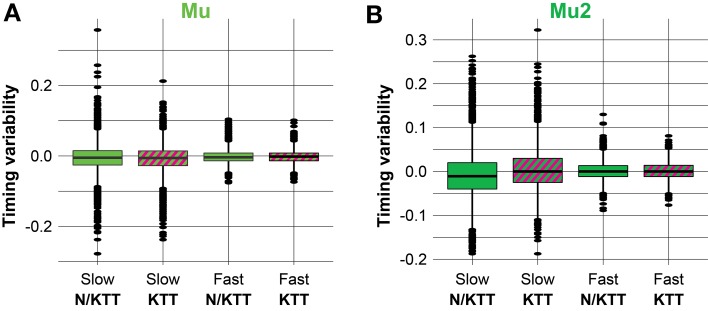
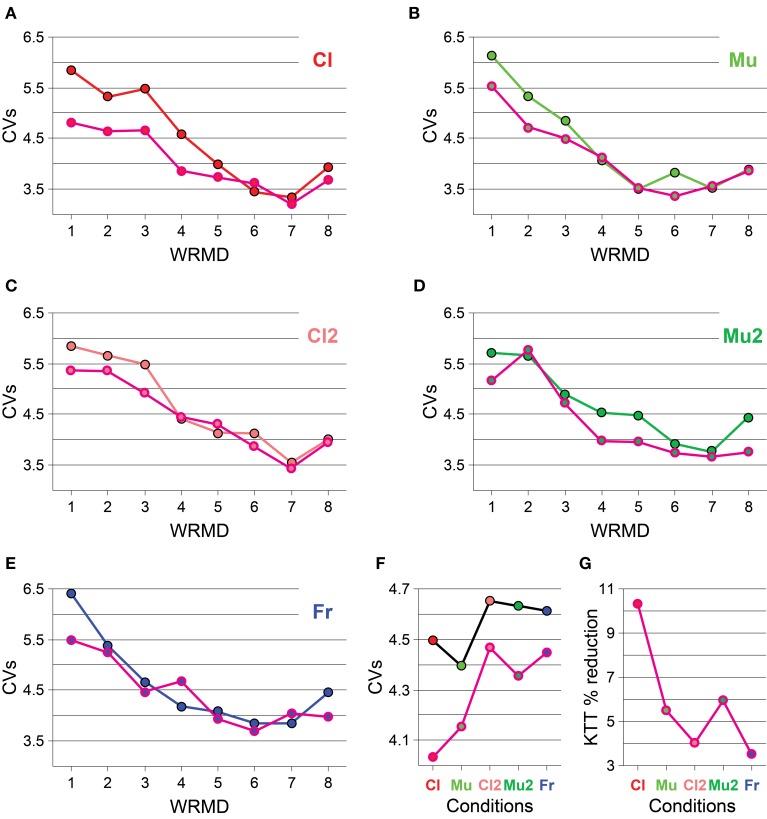
A rhythmic motor performance is brought about by an integration of timing information with movements. Investigations on the millisecond time scale distinguish two forms of time control, event-based timing and emergent timing. While event-based timing asserts the existence of a central internal timekeeper for the control of repetitive movements, the emergent timing perspective claims that timing emerges from dynamic control of nontemporal movements parameters. We have recently demonstrated that the precision of an isochronous performance, defined as performance of repeated movements having a uniform duration, was insensible to auditory stimuli of various characteristics (Bravi et al., 2014). Such finding has led us to investigate whether the application of an elastic therapeutic tape (Kinesio® Tex taping; KTT) used for treating athletic injuries and a variety of physical disorders, is able to reduce the timing variability of repetitive rhythmic movement. Young healthy subjects, tested with and without KTT, have participated in sessions in which sets of repeated isochronous wrist's flexion-extensions (IWFEs) were performed under various auditory conditions and during their recall. Kinematics was recorded and temporal parameters were extracted and analyzed. Our results show that the application of KTT decreases the variability of rhythmic movements by a 2-fold effect: on the one hand KTT provides extra proprioceptive information activating cutaneous mechanoreceptors, on the other KTT biases toward the emergent timing thus modulating the processes for rhythmic movements. Therefore, KTT appears able to render movements less audio dependent by relieving, at least partially, the central structures from time control and making available more resources for an augmented performance.
有节奏的运动表现是由时间信息与动作的整合产生的。在毫秒时间尺度上的研究区分了两种时间控制形式,即基于事件的计时和涌现计时。基于事件的计时认为存在一个中央内部计时员来控制重复运动,而涌现计时观点则声称计时是从非时间运动参数的动态控制中产生的。我们最近证明,等时表现的精度,即具有均匀持续时间的重复运动的表现,对各种特征的听觉刺激不敏感(Bravi等人,2014年)。这一发现促使我们研究用于治疗运动损伤和各种身体疾病的弹性治疗胶带(肌内效贴布;KTT)的应用是否能够降低重复有节奏运动的时间变异性。年轻健康受试者在使用和不使用KTT的情况下进行了测试,他们参与了在各种听觉条件下以及回忆期间进行重复等时手腕屈伸(IWFEs)组的实验。记录运动学数据并提取和分析时间参数。我们的结果表明,KTT的应用通过双重作用降低了有节奏运动的变异性:一方面,KTT提供额外的本体感觉信息,激活皮肤机械感受器,另一方面,KTT倾向于涌现计时,从而调节有节奏运动的过程。因此,KTT似乎能够通过至少部分地减轻中央结构的时间控制,并为增强表现提供更多资源,使运动对听觉的依赖性降低。