Huertas-Martínez Juan, Rello-Varona Santiago, Herrero-Martín David, Barrau Ignasi, García-Monclús Silvia, Sáinz-Jaspeado Miguel, Lagares-Tena Laura, Núñez-Álvarez Yaiza, Mateo-Lozano Silvia, Mora Jaume, Roma Josep, Toran Nuria, Moran Sebastian, López-Alemany Roser, Gallego Soledad, Esteller Manel, Peinado Miguel A, Del Muro Xavier García, Tirado Oscar M
Sarcoma research group, Molecular Oncology Lab, Bellvitge Biomedical Research Institute (IDIBELL), L'Hospitalet de Llobregat, Barcelona, Spain.
Institut de Medicina Predictiva i Personalitzada del Càncer, Badalona, Barcelona, Spain.
Oncotarget. 2014 Oct 30;5(20):9744-55. doi: 10.18632/oncotarget.2403.
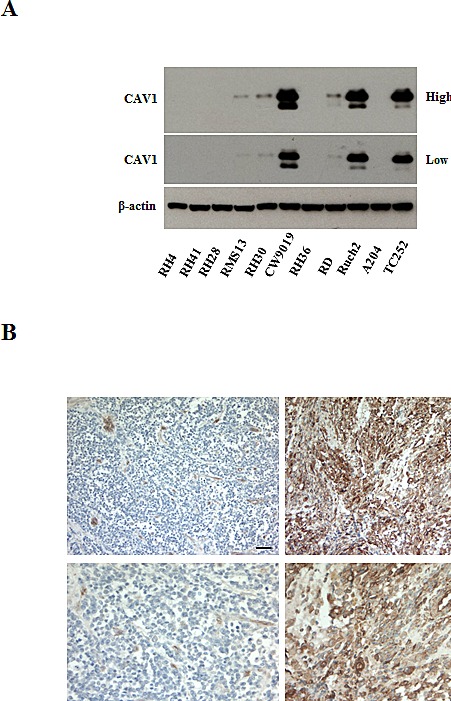
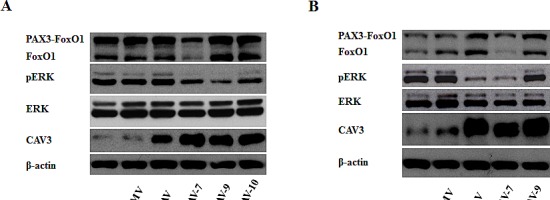
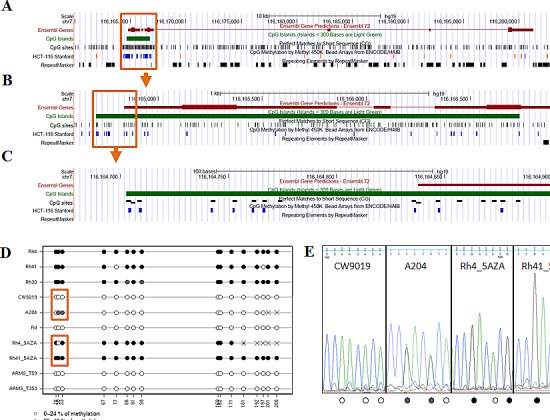
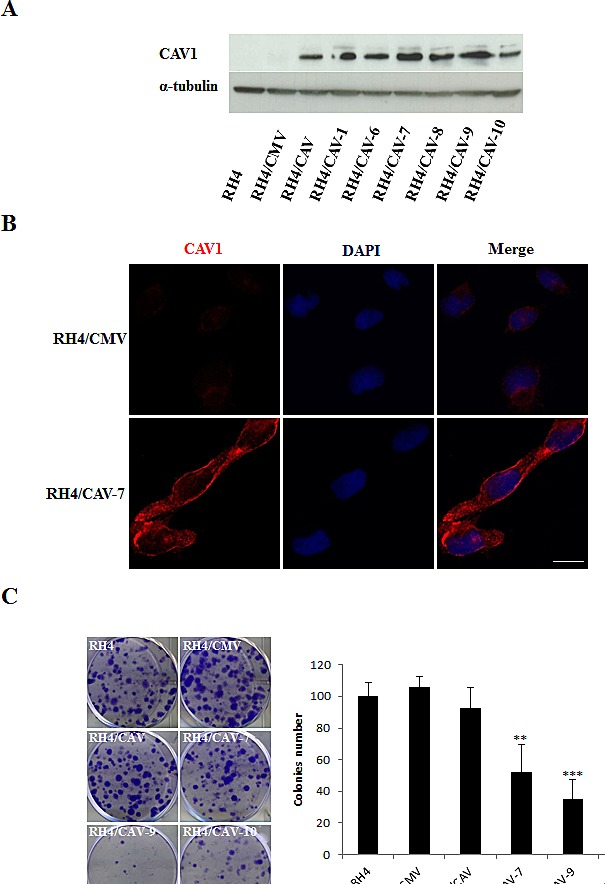
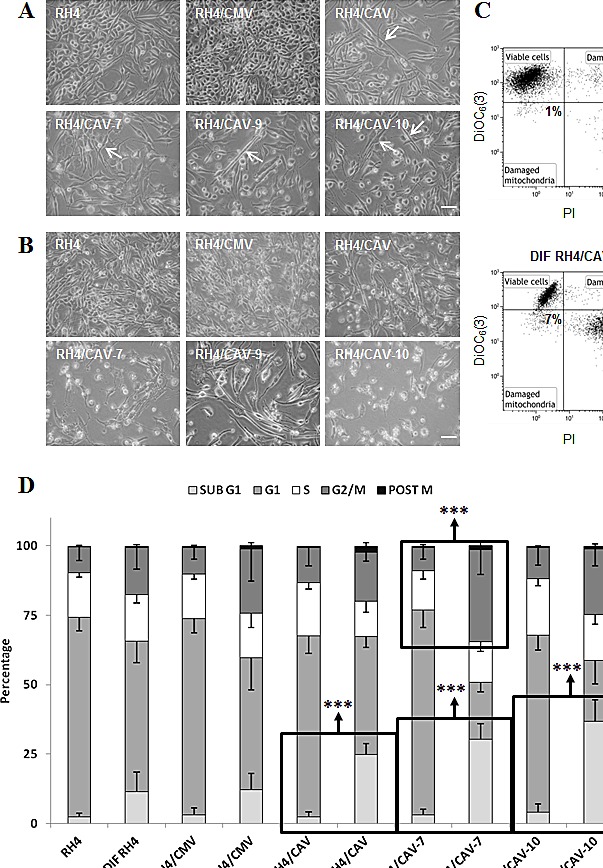
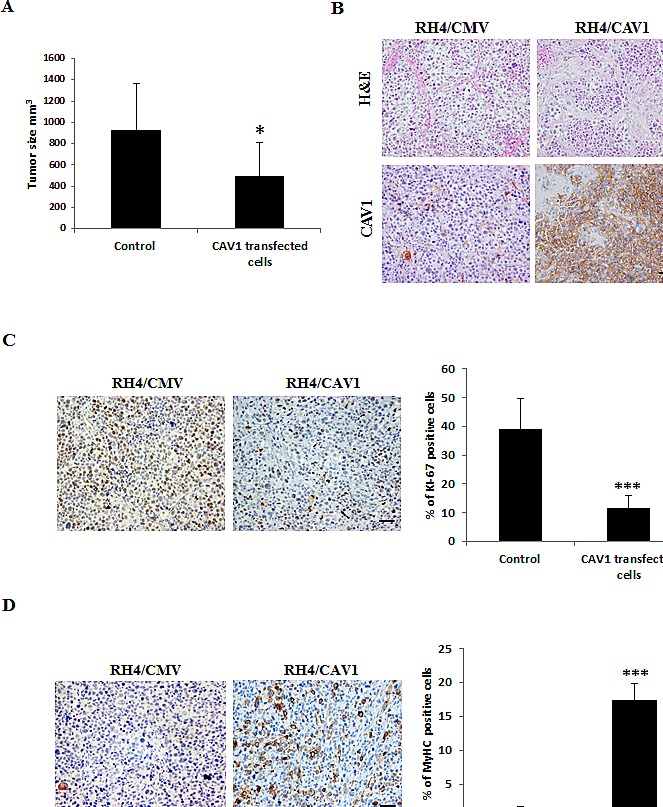
Rhabdomyosarcoma is the most common soft tissue sarcoma of childhood and adolescence. Despite advances in therapy, patients with histological variant of rhabdomyosarcoma known as alveolar rhabdomyosarcoma (ARMS) have a 5-year survival of less than 30%. Caveolin-1 (CAV1), encoding the structural component of cellular caveolae, is a suggested tumor suppressor gene involved in cell signaling. In the present study we report that compared to other forms of rhabdomyosarcoma (RMS) CAV1 expression is either undetectable or very low in ARMS cell lines and tumor samples. DNA methylation analysis of the promoter region and azacytidine-induced re-expression suggest the involvement of epigenetic mechanisms in the silencing of CAV1. Reintroduction of CAV1 in three of these cell lines impairs their clonogenic capacity and promotes features of muscular differentiation. In vitro, CAV1-expressing cells show high expression of Caveolin-3 (CAV3), a muscular differentiation marker. Blockade of MAPK signaling is also observed. In vivo, CAV1-expressing xenografts show growth delay, features of muscular differentiation and increased cell death. In summary, our results suggest that CAV1 could function as a potent tumor suppressor in ARMS tumors. Inhibition of CAV1 function therefore, could contribute to aberrant cell proliferation, leading to ARMS development.
横纹肌肉瘤是儿童和青少年中最常见的软组织肉瘤。尽管治疗取得了进展,但患有被称为肺泡状横纹肌肉瘤(ARMS)的横纹肌肉瘤组织学变体的患者5年生存率低于30%。小窝蛋白-1(CAV1)编码细胞小窝的结构成分,是一种参与细胞信号传导的潜在肿瘤抑制基因。在本研究中,我们报告与其他形式的横纹肌肉瘤(RMS)相比,CAV1在ARMS细胞系和肿瘤样本中的表达要么无法检测到,要么非常低。对启动子区域的DNA甲基化分析和氮杂胞苷诱导的重新表达表明表观遗传机制参与了CAV1的沉默。在其中三个细胞系中重新引入CAV1会损害它们的克隆形成能力,并促进肌肉分化特征。在体外,表达CAV1的细胞显示出肌肉分化标志物小窝蛋白-3(CAV3)的高表达。还观察到MAPK信号传导的阻断。在体内,表达CAV1的异种移植瘤显示出生长延迟、肌肉分化特征和细胞死亡增加。总之,我们的结果表明CAV1可能在ARMS肿瘤中作为一种有效的肿瘤抑制因子发挥作用。因此,CAV1功能的抑制可能导致异常细胞增殖,从而导致ARMS的发生。