Yusuf Nasir, de Wee Rosalina, Foster Norbert, Watkins Margaret A, Tiruneh Desta, Chauvin Claire, Bossarte Robert, Mandlhate Custodia, Jack Abdoulie, Gumede Nicksy, Mawela Alfred, Burns Cara C, Pallansch Mark A, Allies Tina, Rainey Jeannette, Mataruse Noah, Nshimirimana Deo
World Health Organization (WHO) Intercountry Program Office, Harare, Zimbabwe.
Ministry of Health and Social Services.
J Infect Dis. 2014 Nov 1;210 Suppl 1(Suppl 1):S353-60. doi: 10.1093/infdis/jiu069.
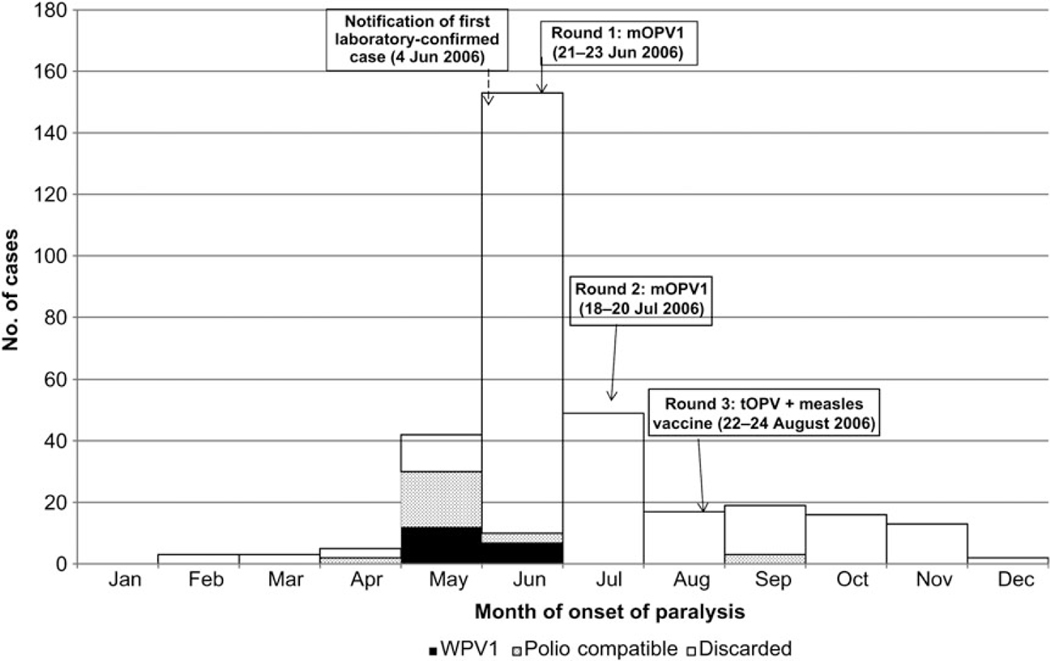
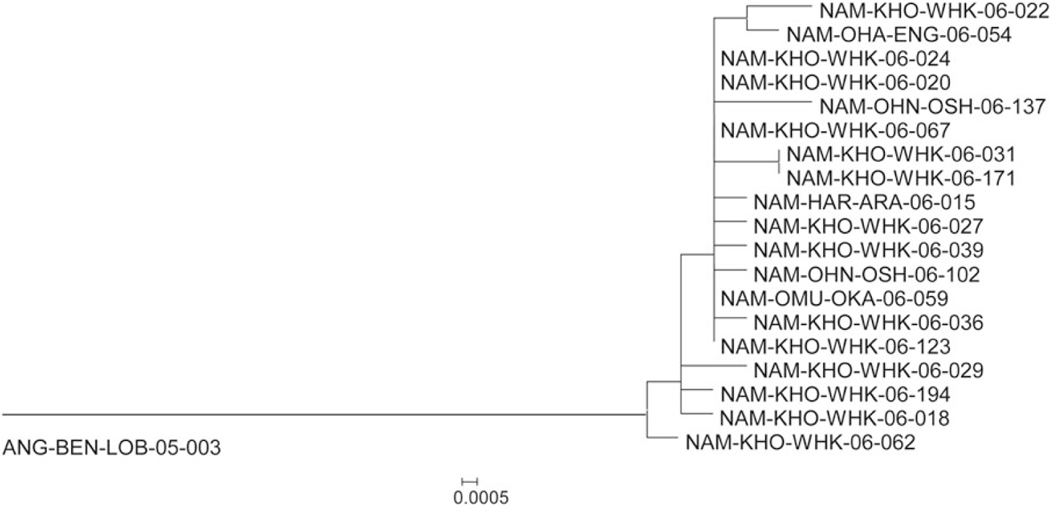
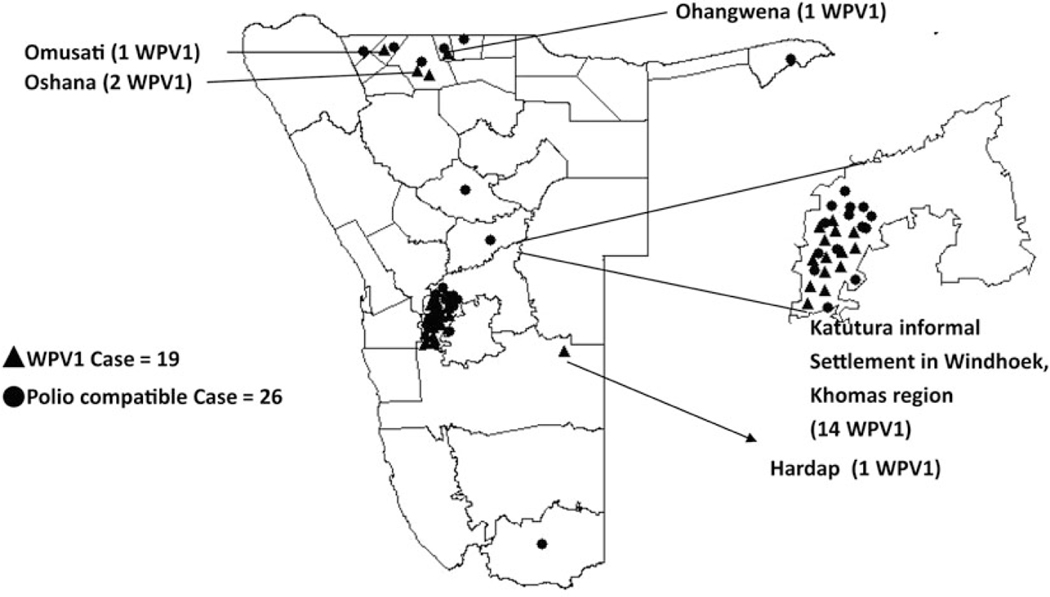
A paralytic poliomyelitis outbreak occurred in Namibia in 2006, almost exclusively among adults. Nineteen cases were virologically confirmed as due to wild poliovirus type 1 (WPV1), and 26 were classified as polio compatible. Eleven deaths occurred among confirmed and compatible cases (24%). Of the confirmed cases, 97% were aged 15-45 years, 89% were male, and 71% lived in settlement areas in Windhoek. The virus was genetically related to a virus detected in 2005 in Angola, which had been imported earlier from India. The outbreak is likely due to immunity gaps among adults who were inadequately vaccinated during childhood. This outbreak underscores the ongoing risks posed by poliovirus importations, the importance of maintaining strong acute flaccid paralysis surveillance even in adults, and the need to maintain high population immunity to avoid polio outbreaks in the preeradication period and outbreaks due to vaccine-derived polioviruses in the posteradication era.
2006年,纳米比亚发生了一次麻痹性脊髓灰质炎疫情,几乎全部发生在成年人中。19例经病毒学确诊为由1型野生脊髓灰质炎病毒(WPV1)引起,26例被归类为脊髓灰质炎疑似病例。确诊病例和疑似病例中有11人死亡(24%)。在确诊病例中,97%的患者年龄在15至45岁之间,89%为男性,71%居住在温得和克的定居点地区。该病毒在基因上与2005年在安哥拉检测到的一种病毒有关,后者早些时候从印度传入。此次疫情可能是由于儿童时期未充分接种疫苗的成年人中存在免疫空白。这次疫情凸显了脊髓灰质炎病毒输入带来的持续风险、即使在成年人中保持强大的急性弛缓性麻痹监测的重要性,以及在根除前时期保持高人群免疫力以避免脊髓灰质炎疫情和在根除后时期避免疫苗衍生脊髓灰质炎病毒引发疫情的必要性。