Department of Hematology, Second Affiliated Hospital, Medical School of Xi'an Jiaotong University, Xi'an, 710004 Shaanxi Province China.
Department of Genetics and Molecular Biology, Medical school of Xi'an Jiaotong University/Key Laboratory of Environment and Disease-Related Gene, Ministry of Education, Xi'an, 710061 Shaanxi China.
Proteome Sci. 2014 Sep 16;12(1):49. doi: 10.1186/s12953-014-0049-y. eCollection 2014.
The persistence of minimal residual disease (MRD) during therapy is the strongest adverse prognostic factor in acute lymphocytic leukemia (ALL). This study was to identify serum candidate peptides for monitoring MRD in adult ALL.
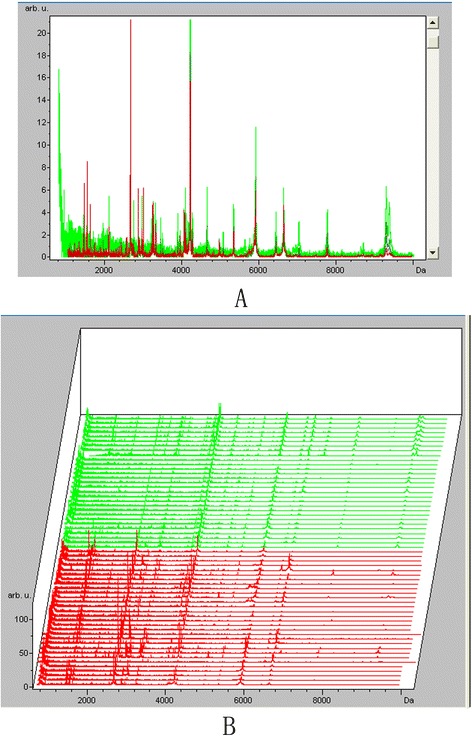
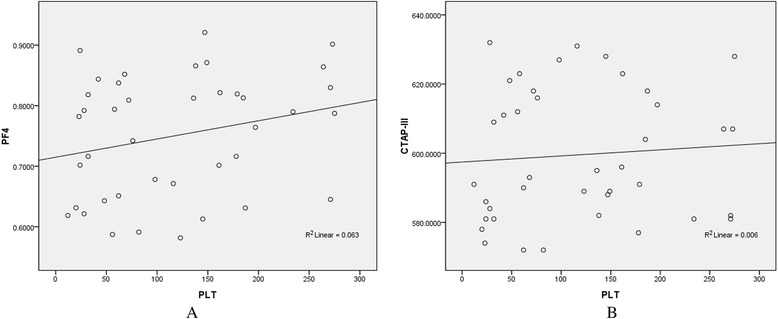
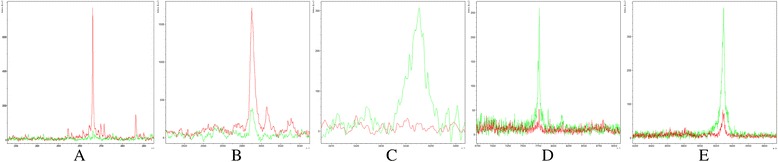
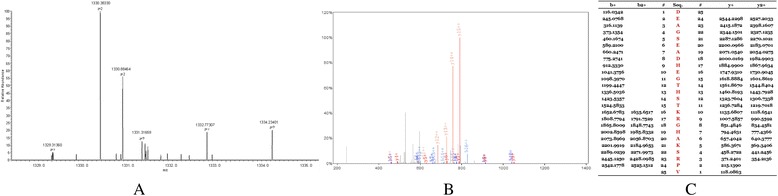
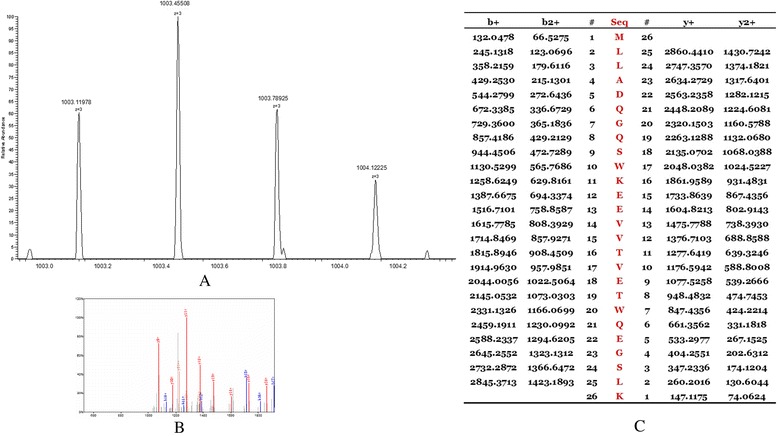
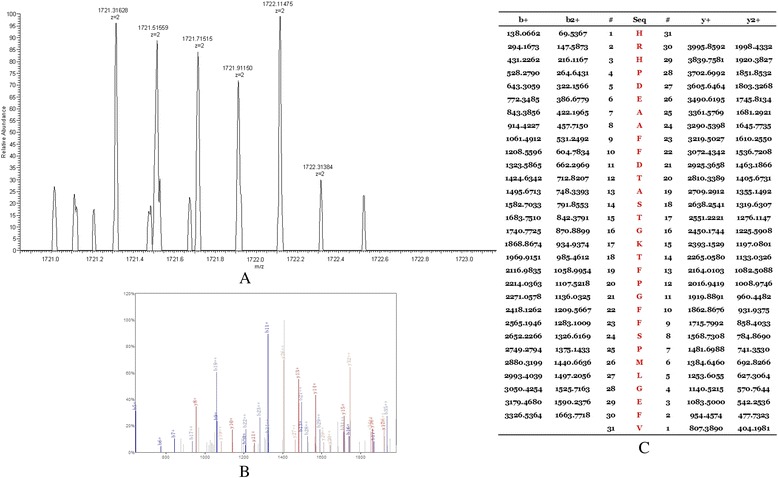
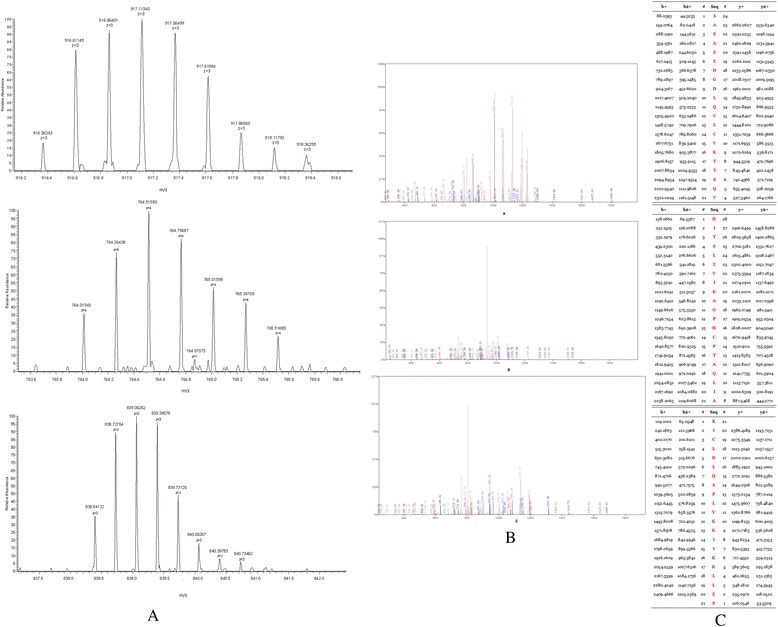
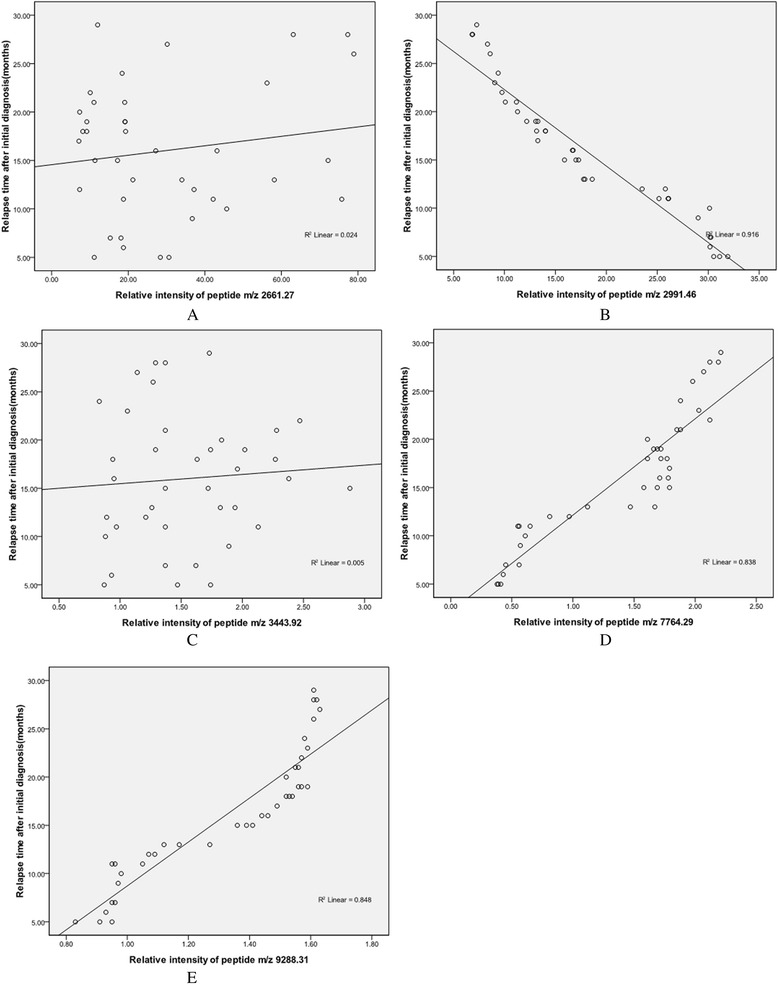
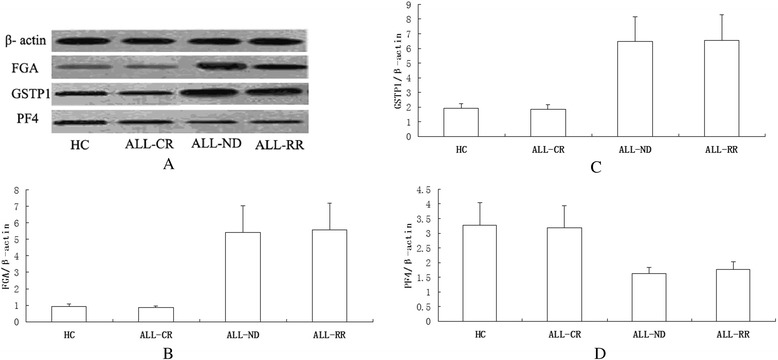
A total of 33 peptides in the molecular weight range of 1000-10000 Da were detected using ClinProt system and statistically different between adult patients with ALL and healthy controls. Quick classifier (QC) algorithm was used to obtain a diagnostic model consisting of five peptides that could discriminate patients with ALL from controls with a high sensitivity (100%) and specificity (96.67%). The peptides in the QC model were identified as fibrinogen alpha chain (FGA), glutathione S-transferase P1 (GSTP1), isoform 1 of fibrinogen alpha chain precursor, platelet factor 4 (PF4) by high pressure/performance liquid chromatography mass spectrometry/mass spectrometry. Relative intensities of the five peptides were compared among ALL different groups for the potential importance of MRD evaluation in ALL. The peptides with increased relative intensities in newly diagnosed (ND) ALL patients were found to be decreased in their relative intensities after complete remission (CR) of adult ALL. When ALL patients were refractory & relapsed (RR), relative intensities of the peptides were elevated again. Peptides with decreased relative intensities in ND and RR ALL patients were found to be increased in their relative intensities when ALL patients achieved CR. The findings were validated by ELISA and western blot. Further linear regression analyses were performed to eliminate the influence of platelet and white blood cell counts on serum protein contents and indicated that there were no correlations between the contents of all four proteins (PF4, connective tissue active peptide III, FGA and GSTP1) and white blood cell or platelet counts in ALL different groups and healthy control.
We speculate the five peptides, FGA, isoform 1 of fibrinogen alpha chain precursor, GSTP1, PF4 and connective tissue active peptide III would be potential biomarkers for forecasting relapse, monitoring MRD and evaluating therapeutic response in adult ALL.
治疗期间微小残留病(MRD)的持续存在是急性淋巴细胞白血病(ALL)最强的预后不良因素。本研究旨在鉴定血清中用于监测成人 ALL 患者 MRD 的候选肽。
使用 ClinProt 系统共检测到分子量在 1000-10000 Da 范围内的 33 种肽,ALL 患者与健康对照之间存在统计学差异。快速分类器(QC)算法用于获得由五个肽组成的诊断模型,该模型可以以 100%的高灵敏度和 96.67%的特异性区分 ALL 患者和对照组。QC 模型中的肽被鉴定为纤维蛋白原α链(FGA)、谷胱甘肽 S-转移酶 P1(GSTP1)、纤维蛋白原α链前体的同工型 1、血小板因子 4(PF4),通过高压/高效液相色谱-质谱/质谱法。比较 ALL 不同组之间五个肽的相对强度,以评估其在 ALL 中的潜在重要性。在新诊断(ND)ALL 患者中相对强度增加的肽在成人 ALL 完全缓解(CR)后相对强度降低。当 ALL 患者难治性和复发(RR)时,肽的相对强度再次升高。在 ND 和 RR ALL 患者中相对强度降低的肽在 ALL 患者达到 CR 时相对强度增加。通过 ELISA 和 Western blot 进行了验证。进一步进行线性回归分析以消除血小板和白细胞计数对血清蛋白含量的影响,并表明在 ALL 不同组和健康对照组中,所有四种蛋白(PF4、结缔组织活性肽 III、FGA 和 GSTP1)的含量与白细胞或血小板计数之间均无相关性。
我们推测,FGA、纤维蛋白原α链前体同工型 1、GSTP1、PF4 和结缔组织活性肽 III 这五个肽可能成为预测复发、监测 MRD 和评估成人 ALL 治疗反应的潜在生物标志物。