Rajha Hiba N, Ziegler Walter, Louka Nicolas, Hobaika Zeina, Vorobiev Eugene, Boechzelt Herbert G, Maroun Richard G
Centre d'Analyses et de Recherche, UR TVA, Faculté des Sciences, Université Saint-Joseph, B.P. 11-514 Riad El Solh, Beirut 1107 2050, Lebanon.
Institute of Chemistry, Karl-Franzens University of Graz, A-8010 Graz, Austria.
Int J Mol Sci. 2014 Oct 15;15(10):18640-58. doi: 10.3390/ijms151018640.
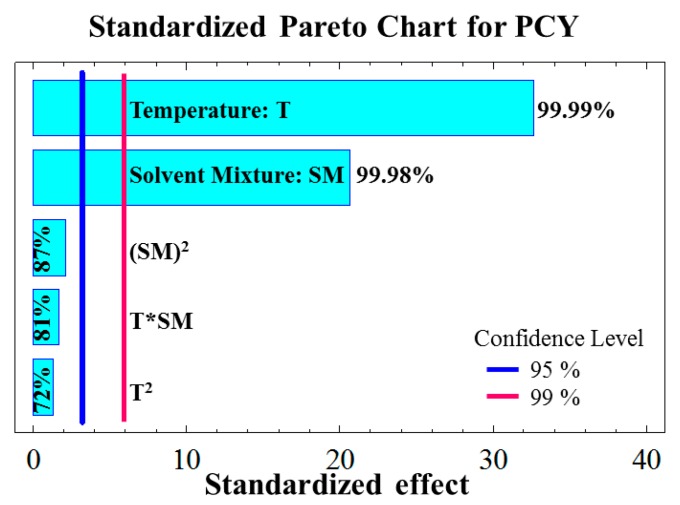
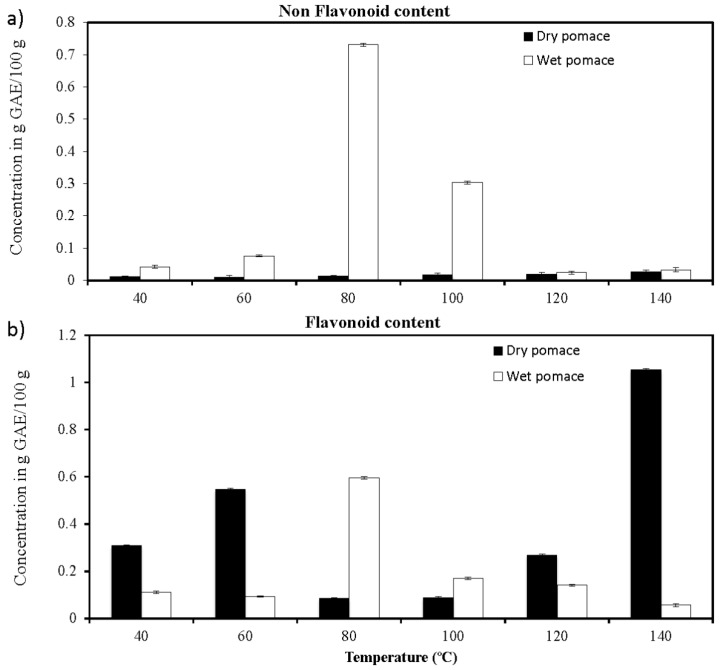
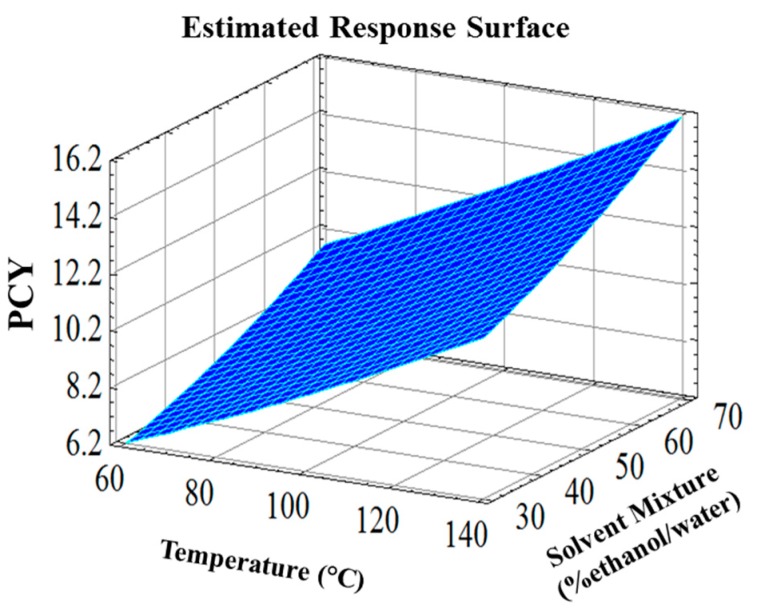
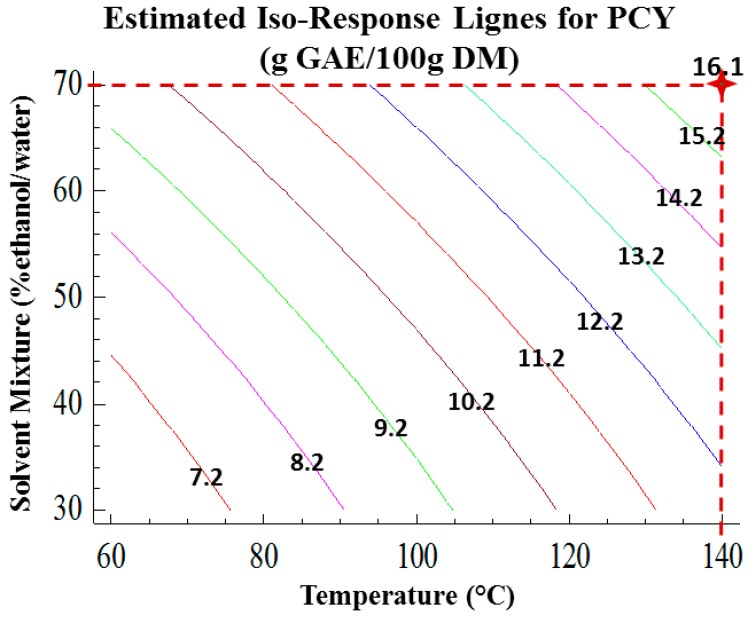
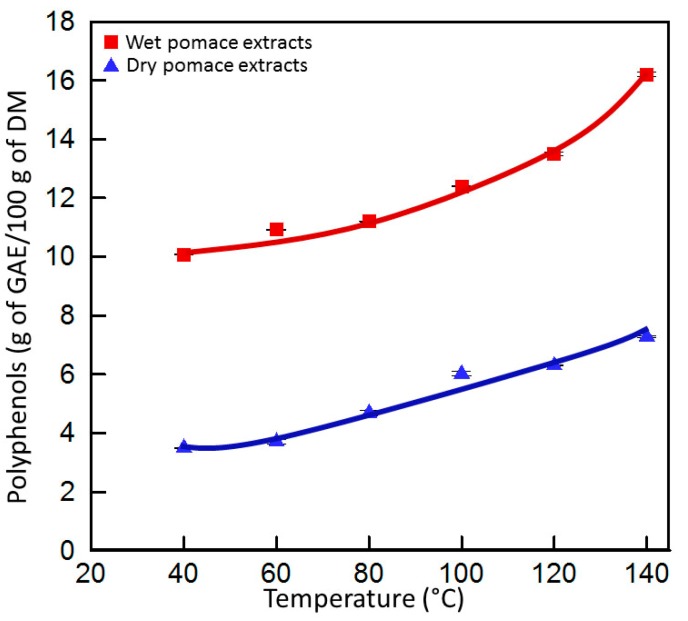
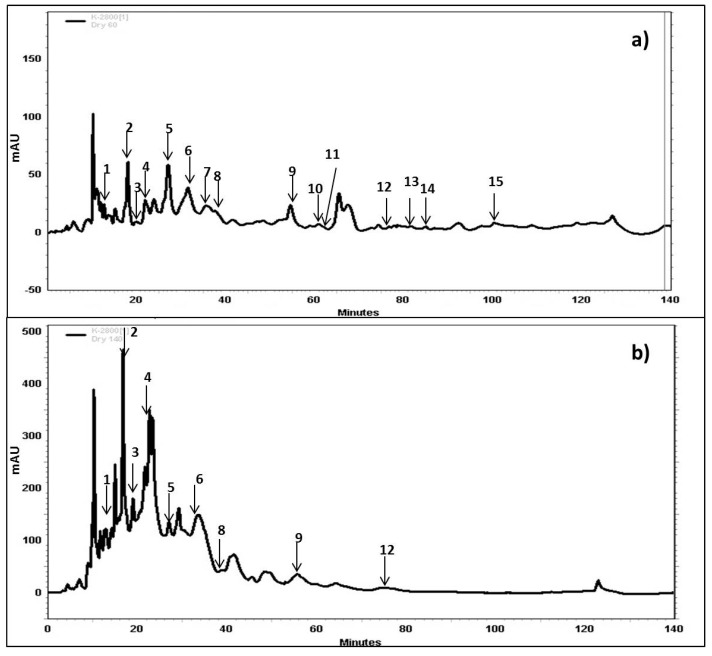
In light of their environmental and economic interests, food byproducts have been increasingly exploited and valorized for their richness in dietary fibers and antioxidants. Phenolic compounds are antioxidant bioactive molecules highly present in grape byproducts. Herein, the accelerated solvent extraction (ASE) of phenolic compounds from wet and dried grape pomace, at 45 °C, was conducted and the highest phenolic compounds yield (PCY) for wet (16.2 g GAE/100 g DM) and dry (7.28 g GAE/100 g DM) grape pomace extracts were obtained with 70% ethanol/water solvent at 140 °C. The PCY obtained from wet pomace was up to two times better compared to the dry byproduct and up to 15 times better compared to the same food matrices treated with conventional methods. With regard to Resveratrol, the corresponding dry pomace extract had a better free radical scavenging activity (49.12%) than the wet extract (39.8%). The drying pretreatment process seems to ameliorate the antiradical activity, especially when the extraction by ASE is performed at temperatures above 100 °C. HPLC-DAD analysis showed that the diversity of the flavonoid and the non-flavonoid compounds found in the extracts was seriously affected by the extraction temperature and the pretreatment of the raw material. This diversity seems to play a key role in the scavenging activity demonstrated by the extracts. Our results emphasize on ASE usage as a promising method for the preparation of highly concentrated and bioactive phenolic extracts that could be used in several industrial applications.
鉴于其环境和经济利益,食品副产品因其富含膳食纤维和抗氧化剂而越来越多地得到开发和增值利用。酚类化合物是葡萄副产品中大量存在的抗氧化生物活性分子。在此,进行了在45℃下从湿葡萄渣和干葡萄渣中加速溶剂萃取(ASE)酚类化合物的实验,在140℃下用70%乙醇/水溶剂获得了湿葡萄渣提取物(16.2 g没食子酸当量/100 g干物质)和干葡萄渣提取物(7.28 g没食子酸当量/100 g干物质)的最高酚类化合物产率(PCY)。从湿葡萄渣中获得的PCY比干副产品高出两倍,比用传统方法处理的相同食品基质高出15倍。关于白藜芦醇,相应的干葡萄渣提取物的自由基清除活性(49.12%)比湿提取物(39.8%)更好。干燥预处理过程似乎改善了抗自由基活性,特别是当在100℃以上的温度下进行ASE萃取时。HPLC-DAD分析表明,提取物中发现的黄酮类和非黄酮类化合物的多样性受到萃取温度和原料预处理的严重影响。这种多样性似乎在提取物表现出的清除活性中起关键作用。我们的结果强调了ASE作为一种有前途的方法用于制备可用于多种工业应用的高浓缩和生物活性酚类提取物。