Dhurandhar E J, Kaiser K A, Dawson J A, Alcorn A S, Keating K D, Allison D B
1] Nutrition Obesity Research Center, University of Alabama at Birmingham, Birmingham, AL, USA [2] Department of Health Behavior, University of Alabama at Birmingham, Birmingham, AL, USA [3] Office of Energetics, University of Alabama at Birmingham, Birmingham, AL, USA.
1] Nutrition Obesity Research Center, University of Alabama at Birmingham, Birmingham, AL, USA [2] Office of Energetics, University of Alabama at Birmingham, Birmingham, AL, USA [3] School of Public Health, Dean's Office, University of Alabama at Birmingham, Birmingham, AL, USA.
Int J Obes (Lond). 2015 Aug;39(8):1181-7. doi: 10.1038/ijo.2014.184. Epub 2014 Oct 17.
Public health and clinical interventions for obesity in free-living adults may be diminished by individual compensation for the intervention. Approaches to predict weight outcomes do not account for all mechanisms of compensation, so they are not well suited to predict outcomes in free-living adults. Our objective was to quantify the range of compensation in energy intake or expenditure observed in human randomized controlled trials (RCTs).
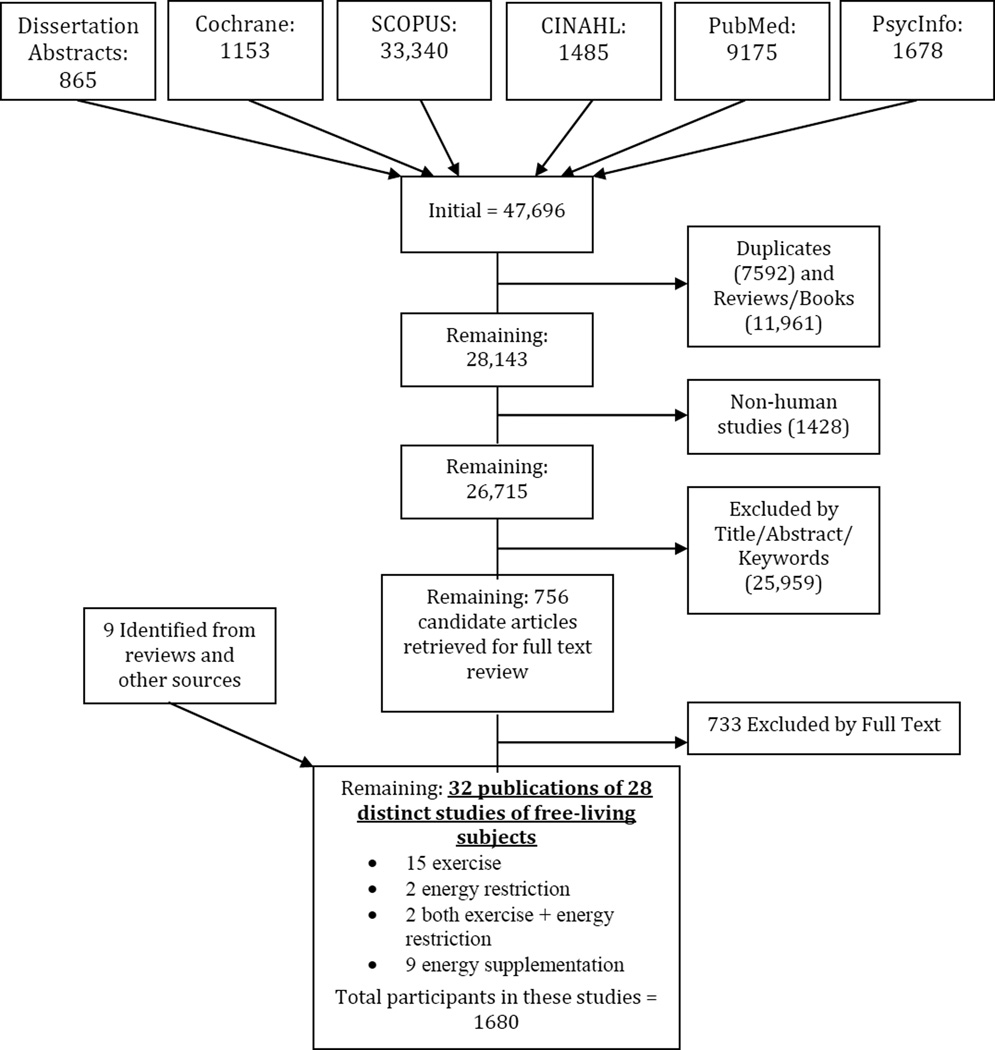
We searched multiple databases (PubMed, CINAHL, SCOPUS, Cochrane, ProQuest, PsycInfo) up to 1 August 2012 for RCTs evaluating the effect of dietary and/or physical activity interventions on body weight/composition.
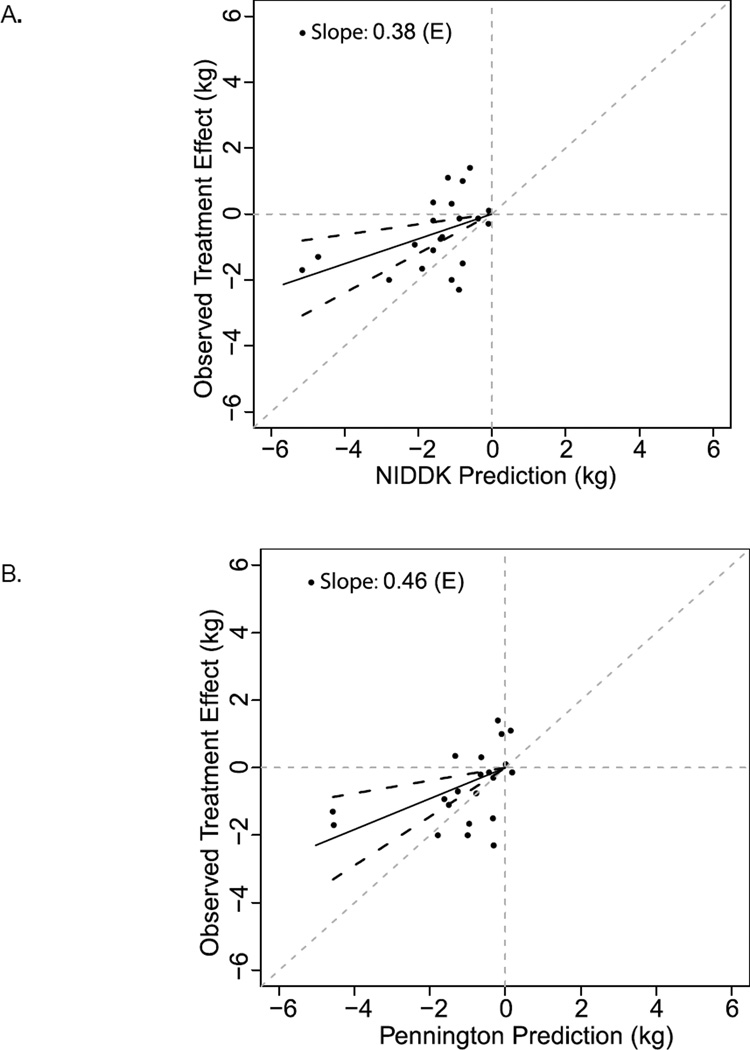
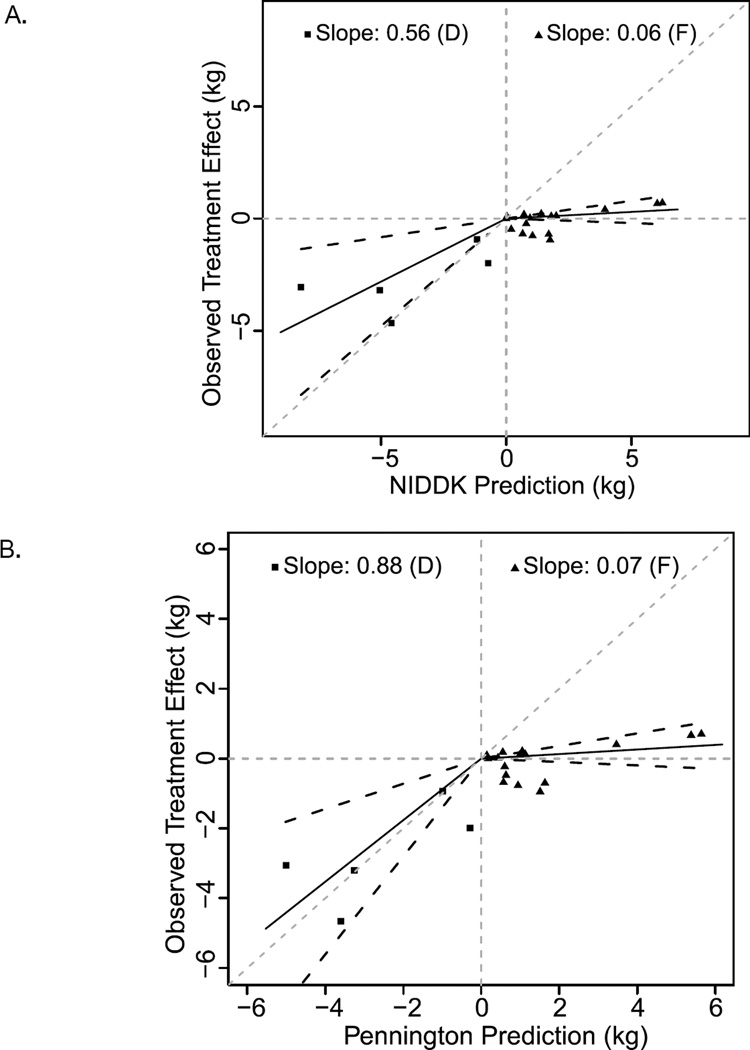
subjects per treatment arm ≥5; ≥1 week intervention; a reported outcome of body weight/body composition; the intervention was either a prescribed amount of over- or underfeeding and/or supervised or monitored physical activity was prescribed; ≥80% compliance; and an objective method was used to verify compliance with the intervention (for example, observation and electronic monitoring). Data were independently extracted and analyzed by multiple reviewers with consensus reached by discussion. We compared observed weight change with predicted weight change using two models that predict weight change accounting only for metabolic compensation.
Twenty-eight studies met inclusion criteria. Overfeeding studies indicate 96% less weight gain than expected if no compensation occurred. Dietary restriction and exercise studies may result in up to 12-44% and 55-64% less weight loss than expected, respectively, under an assumption of no behavioral compensation.
Compensation is substantial even in high-compliance conditions, resulting in far less weight change than would be expected. The simple algorithm we report allows for more realistic predictions of intervention effects in free-living populations by accounting for the significant compensation that occurs.
在自由生活的成年人中,针对肥胖的公共卫生和临床干预措施可能会因个人对干预措施的代偿而减弱。预测体重结果的方法并未考虑到所有的代偿机制,因此并不适合预测自由生活成年人的体重变化。我们的目标是量化在人体随机对照试验(RCT)中观察到的能量摄入或消耗的代偿范围。
我们检索了多个数据库(PubMed、CINAHL、SCOPUS、Cochrane、ProQuest、PsycInfo),检索截止日期为2012年8月1日,以查找评估饮食和/或体育活动干预对体重/身体成分影响的随机对照试验。
每个治疗组的受试者≥5名;干预时间≥1周;报告了体重/身体成分的结果;干预措施为规定量的过度喂养或不足喂养和/或规定了有监督或监测的体育活动;依从性≥80%;并且使用客观方法来验证对干预措施的依从性(例如,观察和电子监测)。数据由多名审阅者独立提取和分析,并通过讨论达成共识。我们使用两个仅考虑代谢代偿来预测体重变化的模型,将观察到的体重变化与预测的体重变化进行了比较。
28项研究符合纳入标准。过度喂养研究表明,如果没有代偿,体重增加比预期少96%。在没有行为代偿的假设下,饮食限制和运动研究导致的体重减轻可能分别比预期少12%-44%和55%-64%。
即使在高依从性条件下,代偿也很显著,导致体重变化远低于预期。我们报告的简单算法通过考虑发生的显著代偿,能够更现实地预测自由生活人群的干预效果。