Center for Quantitative Obesity Research, Montclair State University, Montclair, NJ 07043, USA.
Obes Rev. 2012 Oct;13(10):835-47. doi: 10.1111/j.1467-789X.2012.01012.x. Epub 2012 Jun 11.
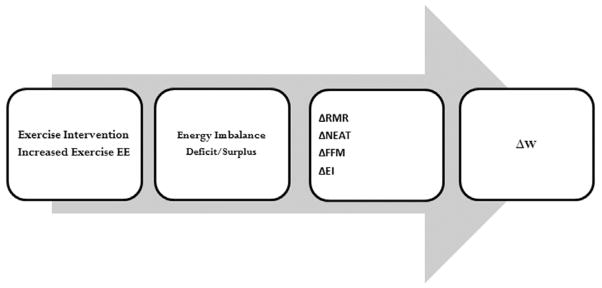
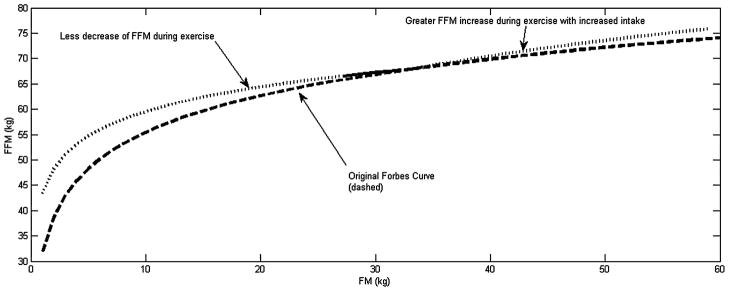
Weight loss resulting from an exercise intervention tends to be lower than predicted. Modest weight loss can arise from an increase in energy intake, physiological reductions in resting energy expenditure, an increase in lean tissue or a decrease in non-exercise activity. Lower than expected, weight loss could also arise from weak and invalidated assumptions within predictive models. To investigate these causes, we systematically reviewed studies that monitored compliance to exercise prescriptions and measured exercise-induced change in body composition. Changed body energy stores were calculated to determine the deficit between total daily energy intake and energy expenditures. This information combined with available measurements was used to critically evaluate explanations for low exercise-induced weight loss. We conclude that the small magnitude of weight loss observed from the majority of evaluated exercise interventions is primarily due to low doses of prescribed exercise energy expenditures compounded by a concomitant increase in caloric intake.
运动干预导致的体重下降往往低于预期。适度的体重下降可能源于能量摄入的增加、静息能量消耗的生理性降低、瘦组织的增加或非运动活动的减少。低于预期的体重下降也可能源于预测模型中存在的薄弱和无效假设。为了研究这些原因,我们系统地回顾了监测运动处方依从性并测量运动引起的身体成分变化的研究。改变的身体能量储存被计算出来,以确定总每日能量摄入和能量消耗之间的差值。将这些信息与可用的测量结果结合起来,用于批判性地评估低运动诱导体重下降的原因。我们得出的结论是,从大多数评估的运动干预中观察到的体重下降幅度较小,主要是由于规定的运动能量消耗剂量低,同时伴随着热量摄入的增加。