Yang Jing, Li Jiabao, Du Zheren, Gong Qihuang, Teng Jinghua, Hong Minghui
1] Department of Electrical and Computer Engineering, National University of Singapore, 4 Engineering Drive 3. 117576, Singapore [2] Institute of Materials Research and Engineering, Agency for Science, Technology and Research (A*STAR), 3 Research Link. 117602, Singapore [3] NUS Environmental Research Institute, National University of Singapore, 5A Engineering Drive 1, #02-01. 117411, Singapore.
Department of Electrical and Computer Engineering, National University of Singapore, 4 Engineering Drive 3. 117576, Singapore.
Sci Rep. 2014 Oct 17;4:6657. doi: 10.1038/srep06657.
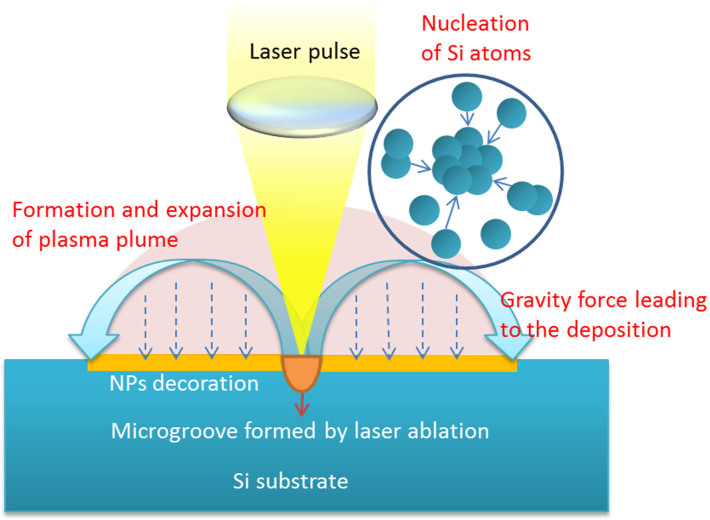
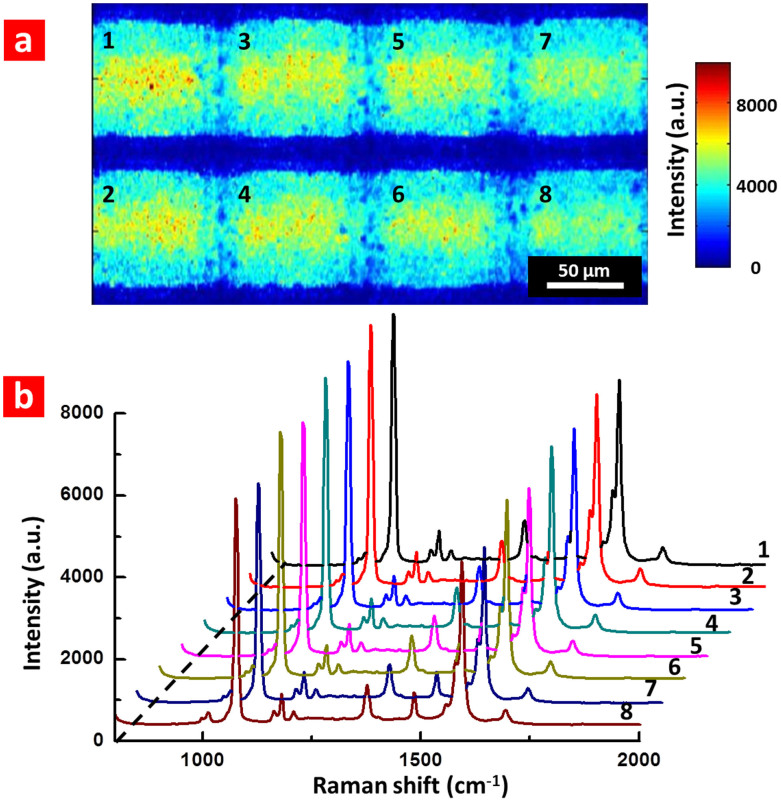
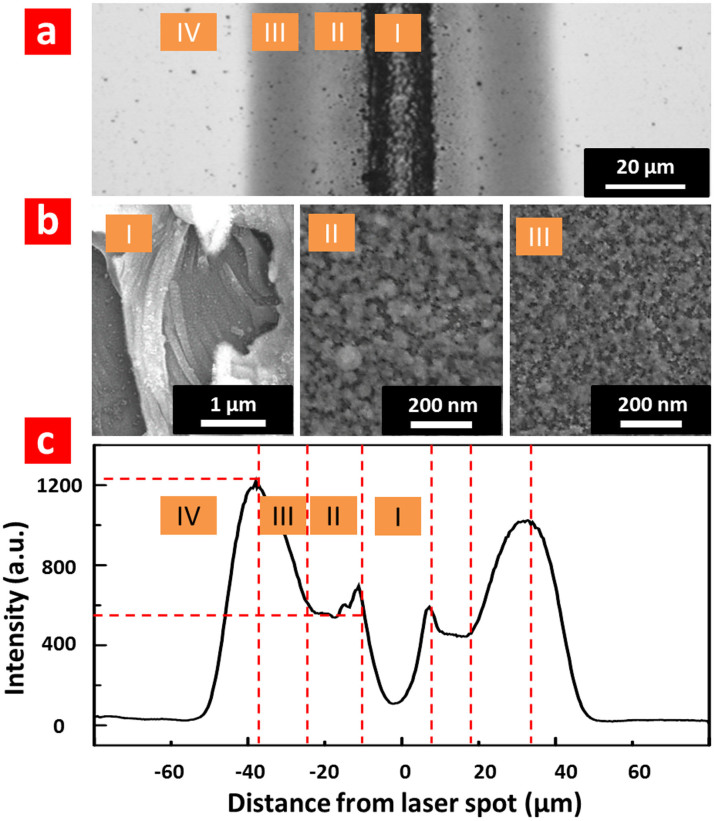
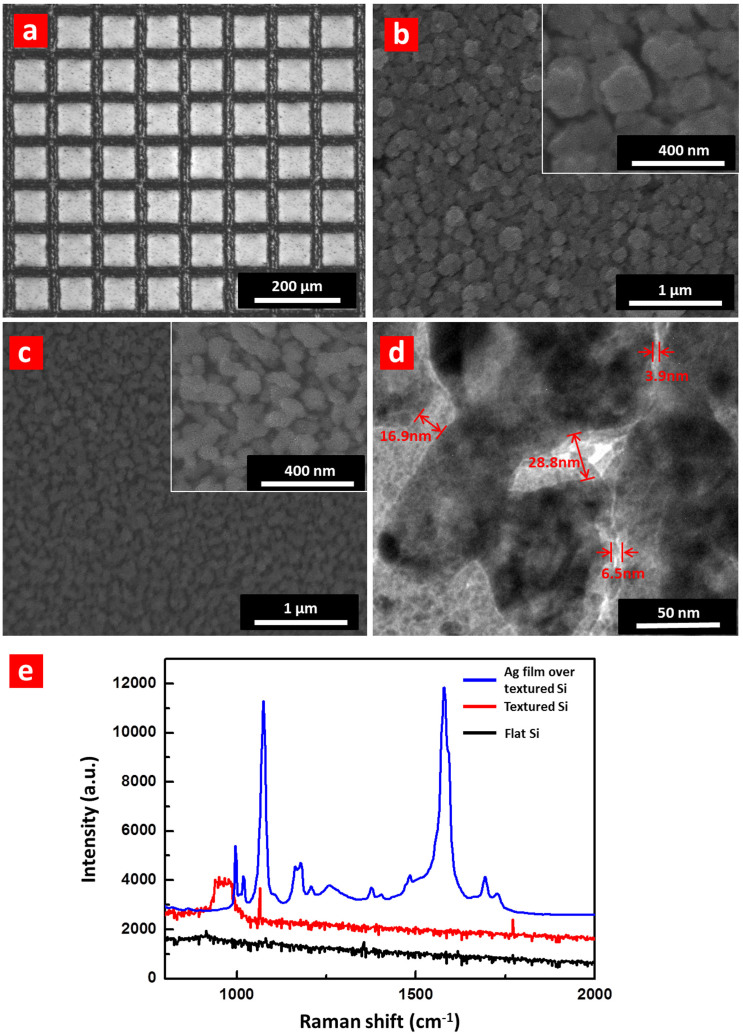
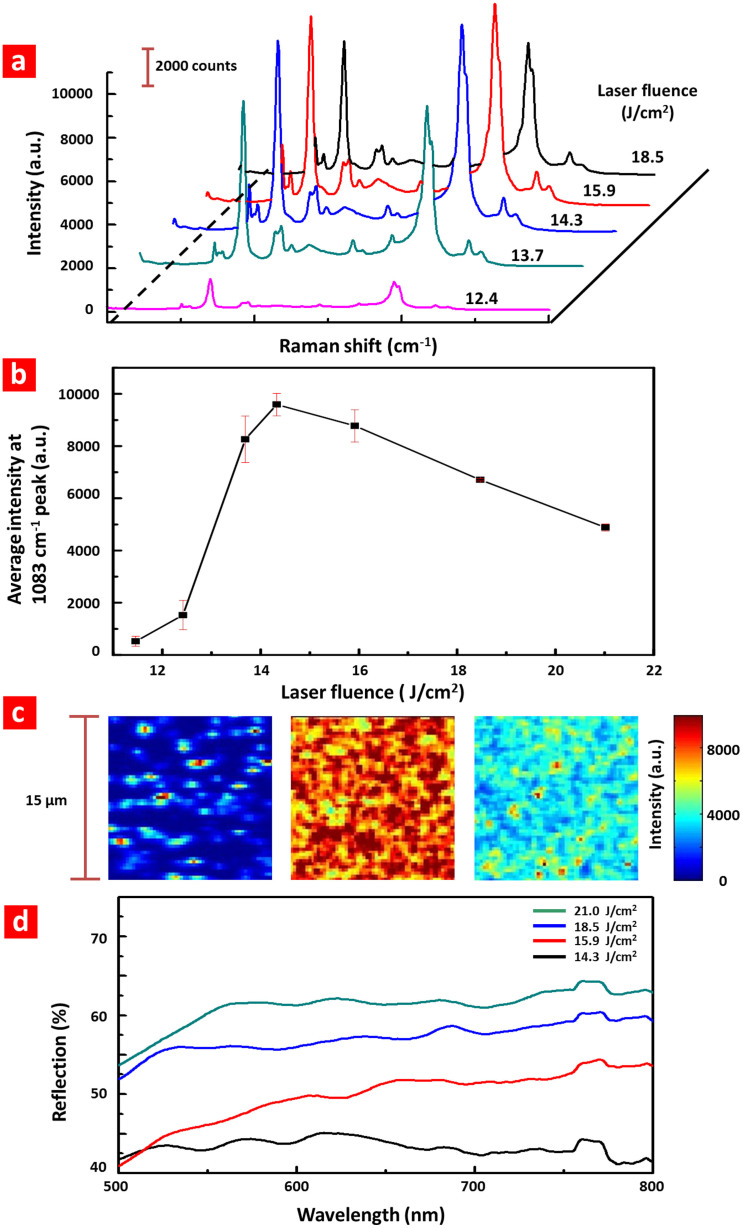
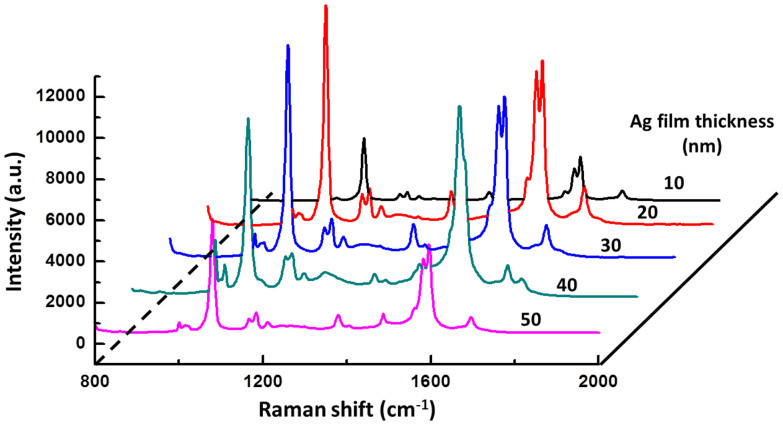
Surface enhanced Raman spectroscopy (SERS) has been widely investigated as an effective technique for low-concentration bio-chemical molecules detection. A rapid two-step approach to fabricate SERS substrates with high controllability in ambient air is developed. Dynamic laser ablation directly creates microgroove on the Si substrate. Meanwhile, nanoparticles are synthesized via the nucleation of laser induced plasma species and the air molecules. It configures the Si surface into four different regions decorated with nanoparticles at different sizes. With Ag film coating, these nanoparticles function as hotspots for SERS. Microsquare arrays are fabricated on the Si surface as large-area SERS substrates by the laser ablation in horizontal and vertical directions. In each microsquare, it exhibits quasi-3D structures with randomly arranged and different shaped nanoparticles aggregated in more than one layer. With Ag film deposition, uniform SERS signals are obtained by detecting the 4-methylbenzenethiol molecules. The SERS signal intensity is determined by the size and shape distributions of the nanoparticles, which depend on the laser processing parameters. With the optimal laser fluence, the SERS signals show a uniform enhancement factor up to 5.5 × 10(6). This provides a high-speed and low-cost method to produce SERS substrates over a large area.
表面增强拉曼光谱(SERS)作为一种用于低浓度生化分子检测的有效技术已得到广泛研究。本文开发了一种在环境空气中快速两步制备具有高可控性SERS基底的方法。动态激光烧蚀直接在硅基底上产生微槽。同时,通过激光诱导等离子体物种与空气分子的成核作用合成纳米颗粒。这将硅表面配置为四个不同区域,这些区域装饰有不同尺寸的纳米颗粒。通过镀银膜,这些纳米颗粒充当SERS的热点。通过在水平和垂直方向上的激光烧蚀在硅表面制备微方形阵列作为大面积SERS基底。在每个微方形中,它呈现出准三维结构,其中随机排列且形状不同的纳米颗粒聚集在不止一层中。通过镀银膜,通过检测4-甲基苯硫醇分子获得均匀的SERS信号。SERS信号强度由纳米颗粒的尺寸和形状分布决定,而这又取决于激光加工参数。在最佳激光能量密度下,SERS信号显示出高达5.5×10⁶的均匀增强因子。这提供了一种在大面积上生产SERS基底的高速且低成本的方法。