Chen Xuebo, Zhang Leying, Zhang Ian Y, Liang Junling, Wang Huaqing, Ouyang Mao, Wu Shihua, da Fonseca Anna Carolina Carvalho, Weng Lihong, Yamamoto Yasuhiko, Yamamoto Hiroshi, Natarajan Rama, Badie Behnam
Department of General Surgery, China Japan Union Hospital of Jilin University, Changchun, Jilin Province, P.R.China.
Division of Neurosurgery, City of Hope Beckman Research Institute.
Cancer Res. 2014 Dec 15;74(24):7285-7297. doi: 10.1158/0008-5472.CAN-14-1240. Epub 2014 Oct 17.
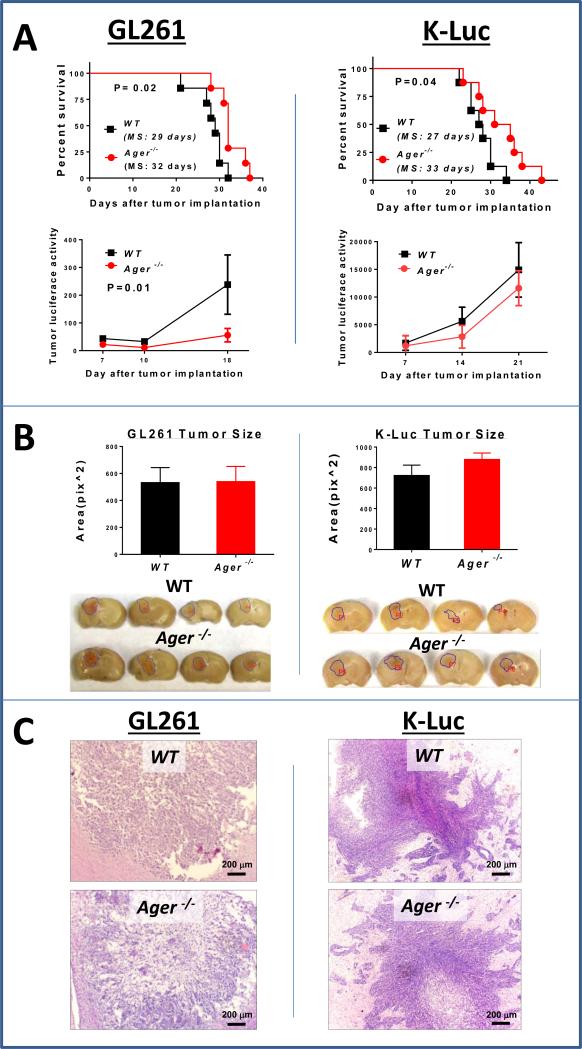
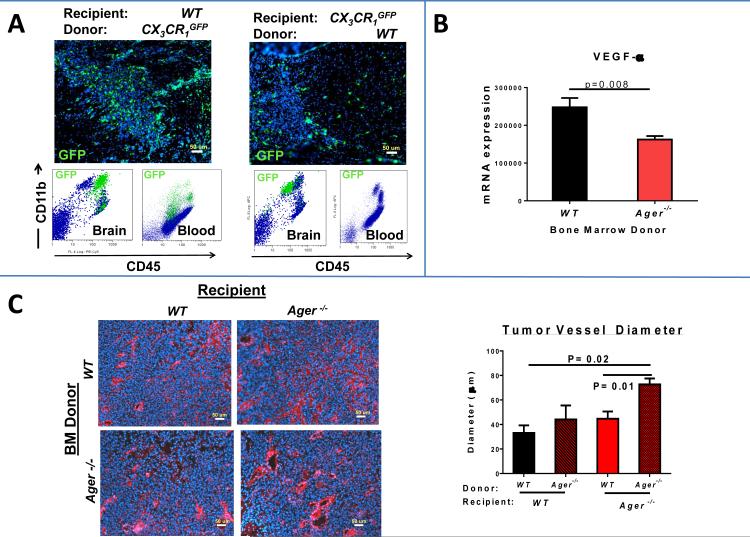
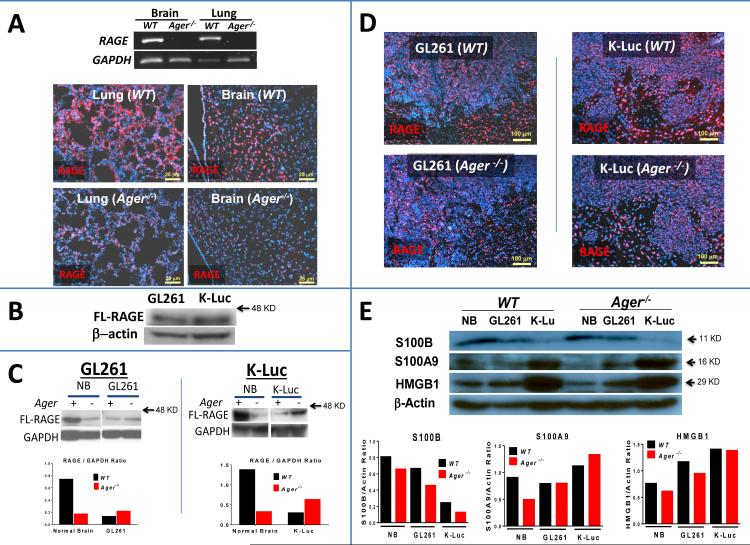
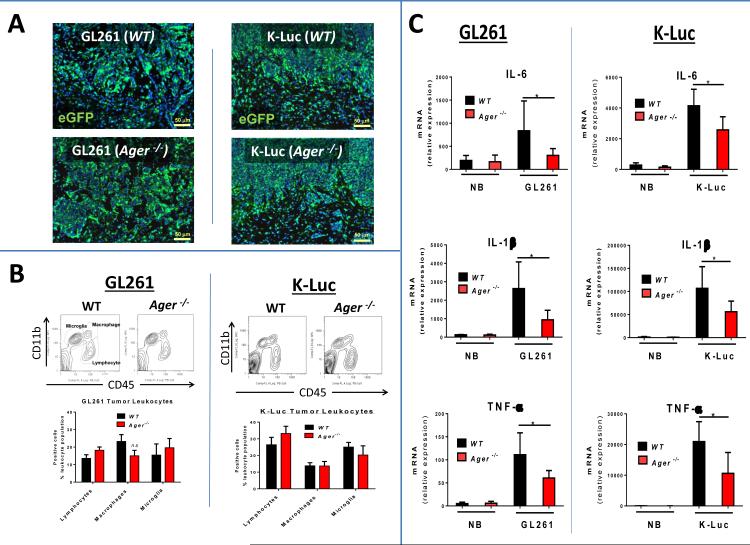
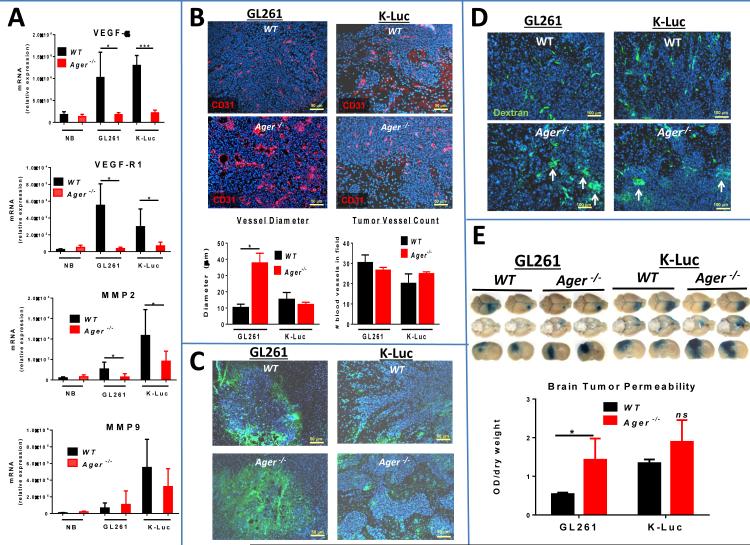
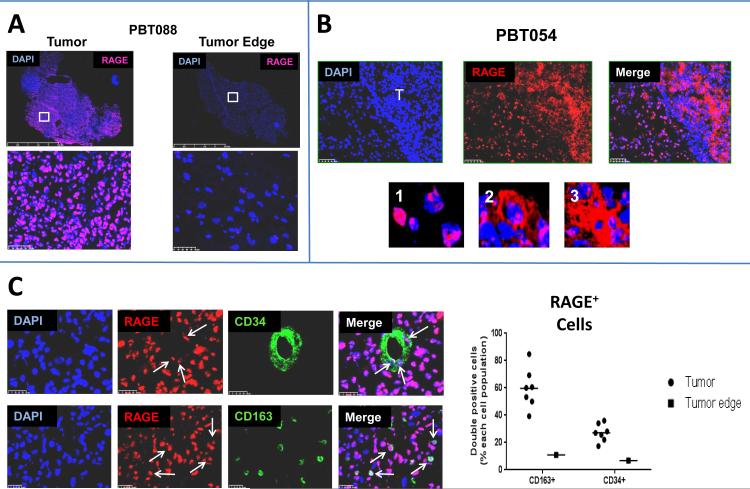
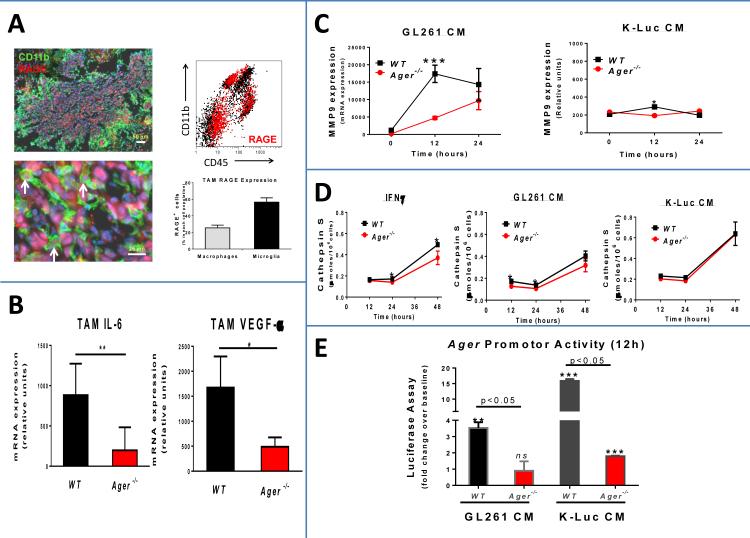
Interaction of RAGE (the receptor for advanced glycation endproducts) with its ligands can promote tumor progression, invasion, and angiogenesis. Although blocking RAGE signaling has been proposed as a potential anticancer strategy, functional contributions of RAGE expression in the tumor microenvironment (TME) have not been investigated in detail. Here, we evaluated the effect of genetic depletion of RAGE in TME on the growth of gliomas. In both invasive and noninvasive glioma models, animal survival was prolonged in RAGE knockout (Ager(-/-)) mice. However, the improvement in survival in Ager(-/-) mice was not due to changes in tumor growth rate but rather to a reduction in tumor-associated inflammation. Furthermore, RAGE ablation in the TME abrogated angiogenesis by downregulating the expression of proangiogenic factors, which prevented normal vessel formation, thereby generating a leaky vasculature. These alterations were most prominent in noninvasive gliomas, in which the expression of VEGF and proinflammatory cytokines were also lower in tumor-associated macrophages (TAM) in Ager(-/-) mice. Interestingly, reconstitution of Ager(-/-) TAM with wild-type microglia or macrophages normalized tumor vascularity. Our results establish that RAGE signaling in glioma-associated microglia and TAM drives angiogenesis, underscoring the complex role of RAGE and its ligands in gliomagenesis.
晚期糖基化终产物受体(RAGE)与其配体的相互作用可促进肿瘤进展、侵袭和血管生成。尽管阻断RAGE信号传导已被提出作为一种潜在的抗癌策略,但RAGE在肿瘤微环境(TME)中的功能作用尚未得到详细研究。在此,我们评估了TME中RAGE基因缺失对胶质瘤生长的影响。在侵袭性和非侵袭性胶质瘤模型中,RAGE基因敲除(Ager(-/-))小鼠的动物生存期均延长。然而,Ager(-/-)小鼠生存期的改善并非由于肿瘤生长速率的改变,而是由于肿瘤相关炎症的减轻。此外,TME中RAGE的缺失通过下调促血管生成因子的表达消除了血管生成,这阻止了正常血管的形成,从而产生了渗漏的脉管系统。这些改变在非侵袭性胶质瘤中最为显著,在Ager(-/-)小鼠的肿瘤相关巨噬细胞(TAM)中,血管内皮生长因子(VEGF)和促炎细胞因子的表达也较低。有趣的是,用野生型小胶质细胞或巨噬细胞重建Ager(-/-) TAM可使肿瘤血管正常化。我们的结果表明,胶质瘤相关小胶质细胞和TAM中的RAGE信号传导驱动血管生成,强调了RAGE及其配体在胶质瘤发生中的复杂作用。