Department of Surgery, Texas A&M University Health Science Center, Temple, TX, USA.
Central Texas Veterans Health Care System, Temple, TX, USA.
Acta Neuropathol Commun. 2014 Oct 20;2:143. doi: 10.1186/s40478-014-0143-5.
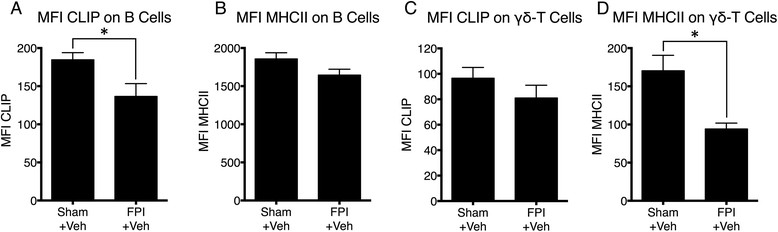
Traumatic brain injury (TBI), a significant cause of death and disability, causes, as in any injury, an acute, innate immune response. A key component in the transition between innate and adaptive immunity is the processing and presentation of antigen by professional antigen presenting cells (APCs). Whether an adaptive immune response to brain injury is beneficial or detrimental is not known. Current efforts to understand the contribution of the immune system after TBI have focused on neuroinflammation and brain-infiltrating immune cells. Here, we characterize and target TBI-induced expansion of peripheral immune cells that may act as potential APCs. Because MHC Class II-associated invariant peptide (CLIP) is important for antigen processing and presentation, we engineered a competitive antagonist (CAP) for CLIP, and tested the hypothesis that peptide competition could reverse or prevent neurodegeneration after TBI.
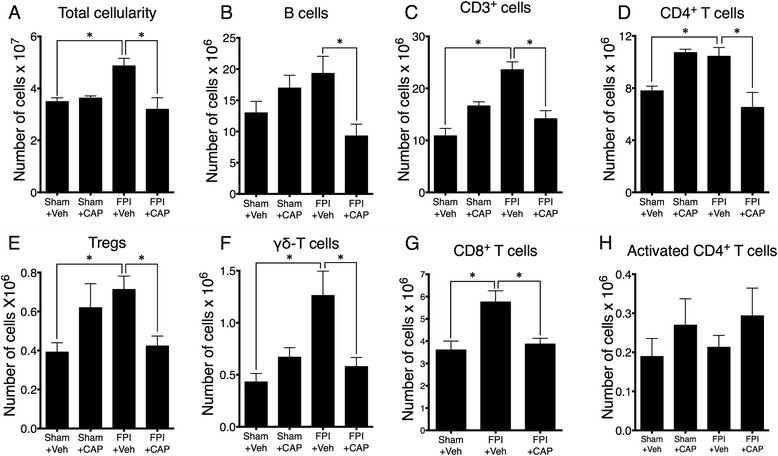
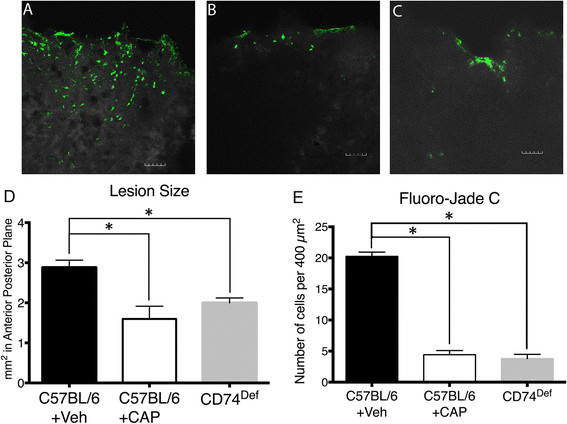
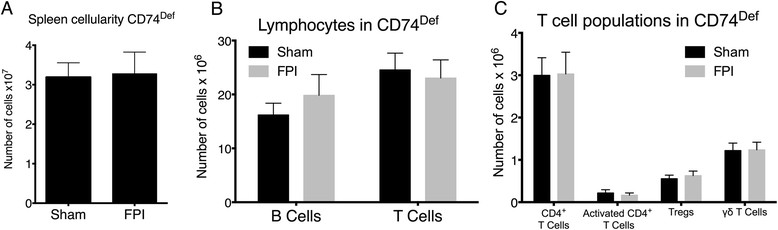
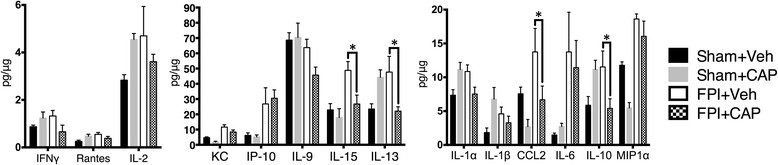
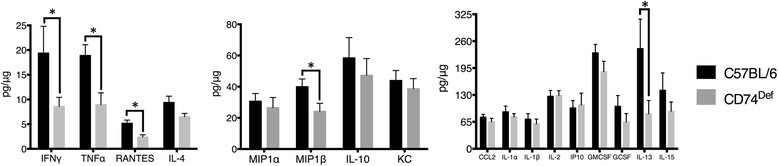
We show that after fluid percussion injury (FPI), peripheral splenic lymphocytes, including CD4+ and CD8+ T cells, regulatory T cells (Tregs), and γδ T cells, are increased in number within 24 hours after FPI. These increases were reversed by CAP treatment and this antagonism of CLIP also reduced neuroinflammation and neurodegeneration after TBI. Using a mouse deficient for the precursor of CLIP, CD74, we observed decreased peripheral lymphocyte activation, decreased neurodegeneration, and a significantly smaller lesion size following TBI.
Taken together, the data support the hypothesis that neurodegeneration following TBI is dependent upon antigen processing and presentation that requires CD74.
颅脑损伤(TBI)是导致死亡和残疾的主要原因,它会引起急性固有免疫反应,就像任何损伤一样。固有免疫向适应性免疫转变的关键组成部分是专业抗原呈递细胞(APC)对抗原的加工和呈递。目前尚不清楚针对脑损伤的适应性免疫反应是有益还是有害。目前,人们努力了解 TBI 后免疫系统的贡献,重点是神经炎症和脑浸润免疫细胞。在这里,我们对 TBI 诱导的外周免疫细胞扩张进行了特征描述和靶向治疗,这些细胞可能作为潜在的 APC 发挥作用。由于 MHC 类 II 相关不变肽(CLIP)对抗原加工和呈递很重要,因此我们设计了一种 CLIP 的竞争性拮抗剂(CAP),并检验了肽竞争是否可以逆转或预防 TBI 后的神经退行性变。
我们发现,在液压冲击损伤(FPI)后,外周脾淋巴细胞,包括 CD4+和 CD8+T 细胞、调节性 T 细胞(Tregs)和γδ T 细胞,在 FPI 后 24 小时内数量增加。CAP 治疗可逆转这些增加,并且这种 CLIP 拮抗作用还可减少 TBI 后的神经炎症和神经退行性变。使用缺乏 CLIP 前体 CD74 的小鼠,我们观察到外周淋巴细胞活化减少、神经退行性变减少以及 TBI 后损伤体积明显减小。
综上所述,数据支持以下假说:TBI 后神经退行性变依赖于需要 CD74 的抗原加工和呈递。