Chollett Iliana, Enríquez Susana, Mumby Peter J
Marine Spatial Ecology Lab, College of Life and Environmental Sciences, University of Exeter, Exeter, United Kingdom; Marine Spatial Ecology Lab, School of Biological Sciences, Goddard Building, University of Queensland, Brisbane, Australia.
Instituto de Ciencias del Mar y Limnología, Universidad Nacional Autónoma de México, Puerto Morelos, México.
PLoS One. 2014 Oct 21;9(10):e110634. doi: 10.1371/journal.pone.0110634. eCollection 2014.
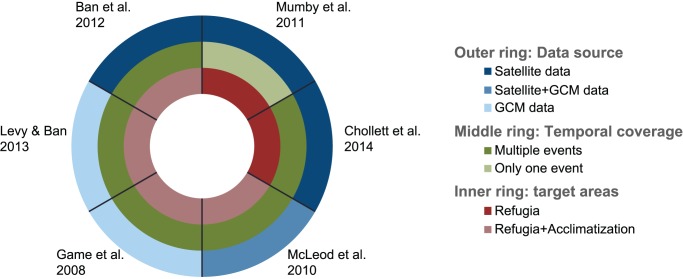
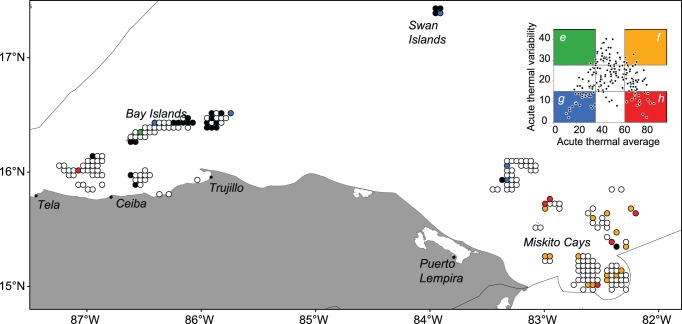
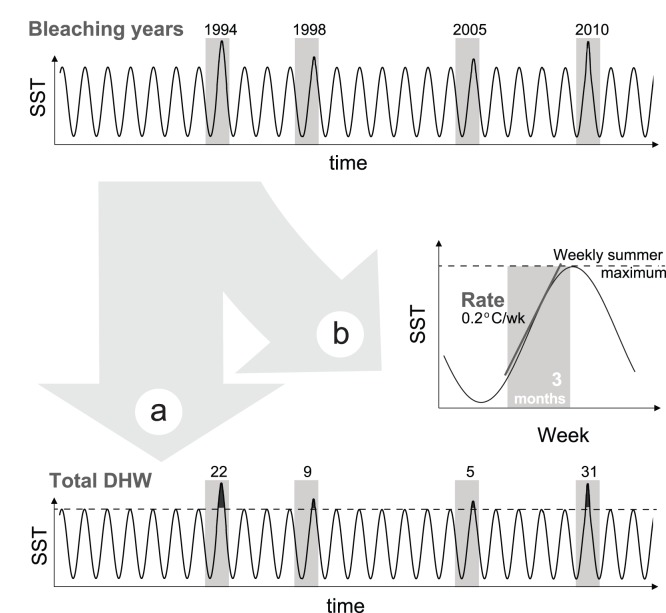
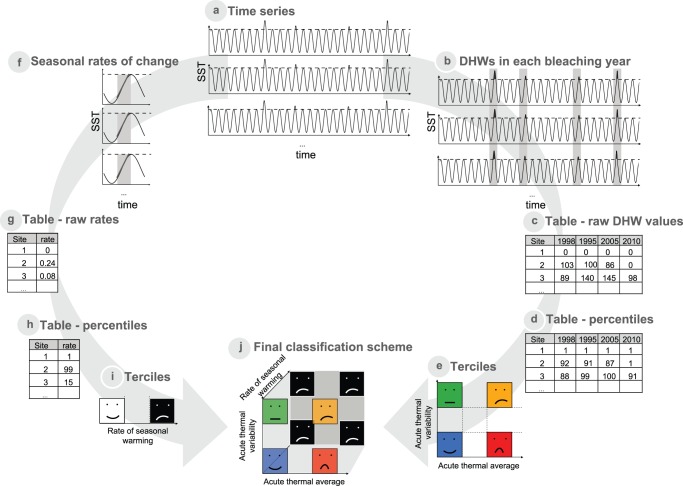
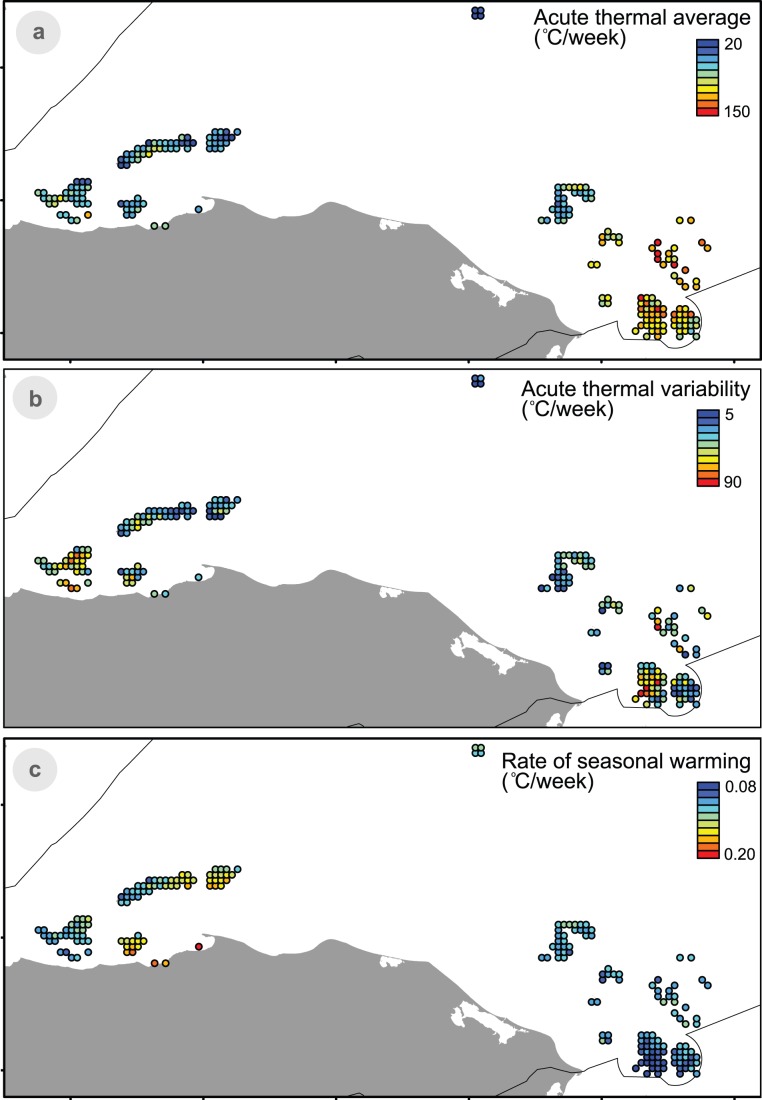
Reef managers cannot fight global warming through mitigation at local scale, but they can use information on thermal patterns to plan for reserve networks that maximize the probability of persistence of their reef system. Here we assess previous methods for the design of reserves for climate change and present a new approach to prioritize areas for conservation that leverages the most desirable properties of previous approaches. The new method moves the science of reserve design for climate change a step forwards by: (1) recognizing the role of seasonal acclimation in increasing the limits of environmental tolerance of corals and ameliorating the bleaching response; (2) using the best proxy for acclimatization currently available; (3) including information from several bleaching events, which frequency is likely to increase in the future; (4) assessing relevant variability at country scales, where most management plans are carried out. We demonstrate the method in Honduras, where a reassessment of the marine spatial plan is in progress.
珊瑚礁管理者无法在地方层面通过缓解措施应对全球变暖,但他们可以利用热模式信息来规划保护区网络,以最大程度提高其珊瑚礁系统持续存在的可能性。在此,我们评估了以往气候变化保护区设计方法,并提出一种新方法,该方法利用以往方法中最理想的特性来确定保护区域的优先级。新方法通过以下方式推动了气候变化保护区设计科学向前发展:(1)认识到季节性适应在提高珊瑚环境耐受限度和减轻白化反应方面的作用;(2)使用目前可用的最佳适应代理指标;(3)纳入来自多次白化事件的信息,而未来白化事件的频率可能会增加;(4)在大多数管理计划实施的国家层面评估相关变异性。我们在洪都拉斯展示了该方法,该国正在对海洋空间规划进行重新评估。