Magris Rafael A, Heron Scott F, Pressey Robert L
Australian Research Council Centre of Excellence for Coral Reef Studies, James Cook University, Townsville, Queensland, Australia.
National Oceanic & Atmospheric Administration Coral Reef Watch, Townsville, Queensland, Australia.
PLoS One. 2015 Nov 4;10(11):e0140828. doi: 10.1371/journal.pone.0140828. eCollection 2015.
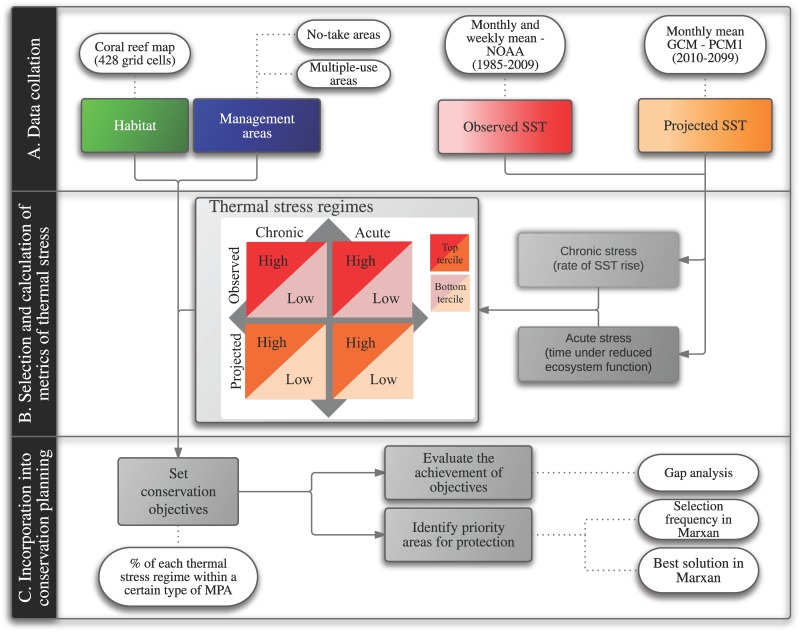
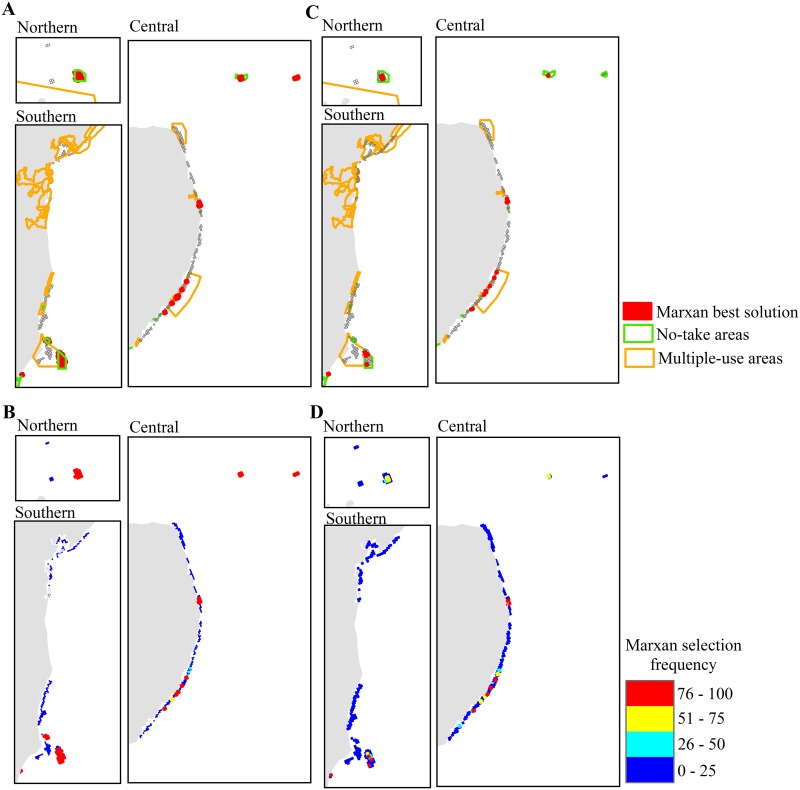
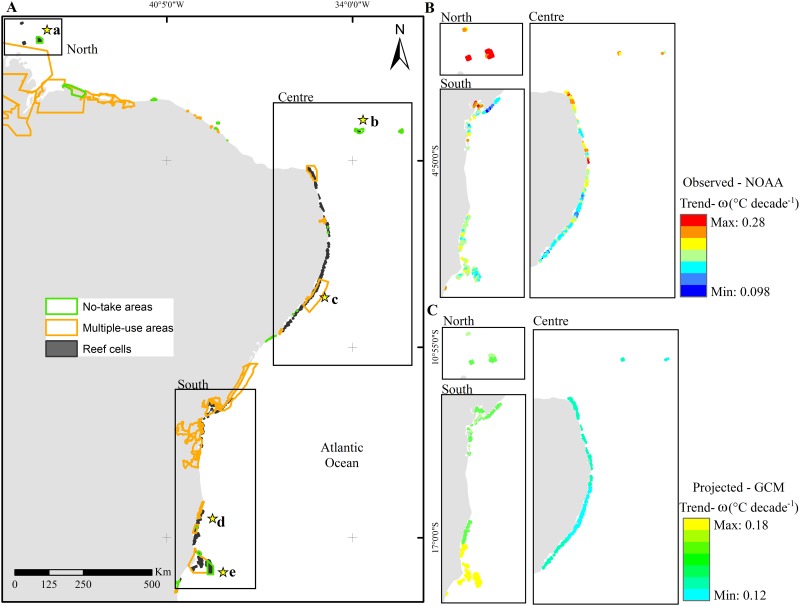
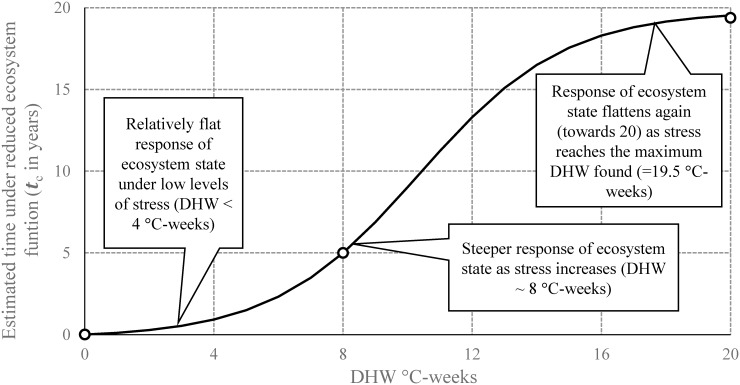
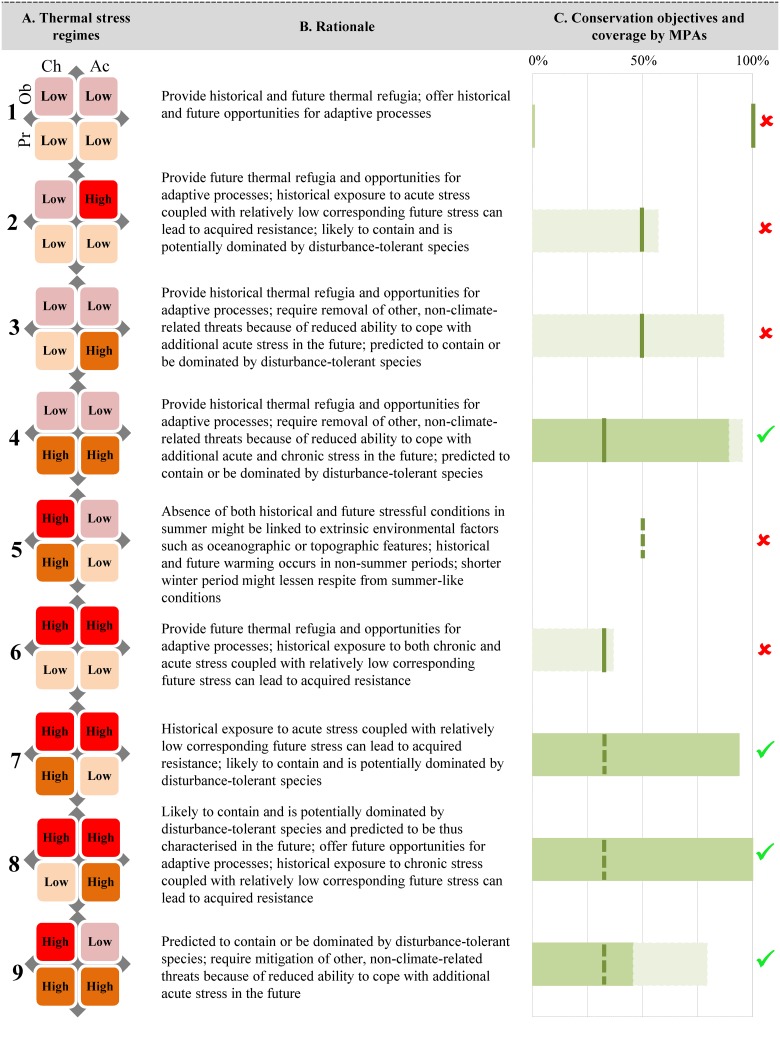
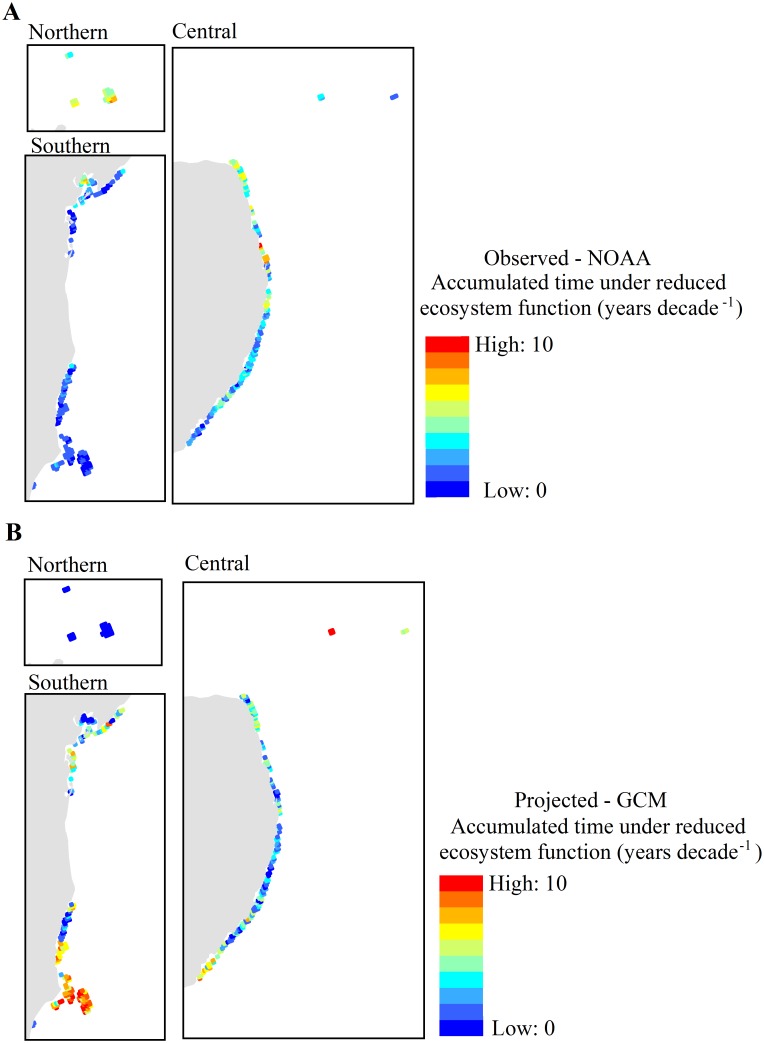
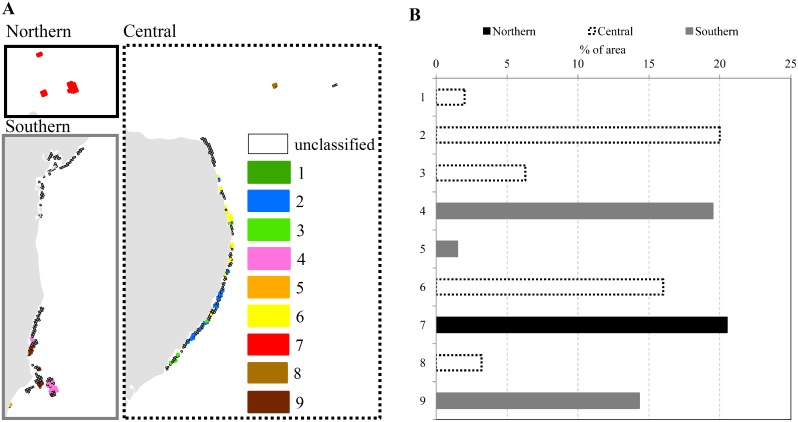
Incorporating warming disturbances into the design of marine protected areas (MPAs) is fundamental to developing appropriate conservation actions that confer coral reef resilience. We propose an MPA design approach that includes spatially- and temporally-varying sea-surface temperature (SST) data, integrating both observed (1985-2009) and projected (2010-2099) time-series. We derived indices of acute (time under reduced ecosystem function following short-term events) and chronic thermal stress (rate of warming) and combined them to delineate thermal-stress regimes. Coral reefs located on the Brazilian coast were used as a case study because they are considered a conservation priority in the southwestern Atlantic Ocean. We show that all coral reef areas in Brazil have experienced and are projected to continue to experience chronic warming, while acute events are expected to increase in frequency and intensity. We formulated quantitative conservation objectives for regimes of thermal stress. Based on these objectives, we then evaluated if/how they are achieved in existing Brazilian MPAs and identified priority areas where additional protection would reinforce resilience. Our results show that, although the current system of MPAs incorporates locations within some of our thermal-stress regimes, historical and future thermal refugia along the central coast are completely unprotected. Our approach is applicable to other marine ecosystems and adds to previous marine planning for climate change in two ways: (i) by demonstrating how to spatially configure MPAs that meet conservation objectives for warming disturbance using spatially- and temporally-explicit data; and (ii) by strategically allocating different forms of spatial management (MPA types) intended to mitigate warming impacts and also enhance future resistance to climate warming.
将变暖干扰因素纳入海洋保护区(MPA)的设计之中,对于制定适当的保护行动以增强珊瑚礁恢复力而言至关重要。我们提出了一种MPA设计方法,该方法纳入了时空变化的海面温度(SST)数据,整合了观测(1985 - 2009年)和预测(2010 - 2099年)的时间序列。我们得出了急性(短期事件后生态系统功能下降时段)和慢性热应激(变暖速率)指数,并将它们结合起来划定热应激区域。巴西海岸的珊瑚礁被用作案例研究,因为它们被视为西南大西洋的保护重点。我们发现,巴西所有的珊瑚礁区域都已经历且预计将继续经历长期变暖,而急性事件的频率和强度预计将会增加。我们为热应激区域制定了量化的保护目标。基于这些目标,我们随后评估了巴西现有MPA是否以及如何实现这些目标,并确定了额外保护将增强恢复力的优先区域。我们的结果表明,尽管当前的MPA系统涵盖了我们部分热应激区域内的地点,但中部海岸的历史和未来热避难所却完全未受保护。我们的方法适用于其他海洋生态系统,并在两个方面对先前的海洋气候变化规划有所补充:(i)通过展示如何利用时空明确的数据在空间上配置符合变暖干扰保护目标的MPA;(ii)通过战略性地分配不同形式的空间管理(MPA类型),旨在减轻变暖影响并增强未来对气候变暖的抵抗力。