Irimia Cristina, Tuong Roxanne N, Quach Tammy, Parsons Loren H
Committee on the Neurobiology of Addictive Disorders, The Scripps Research Institute, La Jolla, California, United States of America.
PLoS One. 2014 Oct 15;9(10):e109948. doi: 10.1371/journal.pone.0109948. eCollection 2014.
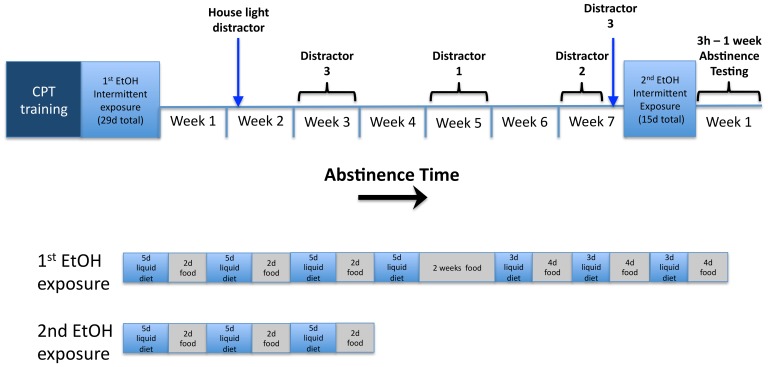
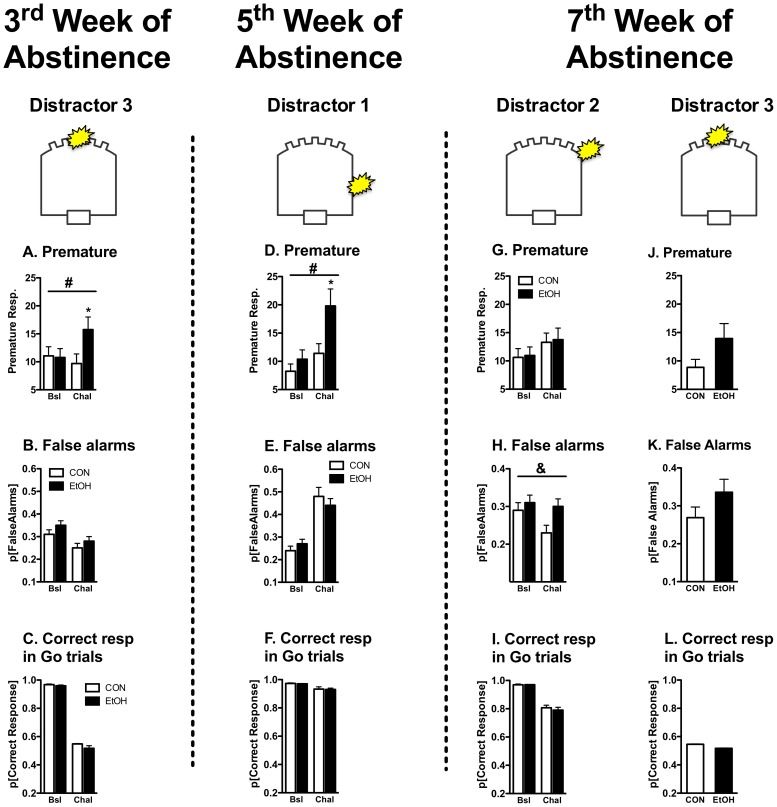
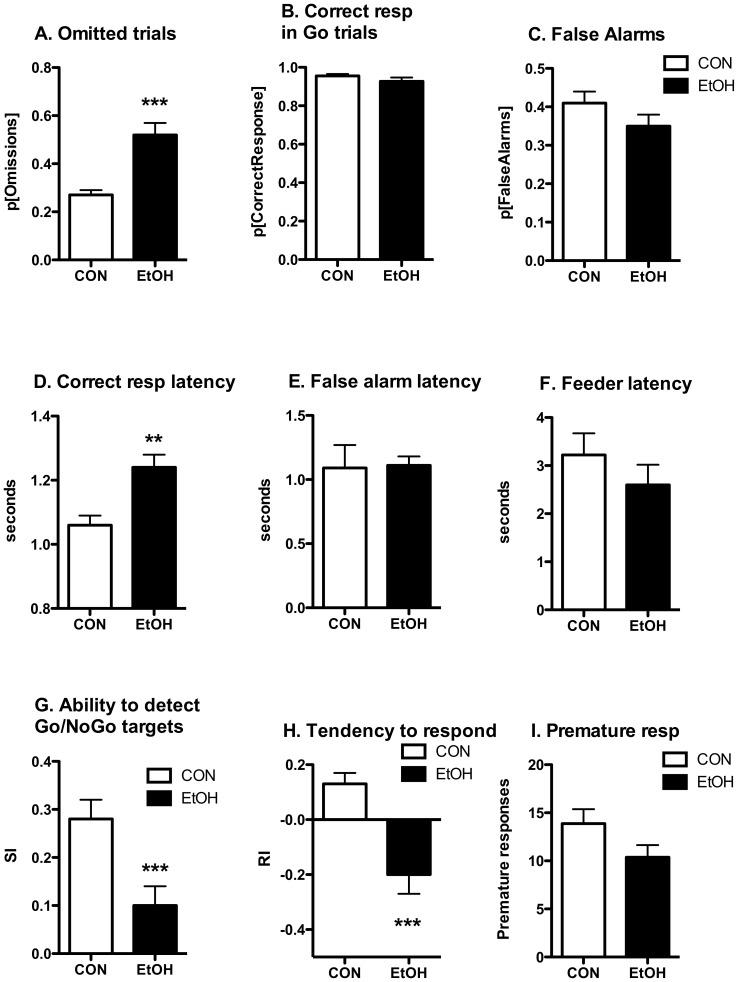
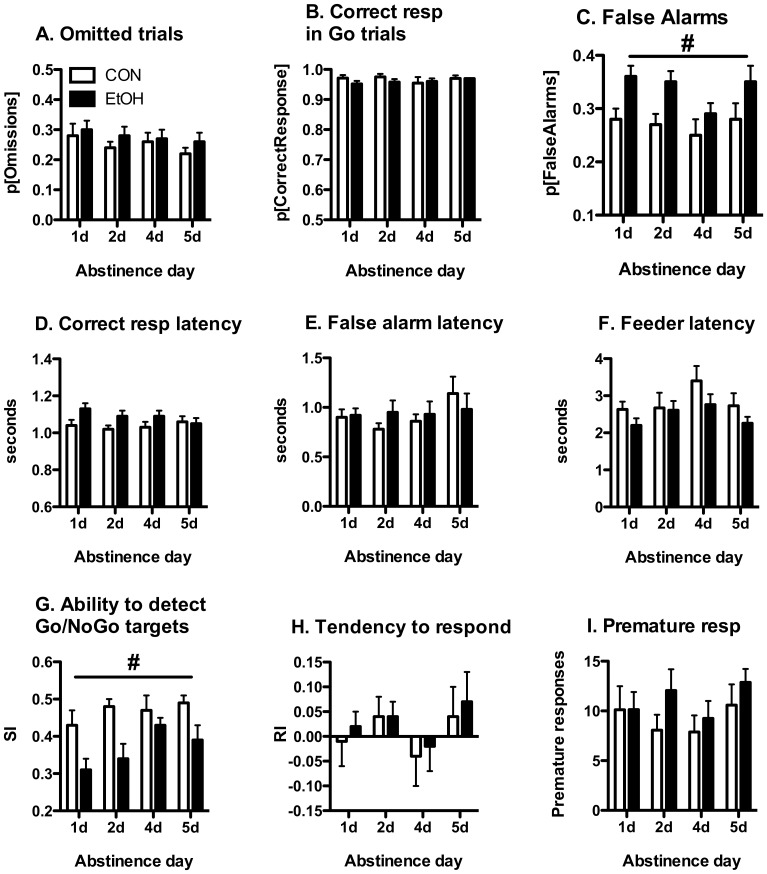
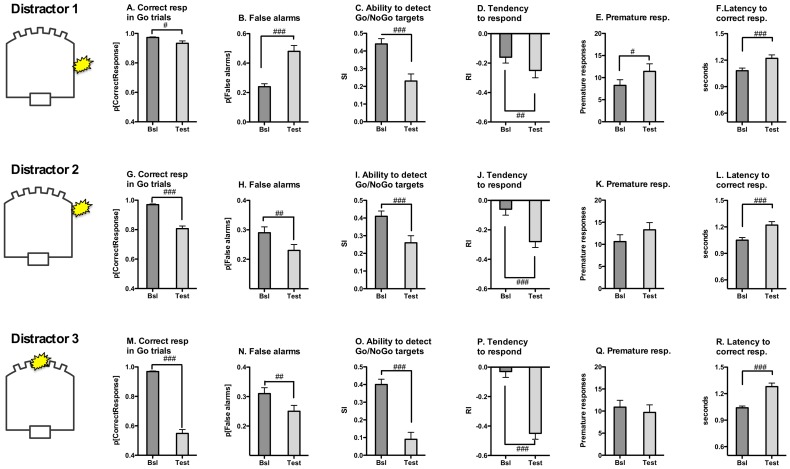
Impaired cognitive processing is a hallmark of addiction. In particular, deficits in inhibitory control can propel continued drug use despite adverse consequences. Clinical evidence shows that detoxified alcoholics exhibit poor inhibitory control in the Continuous Performance Task (CPT) and related tests of motor impulsivity. Animal models may provide important insight into the neural mechanisms underlying this consequence of chronic alcohol exposure though pre-clinical investigations of behavioral inhibition during alcohol abstinence are sparse. The present study employed the rat 5 Choice-Continuous Performance Task (5C-CPT), a novel pre-clinical variant of the CPT, to evaluate attentional capacity and impulse control over the course of protracted abstinence from chronic intermittent alcohol consumption. In tests conducted with familiar 5C-CPT conditions EtOH-exposed rats exhibited impaired attentional capacity during the first hours of abstinence and impaired behavioral restraint (increased false alarms) during the first 5d of abstinence that dissipated thereafter. Subsequent tests employing visual distractors that increase the cognitive load of the task revealed significant increases in impulsive action (premature responses) at 3 and 5 weeks of abstinence, and the emergence of impaired behavioral restraint (increased false alarms) at 7 weeks of abstinence. Collectively, these findings demonstrate the emergence of increased impulsive action in alcohol-dependent rats during protracted alcohol abstinence and suggest the 5C-CPT with visual distractors may provide a viable behavioral platform for characterizing the neurobiological substrates underlying impaired behavioral inhibition resulting from chronic intermittent alcohol exposure.
认知加工受损是成瘾的一个标志。特别是,抑制控制缺陷会促使人们不顾不良后果继续使用药物。临床证据表明,戒酒的酗酒者在连续性能任务(CPT)和相关的运动冲动测试中表现出较差的抑制控制能力。动物模型可能会为慢性酒精暴露导致的这种后果背后的神经机制提供重要见解,尽管关于戒酒期间行为抑制的临床前研究很少。本研究采用大鼠5选择连续性能任务(5C-CPT),这是CPT的一种新型临床前变体,以评估长期戒除慢性间歇性酒精消费过程中的注意力容量和冲动控制。在熟悉的5C-CPT条件下进行的测试中,暴露于乙醇的大鼠在戒酒的最初几个小时内注意力容量受损,在戒酒的前5天内行为抑制受损(错误警报增加),此后消散。随后使用增加任务认知负荷的视觉干扰物进行的测试显示,在戒酒3周和5周时冲动行为(过早反应)显著增加,在戒酒7周时出现行为抑制受损(错误警报增加)。总的来说,这些发现表明,在长期戒酒期间,酒精依赖大鼠的冲动行为增加,并表明带有视觉干扰物的5C-CPT可能为表征慢性间歇性酒精暴露导致的行为抑制受损背后的神经生物学底物提供一个可行的行为平台。