Dhanjal Jaspreet Kaur, Nigam Nupur, Sharma Sudhanshu, Chaudhary Anupama, Kaul Sunil C, Grover Abhinav, Wadhwa Renu
School of Biotechnology, Jawaharlal Nehru University, New Delhi 110 067, India.
BMC Cancer. 2014 Oct 22;14:775. doi: 10.1186/1471-2407-14-775.
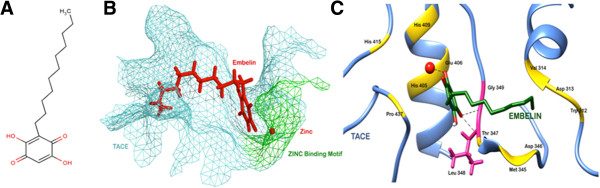
Embelin, a quinone derivative, is found in the fruits of Embelia ribes Burm (Myrsinaceae). It has been shown to have a variety of therapeutic potentials including anthelmintic, anti-tumor, anti-diabetic, anti-bacterial and anti-inflammation. Inflammation is an immunological response to external harmful stimuli and is regulated by an endogenous pyrogen and pleiotropic pro-inflammatory cytokine, tumor necrosis factor alpha (TNF-α). TNF-α production has been implicated in a variety of other human pathologies including neurodegeneration and cancer. Several studies have shown that the anti-inflammatory activity of embelin is mediated by reduction in TNF-α. The latter is synthesized as a membrane anchored protein (pro-TNF-α); the soluble component of pro-TNF-α is then released into the extracellular space by the action of a protease called TNF-α converting enzyme (TACE). TACE, hence, has been proposed as a therapeutic target for inflammation and cancer.
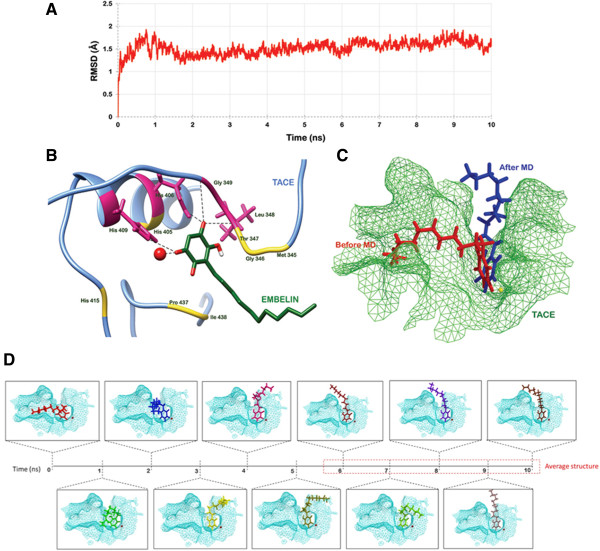
We used molecular docking and experimental approaches to investigate the docking potential and molecular effects of embelin to TACE and human cancer cell characteristics, respectively.
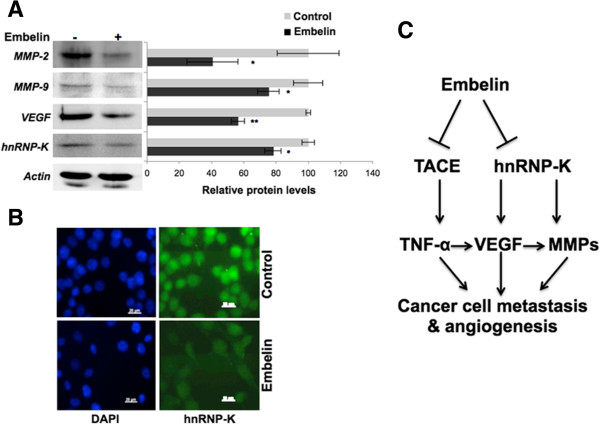
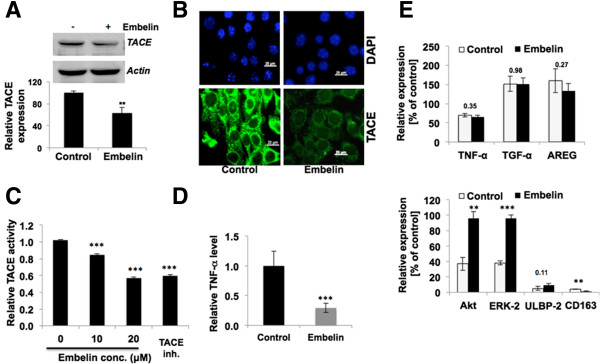
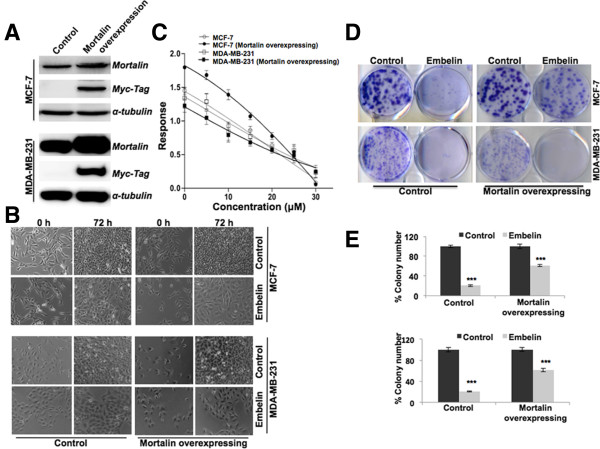
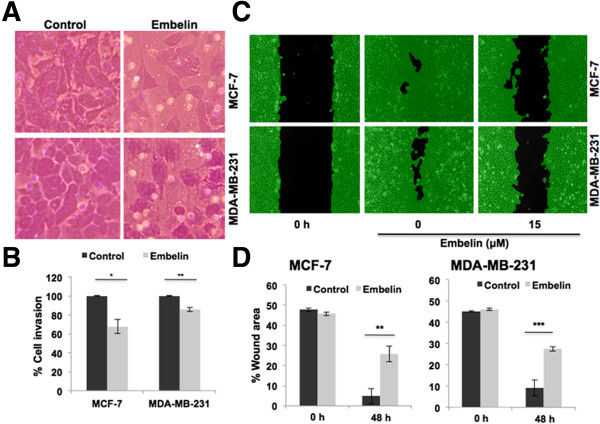
We demonstrate that embelin is a potential inhibitor of TACE. Furthermore, in vitro studies revealed that it inhibits malignant properties of cancer cells through inactivation of metastatic signaling molecules including MMPs, VEGF and hnRNP-K in breast cancer cells.
Based on the molecular dynamics and experimental data, embelin is proposed as a natural anti-inflammatory and anticancer drug.
紫铆因是一种醌衍生物,存在于紫金牛科植物百两金(Embelia ribes Burm)的果实中。已证明它具有多种治疗潜力,包括驱虫、抗肿瘤、抗糖尿病、抗菌和抗炎作用。炎症是对外部有害刺激的免疫反应,由内源性热原和多效性促炎细胞因子肿瘤坏死因子α(TNF-α)调节。TNF-α的产生与包括神经退行性变和癌症在内的多种其他人类疾病有关。多项研究表明,紫铆因的抗炎活性是通过降低TNF-α来介导的。后者作为一种膜锚定蛋白(前体TNF-α)合成;前体TNF-α的可溶性成分随后通过一种名为TNF-α转换酶(TACE)的蛋白酶作用释放到细胞外空间。因此,TACE已被提议作为炎症和癌症的治疗靶点。
我们分别使用分子对接和实验方法来研究紫铆因与TACE的对接潜力和分子效应以及对人类癌细胞特征的影响。
我们证明紫铆因是TACE的潜在抑制剂。此外,体外研究表明,它通过使乳腺癌细胞中包括基质金属蛋白酶(MMPs)、血管内皮生长因子(VEGF)和不均一核糖核蛋白K(hnRNP-K)在内的转移信号分子失活来抑制癌细胞的恶性特性。
基于分子动力学和实验数据,紫铆因被提议作为一种天然的抗炎和抗癌药物。