Hassouna Ashraf, Bahadur Yasir Abdulaziz, Constantinescu Camelia
King Faisal Specialist Hospital & Research Center, Jeddah, Saudi Arabia ; National Cancer Institute, Cairo University, Egypt.
King Abdulaziz University Hospital, Jeddah, Saudi Arabia.
J Contemp Brachytherapy. 2014 Oct;6(3):271-5. doi: 10.5114/jcb.2014.45436. Epub 2014 Sep 23.
To retrospectively assess the incidence and magnitude of air pockets around vaginal cylinders and its impact on dose distribution in vaginal cuff image-guided high-dose-rate (HDR) brachytherapy.
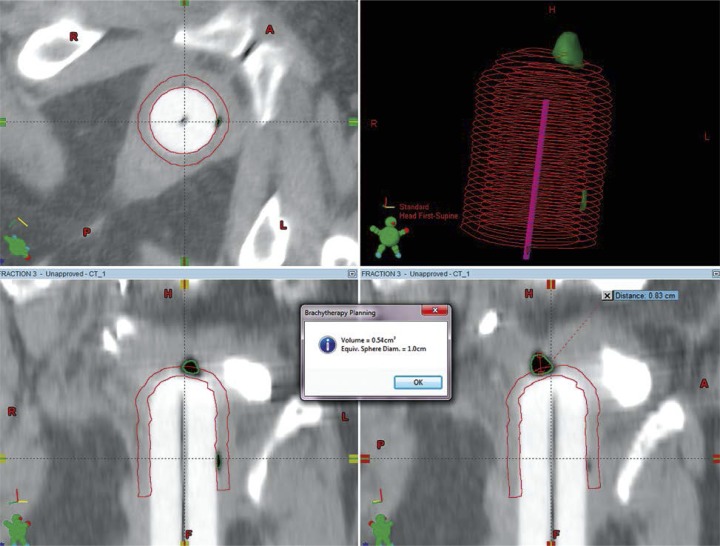
Fifty endometrial carcinoma patients treated by postoperative HDR vaginal cuff brachytherapy were included in the study. The average age of patients was 58.3 ± 11.8 years (range: 31-87 years). Brachytherapy was performed using cylindrical applicators, and the dose prescribed to 0.5 cm from the applicator's surface, over a length of 5 cm from the applicator's tip. Computed tomography (CT) simulation was used for each brachytherapy fraction. The incidence, vaginal mucosa displacement, volume, and dosimetric effect of air pockets around the vaginal cylinder were evaluated.
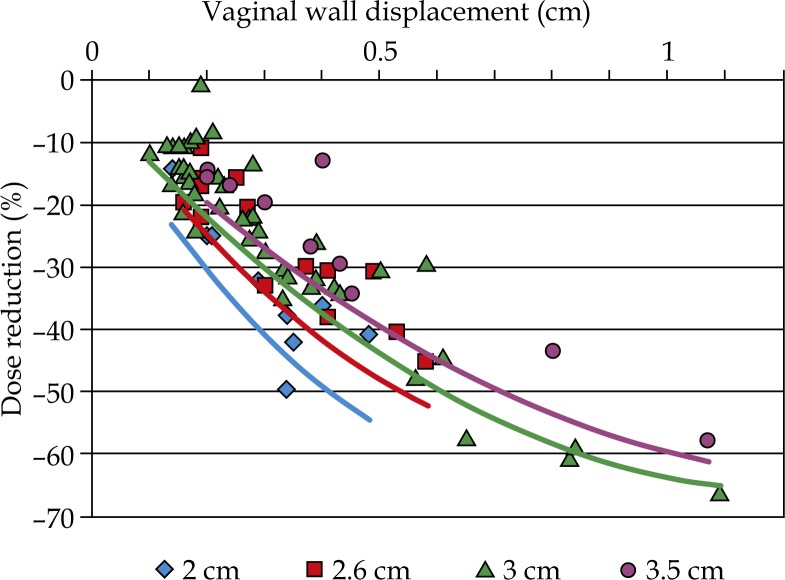
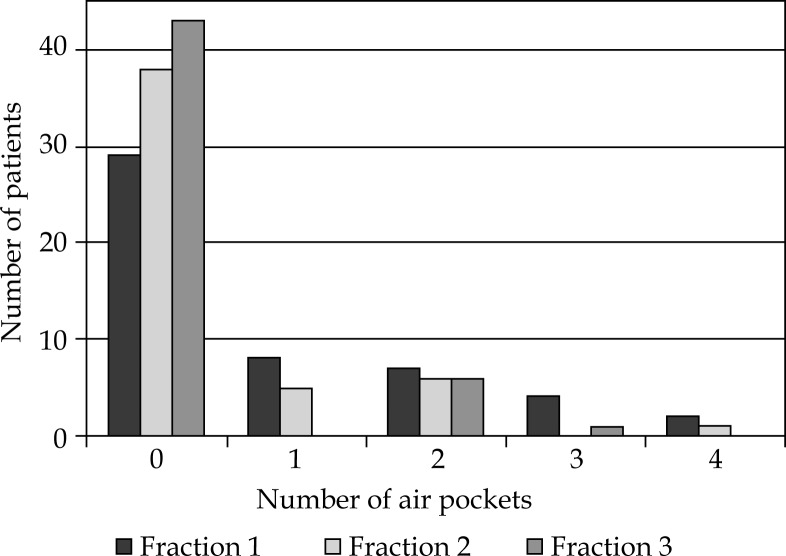
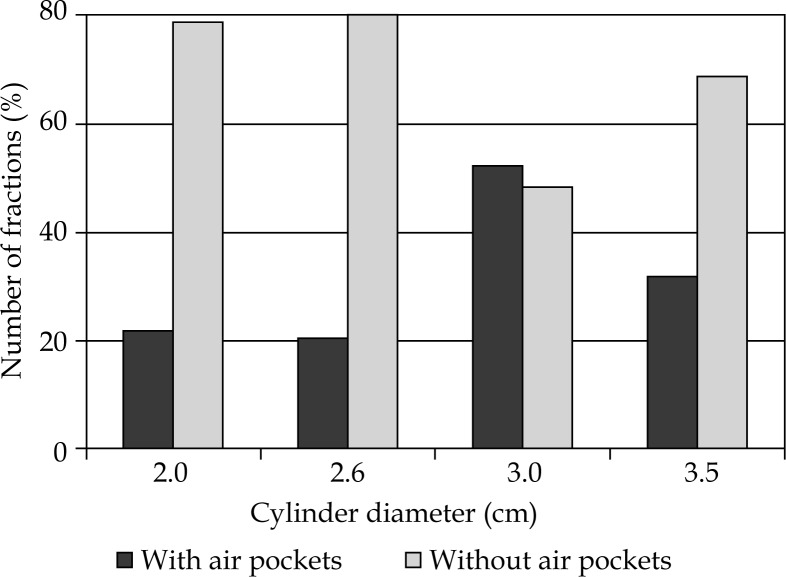
A total of 78 air pockets were found in 29/50 patients (58%) and 45/135 (33%) brachytherapy plans. They were located at the apex: 16/78 (20%) and lateral to the applicator: 62/78 (80%). The volume of air pockets ranged between 0.01 and 2.1 cm(3) (mean: 0.15 cm(3) ± 0.36 cm(3)), and the maximum displacement of vaginal mucosa from cylinder surface was between 0.1 and 1.09 cm (mean: 0.34 cm ± 0.2 cm). The dose reduction to the vaginal mucosa generated by the air pockets ranged from 0.5 to 66% (mean: 26.4% ± 13.9%).
The presence of air pockets around vaginal cylinder applicators is frequently noticed in post-operative vaginal cuff brachytherapy. The dose to the vaginal mucosa is reduced, as a result of displacement generated by air pockets. The effect on the clinical outcome of this dose reduction is yet to be determined.
回顾性评估阴道柱状施源器周围气腔的发生率、大小及其对阴道残端图像引导下高剂量率(HDR)近距离放射治疗剂量分布的影响。
本研究纳入50例接受术后HDR阴道残端近距离放射治疗的子宫内膜癌患者。患者的平均年龄为58.3±11.8岁(范围:31 - 87岁)。使用圆柱形施源器进行近距离放射治疗,处方剂量为距施源器表面0.5 cm处,从施源器尖端起5 cm长度范围内。每次近距离放射治疗均采用计算机断层扫描(CT)模拟。评估阴道柱状施源器周围气腔的发生率、阴道黏膜移位、体积及剂量学效应。
在29/50例患者(58%)和45/135个(33%)近距离放射治疗计划中总共发现78个气腔。它们位于顶端:16/78(20%),施源器侧面:62/78(80%)。气腔体积在0.01至2.1 cm³之间(平均:0.15 cm³±0.36 cm³),阴道黏膜相对于柱状施源器表面的最大移位在0.1至1.09 cm之间(平均:0.34 cm±0.2 cm)。气腔导致阴道黏膜的剂量减少范围为0.5%至66%(平均:26.4%±13.9%)。
术后阴道残端近距离放射治疗中经常会注意到阴道柱状施源器周围存在气腔。气腔产生的移位导致阴道黏膜剂量降低。这种剂量降低对临床结果的影响尚待确定。