Jaberzadeh Shapour, Zoghi Maryam
Department of Physiotherapy, School of Primary Health Care, Faculty of Medicine, Nursing and Health Sciences, Monash University, Melbourne, Australia.
Melbourne Medical School, the Faculty of Medicine, Dentistry and Health Sciences, The University of Melbourne.
Basic Clin Neurosci. 2013 Summer;4(3):257-65.
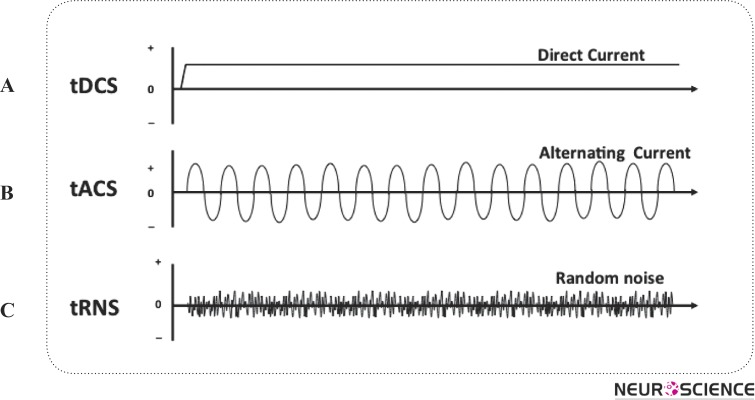
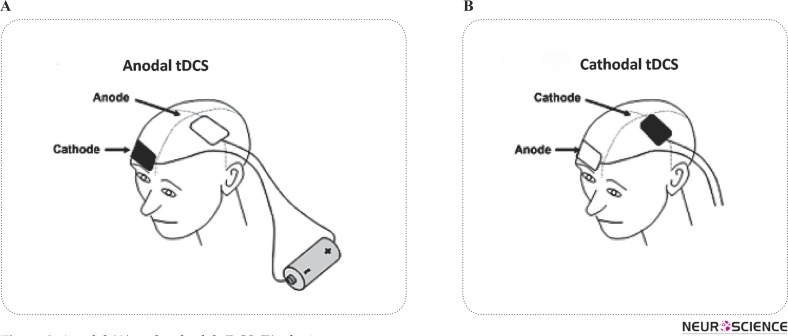
During the past 20 years, non-invasive brain stimulation has become an emerging field in clinical neuroscience due to its capability to transiently modulate corticospinal excitability, motor and cognitive functions. Whereas transcranial magnetic stimulation has been used extensively since more than two decades ago as a potential "neuromodulator", transcranial current stimulation (tCS) has more recently gathered increased scientific interests. The primary aim of this narrative review is to describe characteristics of different tCS paradigms. tCS is an umbrella term for a number of brain modulating paradigms such as transcranial direct current stimulation (tDCS), transcranial alternative current stimulation (tACS), and transcranial random noise stimulation (tRNS). Their efficacy is dependent on two current parameters: intensity and length of application. Unlike tACS and tRNS, tDCS is polarity dependent. These techniques could be used as stand-alone techniques or can be used to prime the effects of other movement trainings. The review also summarises safety issues, the mechanisms of tDCS-induced neuroplasticity, limitations of current state of knowledge in the literature, tool that could be used to understand brain plasticity effects in motor regions and tool that could be used to understand motor learning effects.
在过去20年里,非侵入性脑刺激因其能够短暂调节皮质脊髓兴奋性、运动和认知功能,已成为临床神经科学中的一个新兴领域。尽管经颅磁刺激作为一种潜在的“神经调节剂”,自二十多年前就已被广泛应用,但经颅电流刺激(tCS)最近才引起越来越多的科学关注。本叙述性综述的主要目的是描述不同tCS模式的特点。tCS是多种脑调节模式的统称,如经颅直流电刺激(tDCS)、经颅交流电刺激(tACS)和经颅随机噪声刺激(tRNS)。它们的疗效取决于两个电流参数:强度和施加时间。与tACS和tRNS不同,tDCS依赖于极性。这些技术既可以作为独立技术使用,也可以用于增强其他运动训练的效果。该综述还总结了安全问题、tDCS诱导神经可塑性的机制、文献中当前知识状态的局限性、可用于理解运动区域脑可塑性效应的工具以及可用于理解运动学习效应的工具。